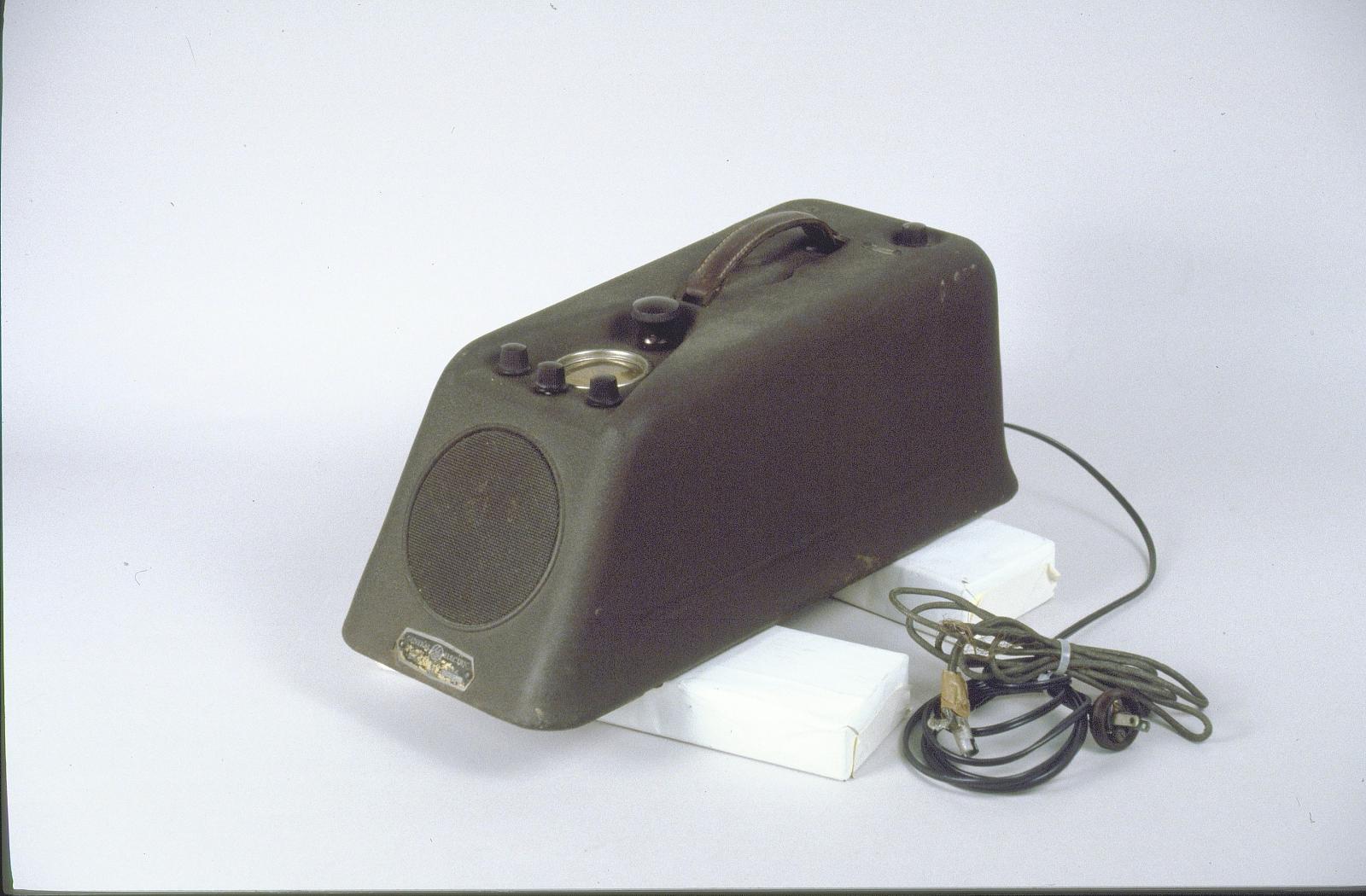
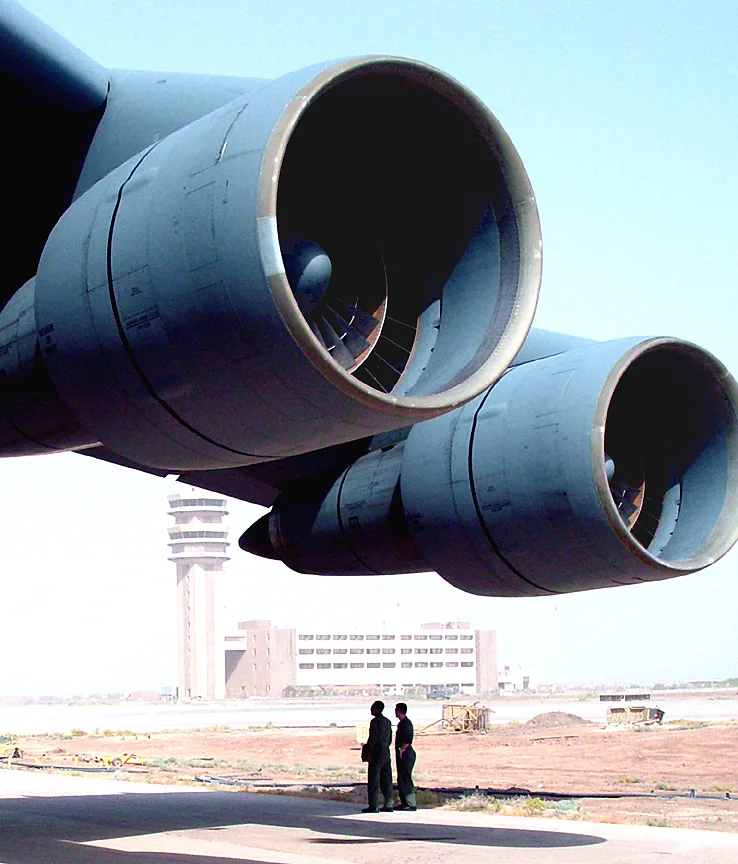
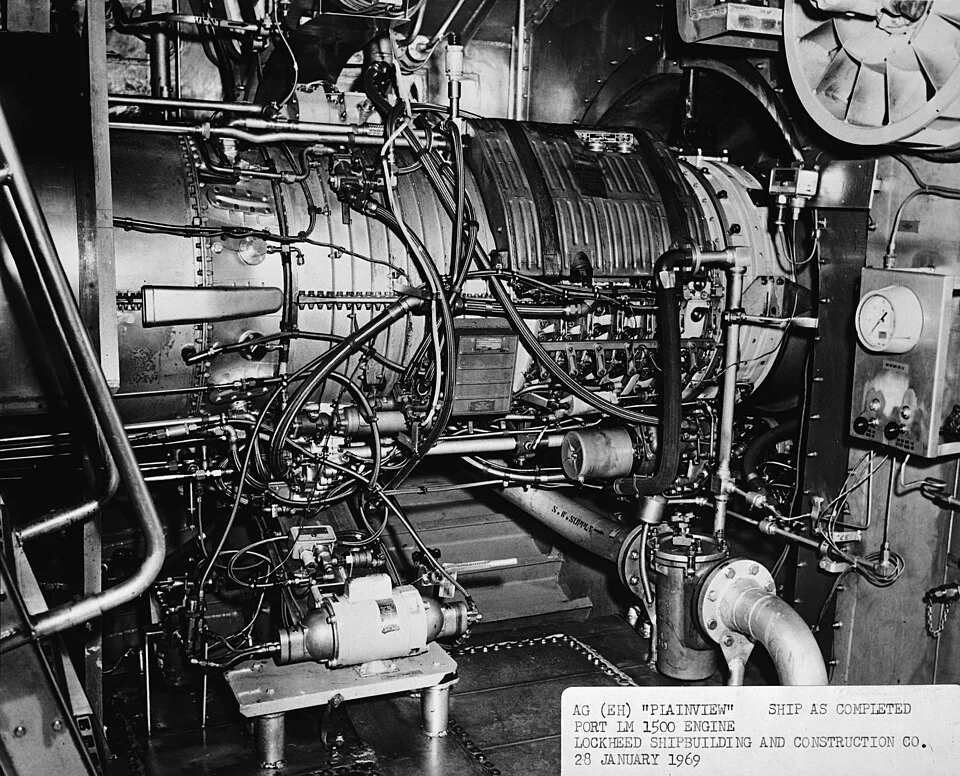
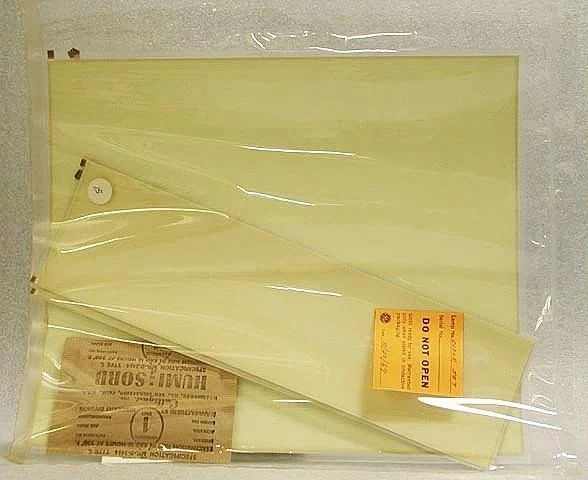
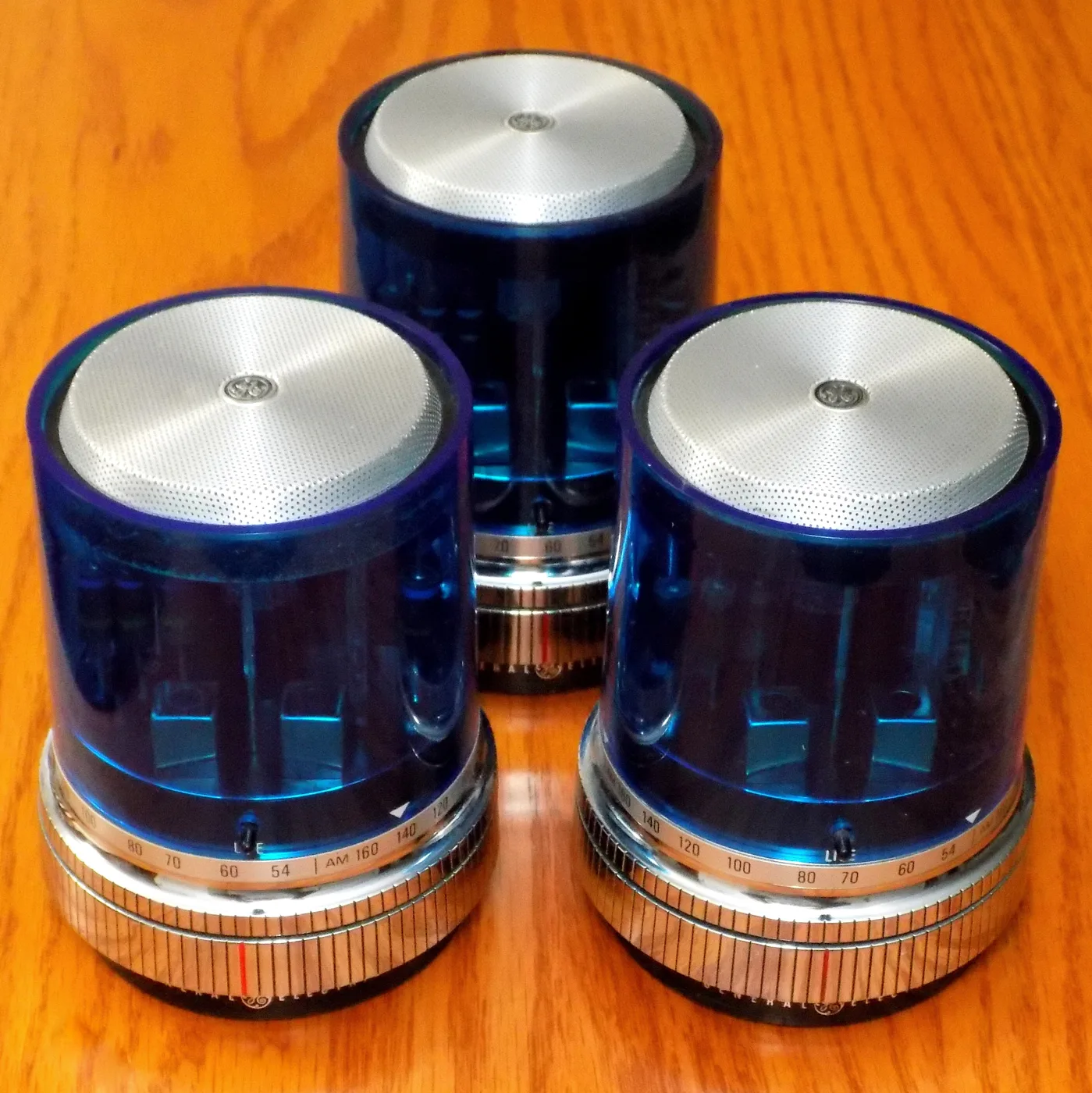
Edison General Electric and Thomson-Houston merged on April 15, 1892, to form General Electric. This collection begins with that company; its earliest photographed, dated artifact here is a lamp socket cataloged as 1894–1895. Earlier Edison inventions are shown as history leading up to GE, not as products of the 1892 corporation.
A researched selection of 215 exhibits—not a complete inventory. Sources include museum collections, historical photographs, GE’s news archive, successor-company websites and regulatory records, and a museum record does not guarantee that an object is currently on public display.
Where an authentic photograph cannot be reproduced, a labeled look-alike illustration stands in; it is not a photograph of the exact model or artifact. Experimental vehicles are identified as prototypes; no GE-made fashion garment or cosmetic has been verified in this collection. Britain’s separate General Electric Company (GEC) is not the American GE.
The object collection
Made across generations
215 of 215 product exhibits
Dates identify an introduction, a dated artifact or a documented model—not an assumed complete production run. Undated objects appear in All eras only. Photographs show actual products. Clearly labeled look-alike illustrations represent a product type, not the exact model or museum artifact.
1894 / 1895 · museum datingDated artifact
Lighting
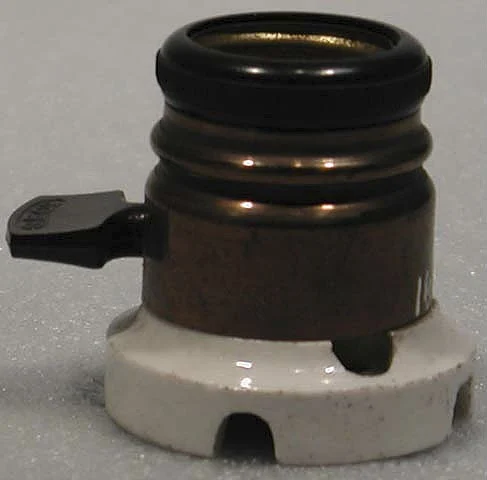
GE surface-mounted lamp socket
A surface-mounted keyed lamp socket with a brass shell and porcelain base. The key is molded “G.E. Co.”; the museum record lists both 1894 and 1895.
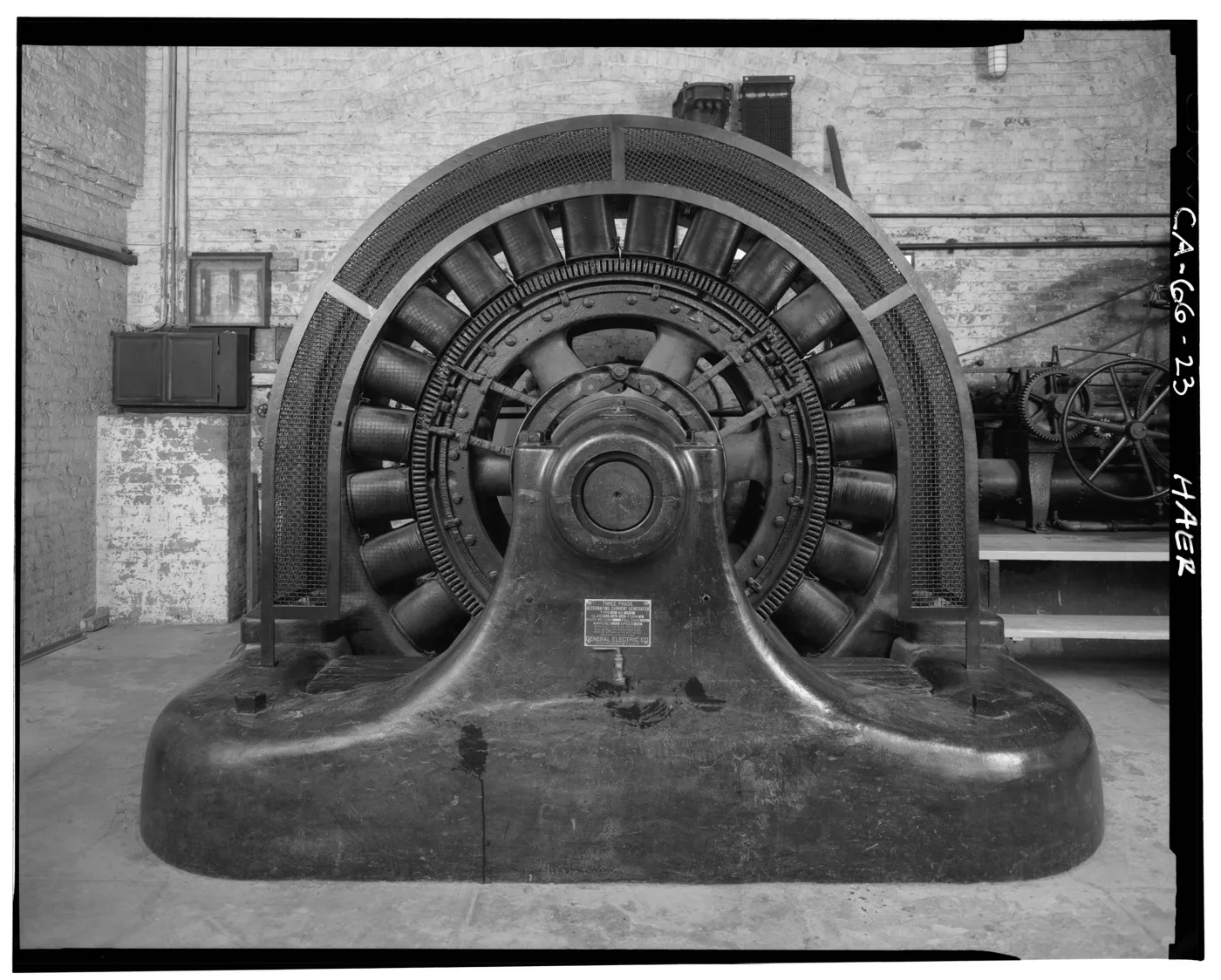
Generator No. 4 at the Folsom Powerhouse in California, documented by the Historic American Engineering Record in 1993; the 1895 station's GE generators sent power 22 miles to Sacramento, a landmark of early long-distance AC transmission.
Built by General Electric for the Folsom Powerhouse, one of the earliest hydroelectric AC stations in the United States.
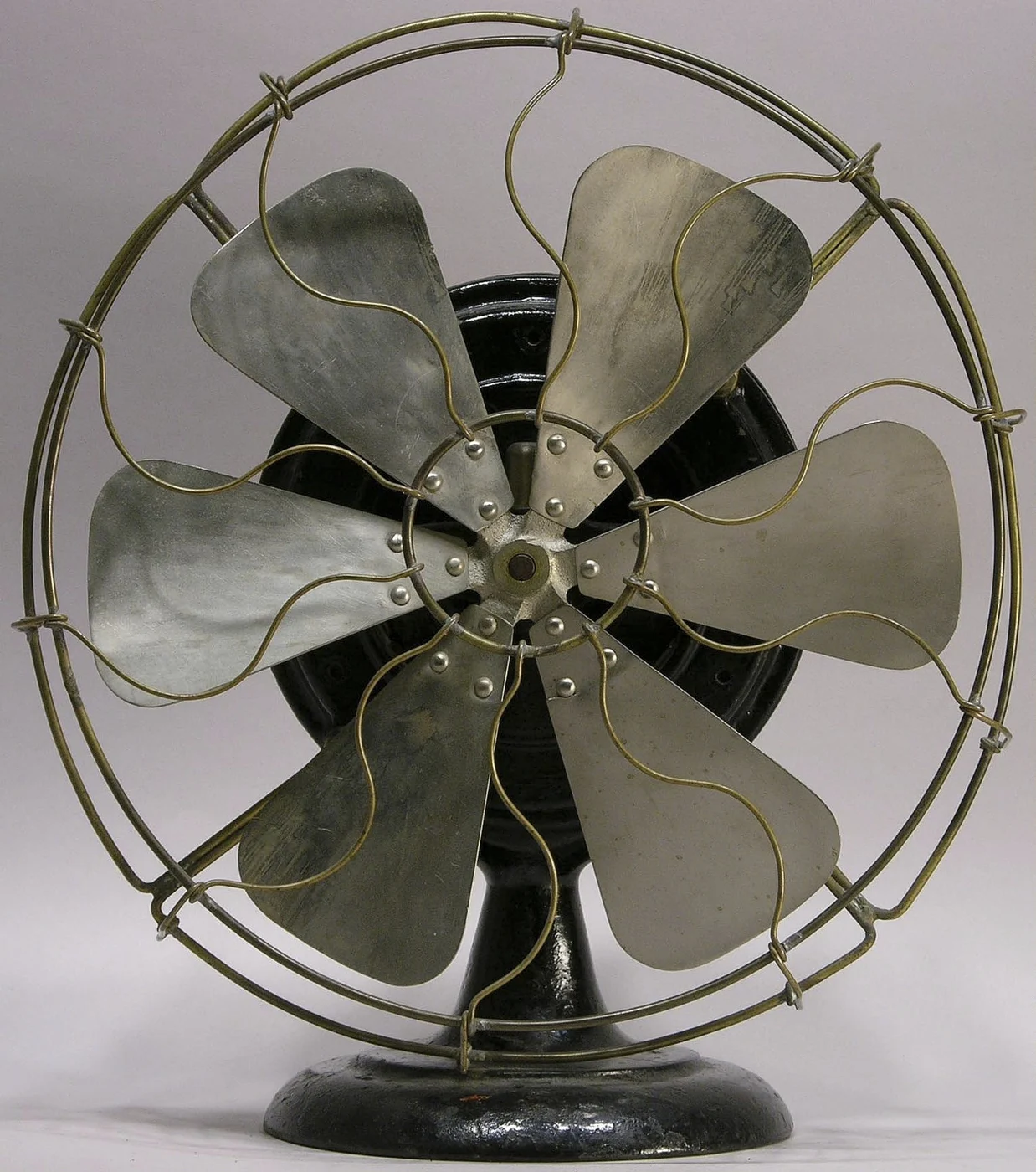
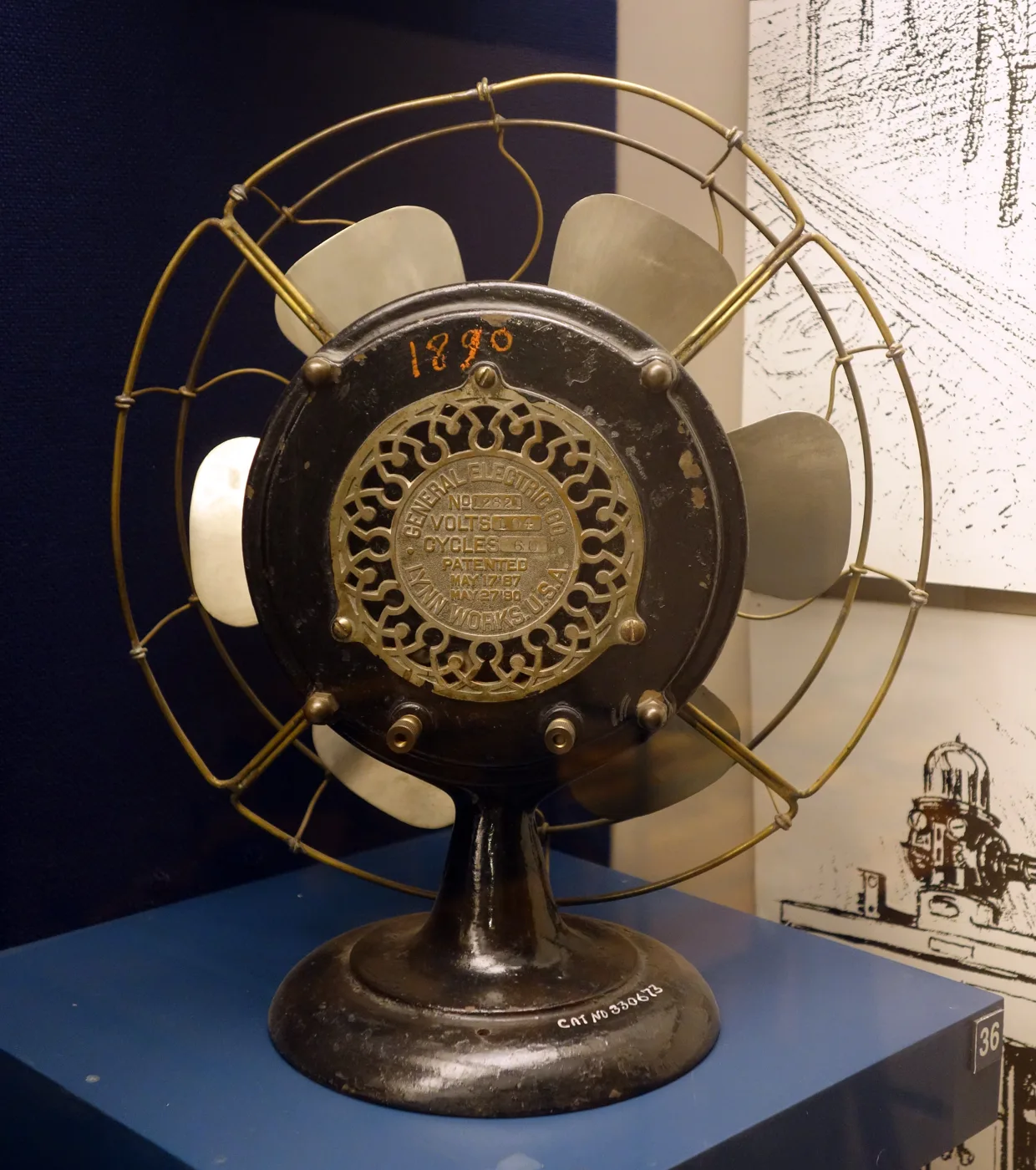
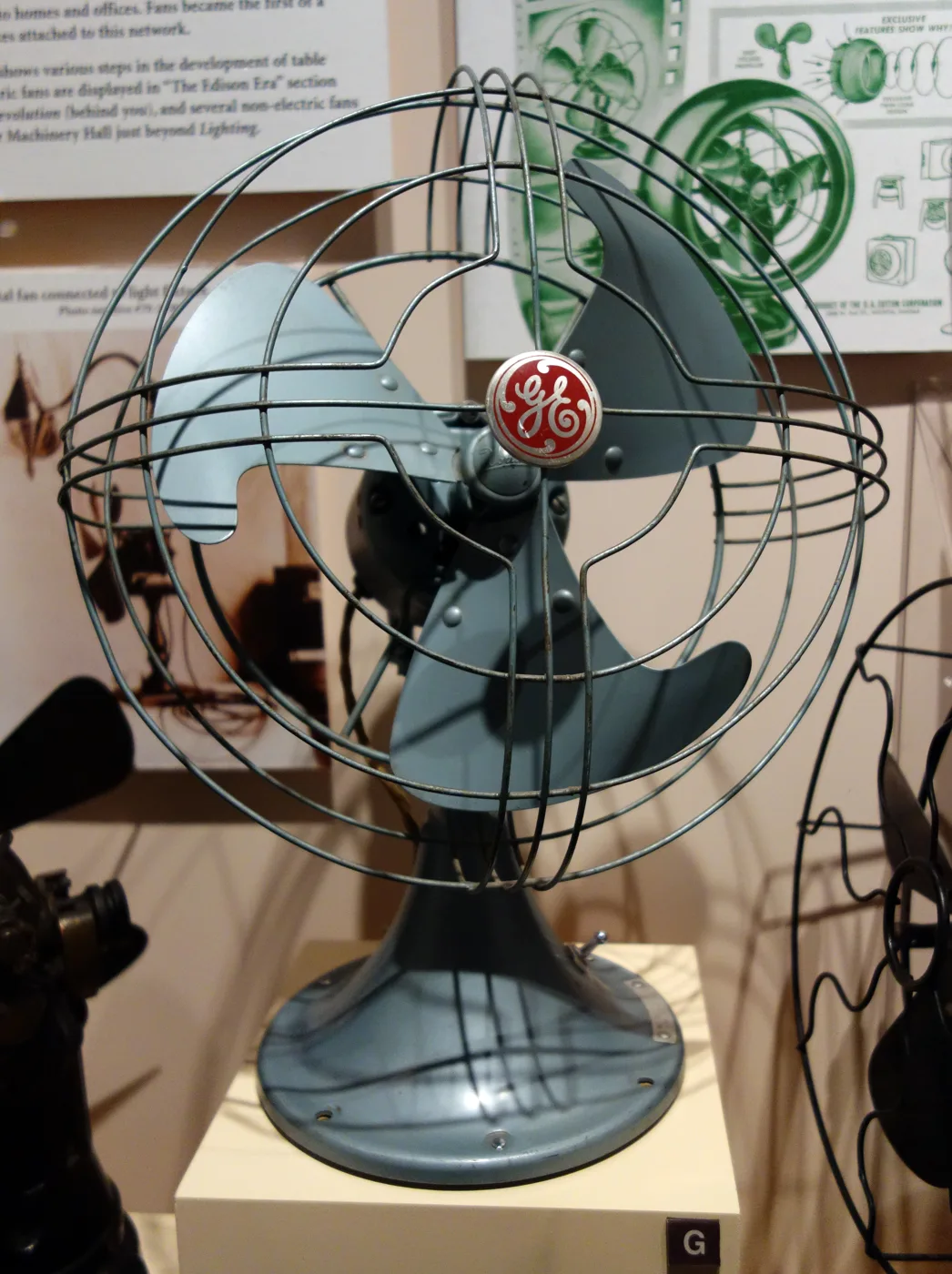
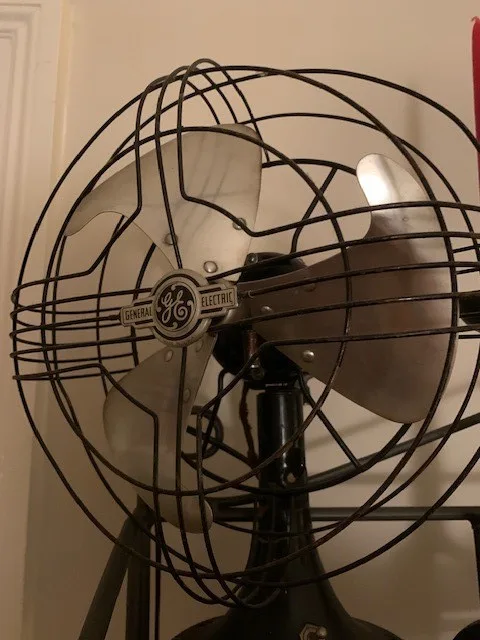
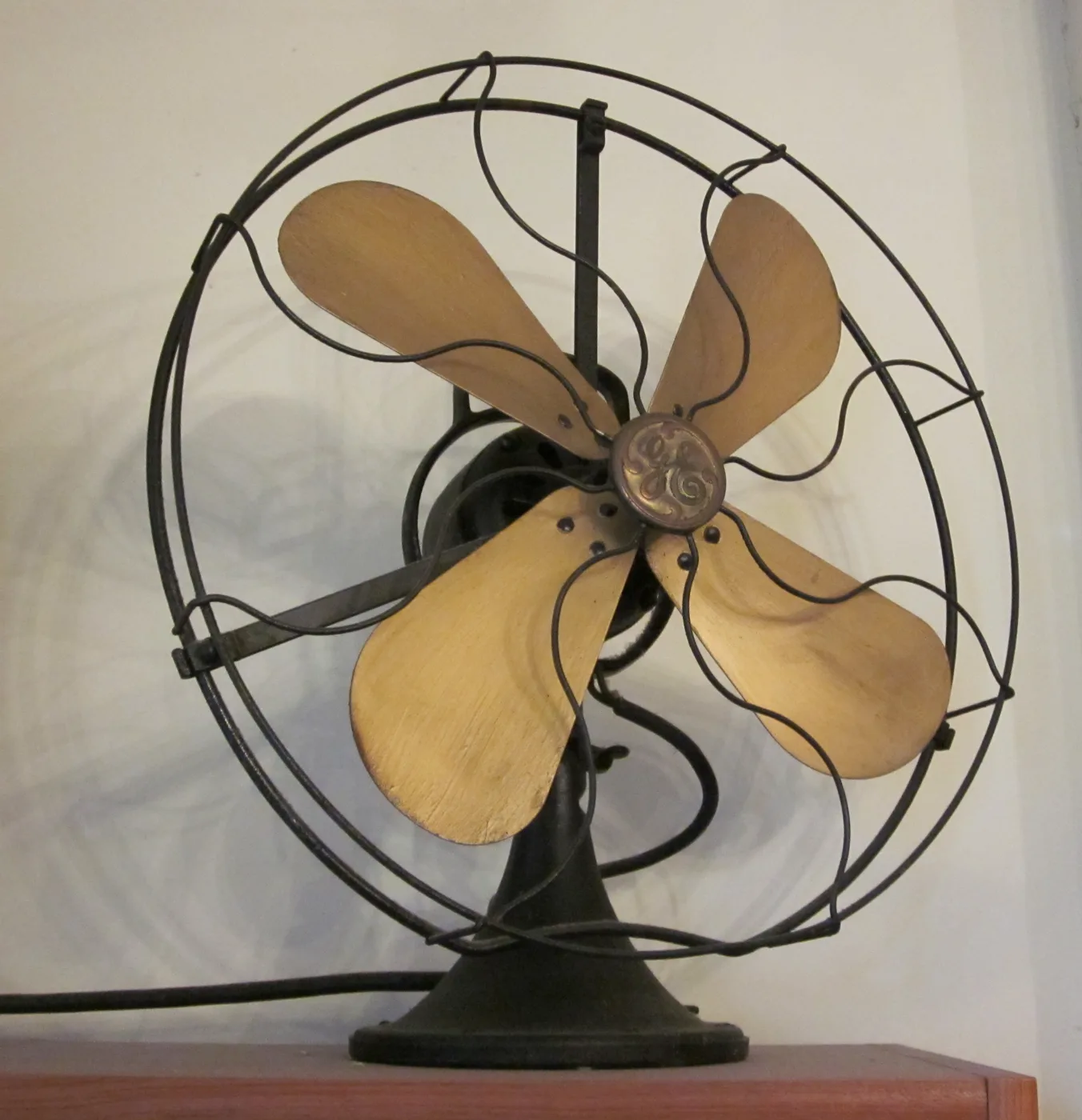
A General Electric model 1Z821 electric table fan dated circa 1895, from the collections of the Smithsonian's National Museum of American History and photographed in 2024 — among the earliest electric fans GE sold.
Made by the newly formed General Electric Company; GE's appliance business was acquired by Haier in 2016.
Representative vintage illustration · not the exact vehicle, model or museum artifact.
1895–1905 · museum photograph rangeDocumented use
Rail & transportation
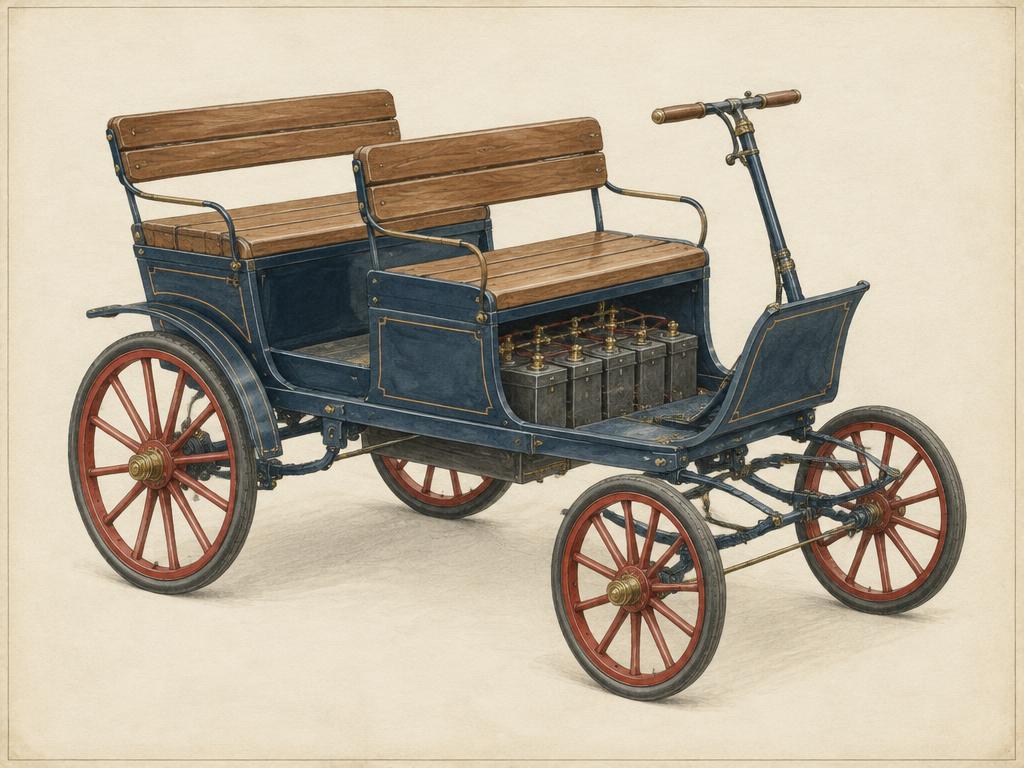
Thomson–Lemp electric wagonette
miSci's GE photographic collection documents an early battery-powered wagonette developed in Lynn, Massachusetts, by Elihu Thomson and Hermann Lemp. The museum describes a three-horsepower motor and an 18-mph top speed. Its 1895–1905 image range does not establish an exact vehicle build or introduction year; 1895 is the sorting anchor.
GE inventor-linked experimental vehicle documented by miSci; not a mass-produced GE automobile or a claim that GE invented the electric car.
Illustration: GE Heritage Village · AI-generated representative artwork · AI-generated artwork · not a historical photograph
Circa 1899Dated artifact
Computing & industry
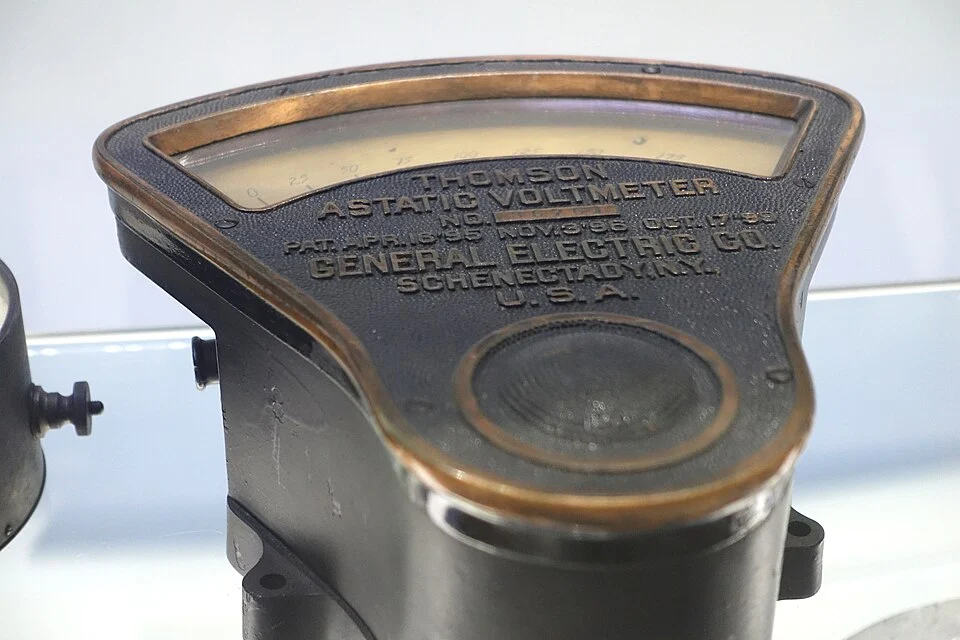
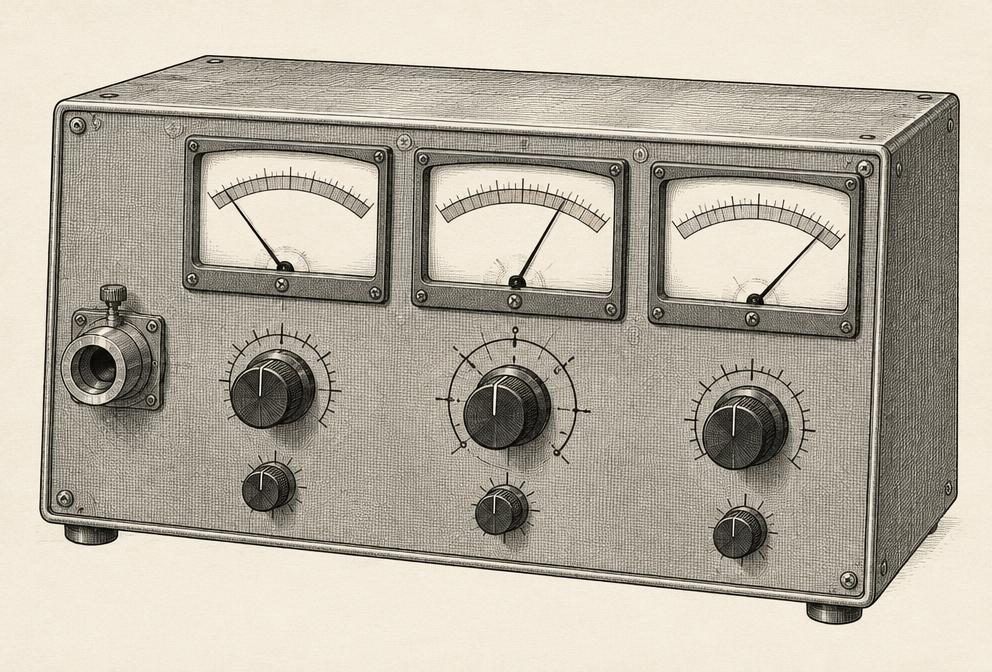
GE Thomson astatic voltmeter
A Thomson astatic voltmeter attributed to General Electric and dated circa 1899 in the archive filename, photographed at Chicago’s Museum of Science and Industry in 2014.
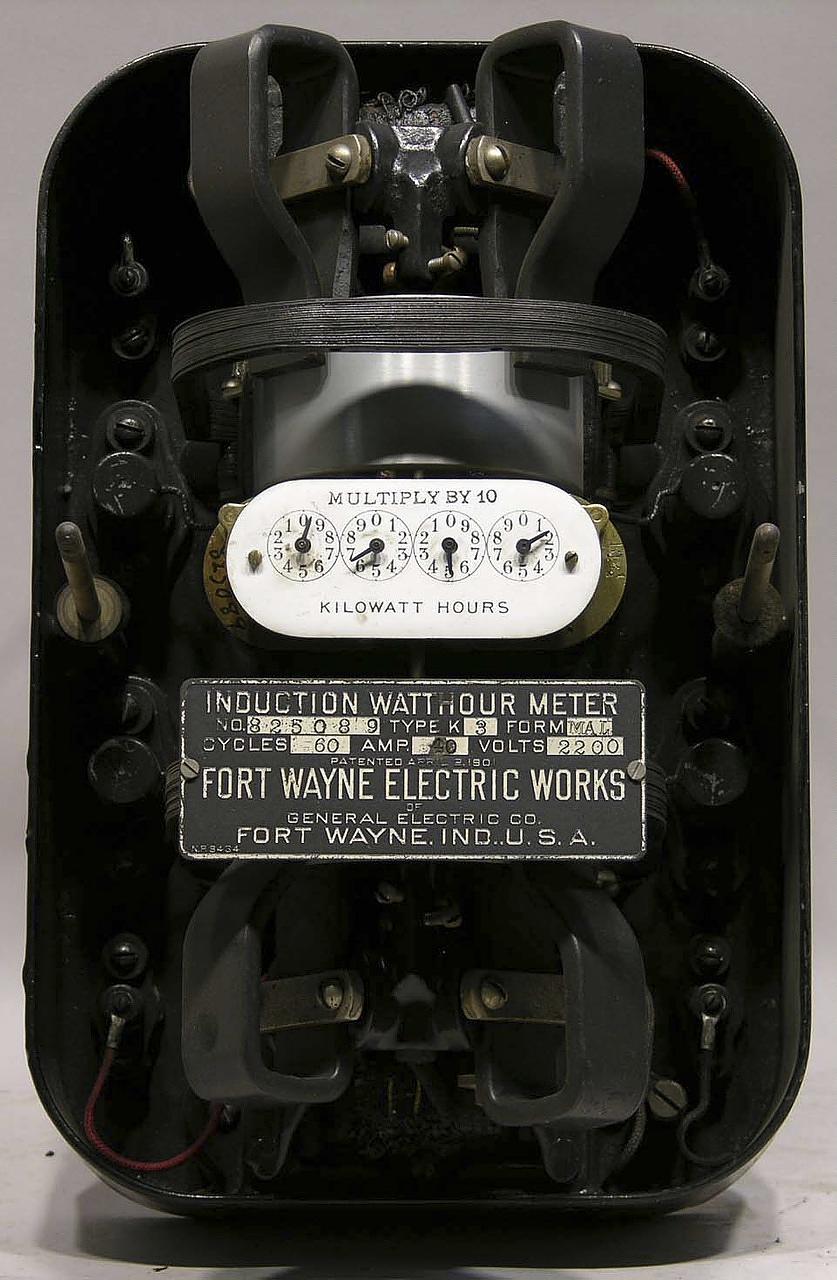
An induction watt-hour meter made by General Electric at Fort Wayne. The museum dates the specimen to approximately 1901; the instrument measures electricity consumption.
Made by General Electric Company; a historical GE artifact, not a claim that GE invented its entire product category.
Look-alike illustration · not the exact model, laboratory device or museum artifact.
After 1902 · museum citationDated artifact
Energy & power
GE Type ML direct-current generator · Canadian collection
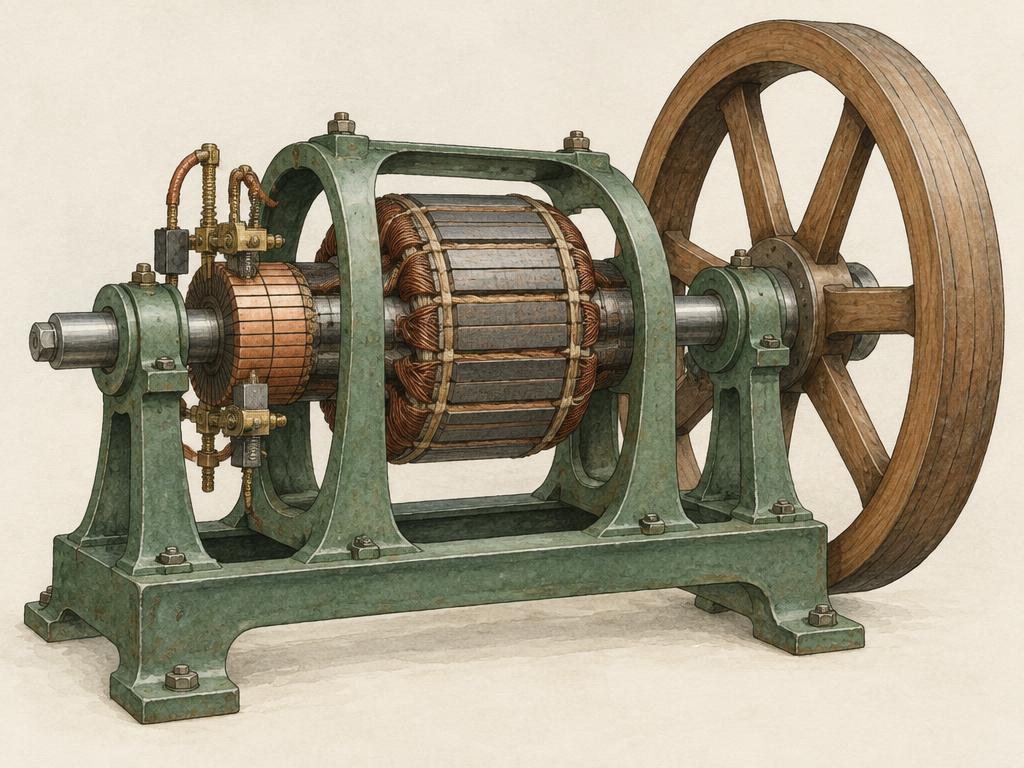
Ingenium preserves a Schenectady-made General Electric generator, serial 250513, with an open cast-iron frame, copper commutator, carbon brushes and wooden flywheel. Its nameplate records 9 kW, 125 volts and 1,050 rpm. The catalog date field is 1902, but its citation says after 1902; that lower bound is used here, not an exact build year.
General Electric Co. is the recorded U.S. manufacturer. A distinct Type ML specimen in Canada's national collection, not a claim that GE invented the generator.
Illustration: GE Heritage Village · AI-generated representative artwork · AI-generated artwork · not a historical photograph
Look-alike illustration · not the exact model or museum artifact.
1905 · archival photographDocumented use
Power generation
GE Curtis 125 kW steam turbine
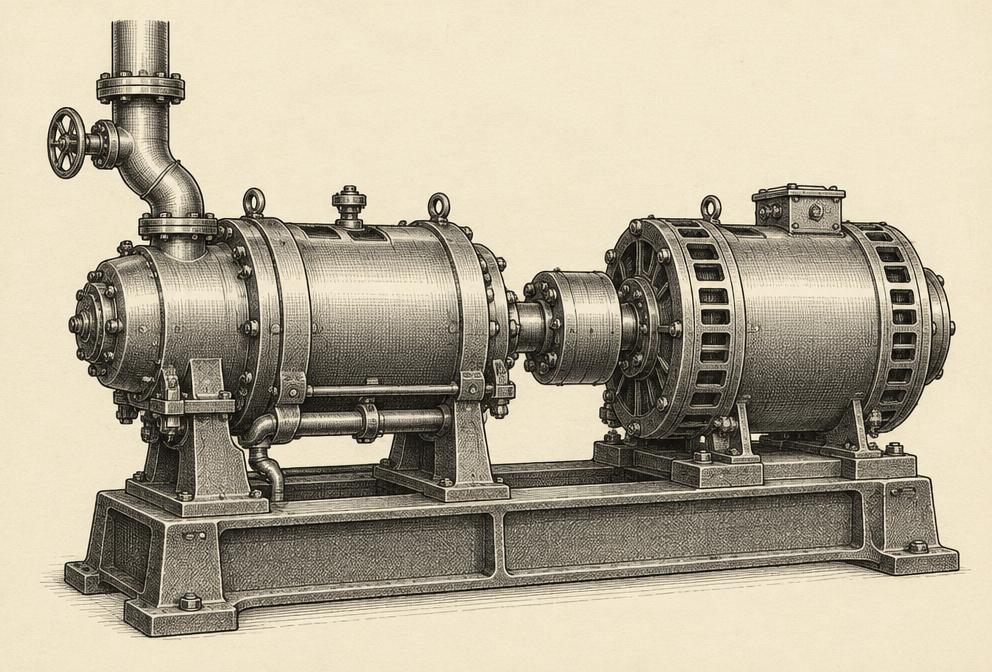
miSci's GE photograph identifies a Type CC four-pole Curtis steam turbine rated 125 kW, 2,400 rpm and 125 volts. 1905 dates the archive image, not an independently established manufacturing or invention date.
General Electric Company is the photograph's creator and publisher. This records a named turbine model, not a claim that GE alone invented steam turbines.
Illustration: GE Heritage Village · AI-generated representative artwork · AI-generated artwork · not a historical photograph
Circa 1905Dated artifact
Power generation
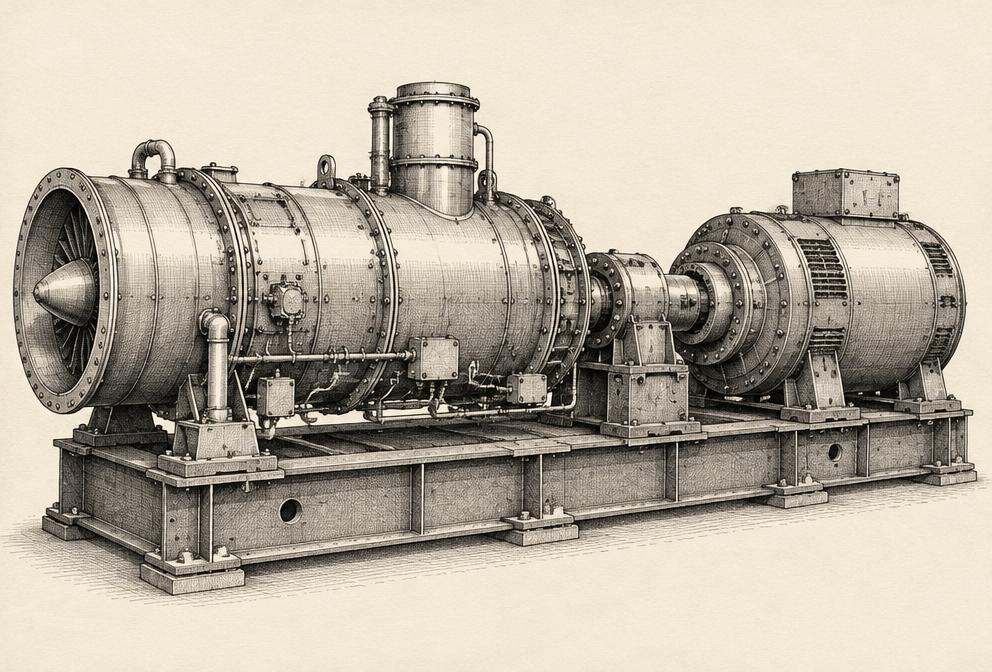
GE type ATB 6-13 AC generator
A GE alternating-current generator, type ATB 6-13, dated approximately 1905 by the Smithsonian. The collection record identifies the maker and credits Michigan State University.
Made by General Electric Company; a historical GE artifact, not a claim that GE invented its entire product category.
Representative vintage illustration · not the exact vehicle, model or museum artifact.
1905 · museum-documented vehicleDocumented use
Rail & transportation
GE-equipped Fifth Avenue gasoline-electric bus
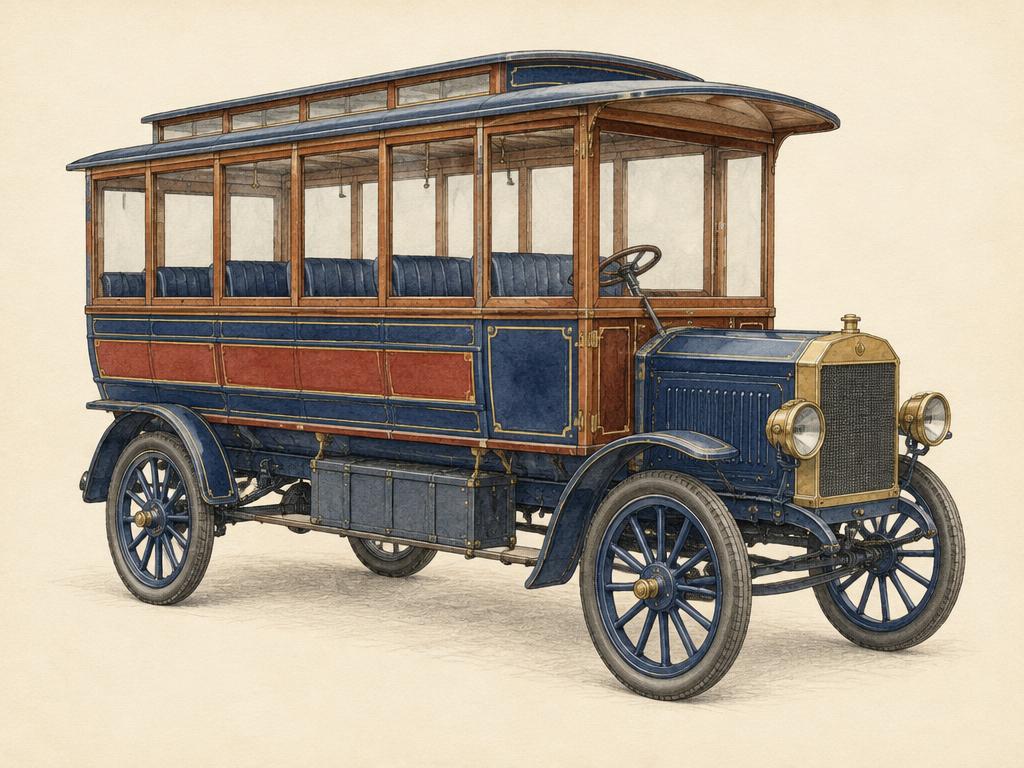
miSci records GE's development of a gasoline-electric hybrid bus in 1905 for New York City's Fifth Avenue line. Its archival captions identify GE equipment powering a bus operating on the line. This documents an early transit application, not a claim that GE invented hybrid propulsion.
GE-developed hybrid bus technology and GE propulsion equipment; the source does not separately establish the chassis or body manufacturer.
Symbolic illustration · not the original artwork, archive document or historical scene.
1907–1985 · archive document rangeDocumented use
Materials & research
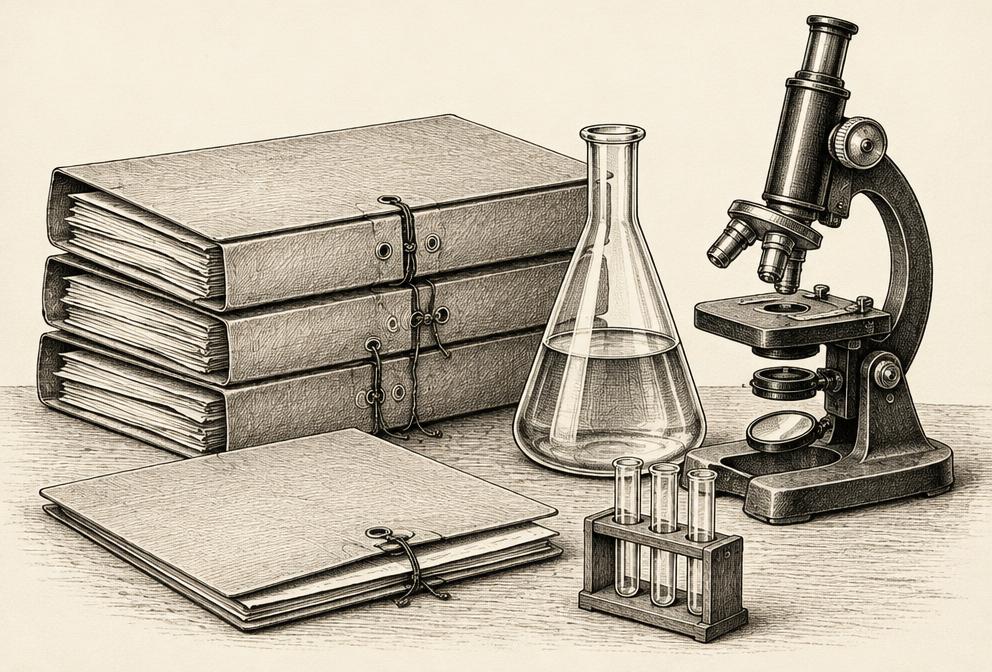
GE Corporate Research Department archive
Smithsonian's archival collection documents the organization, personnel and research areas of GE's Schenectady Research Department, including speeches, management materials, reports and publications. 1907 is the earliest year in the archival range, not the laboratory's founding date or a single artifact's manufacture date.
Records created by General Electric Company; an archival research exhibit, not a manufactured product or a claim that every documented discovery was invented by GE.
Illustration: GE Heritage Village · AI-generated representative artwork · AI-generated artwork · not a historical photograph
1908 photographDocumented use
Appliances
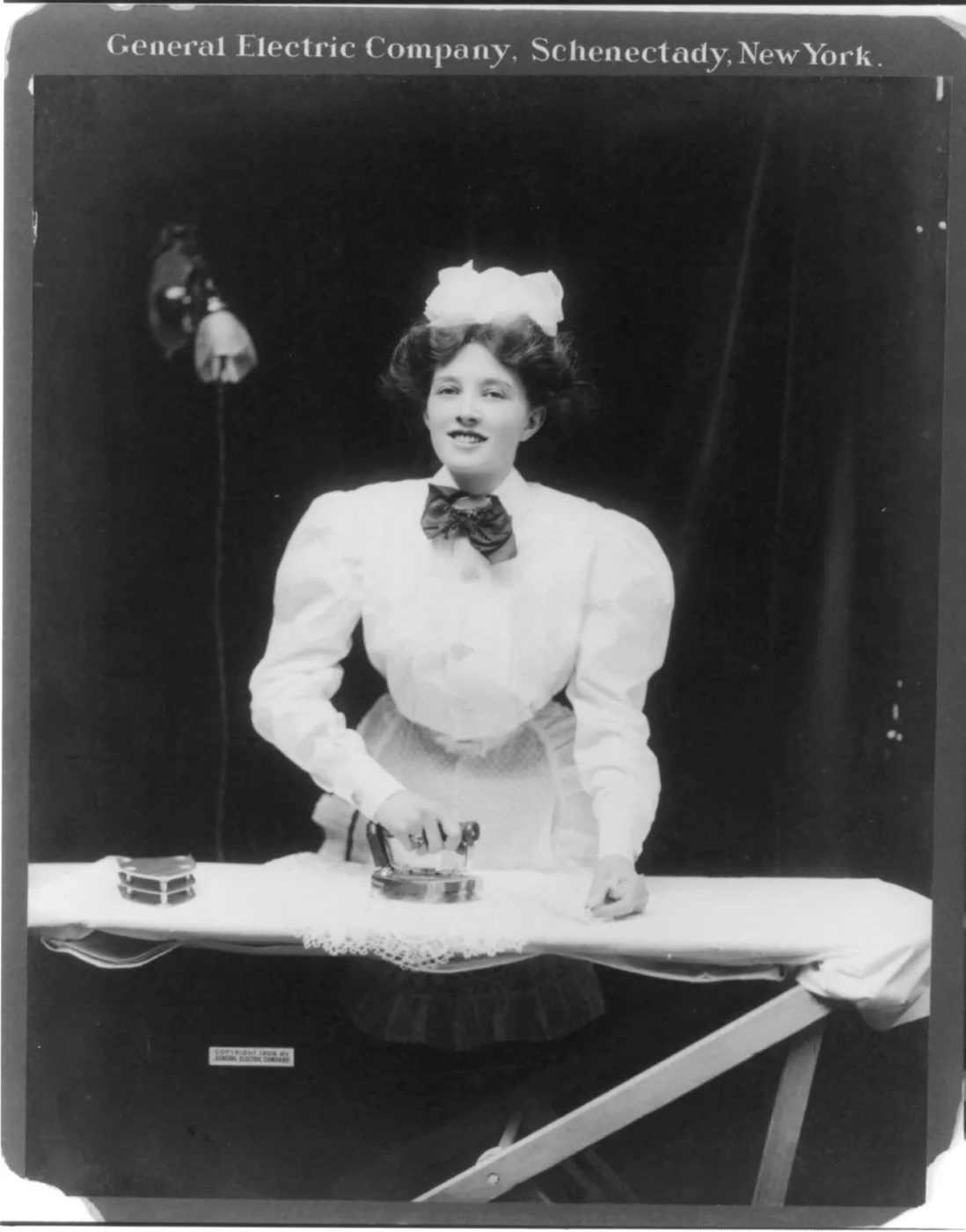
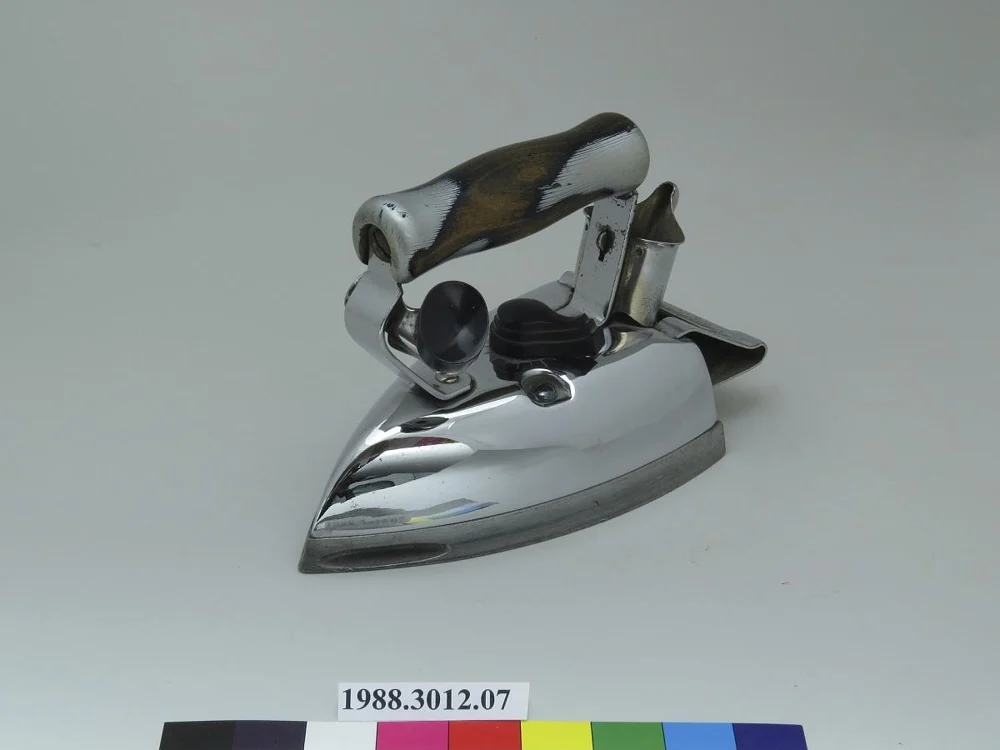
GE electric iron in use, 1908
A housemaid ironing a lace doily with a GE electric iron in a 1908 photograph from the Library of Congress — early evidence of GE's electric appliances entering the home.
Made by GE's appliance business; GE Appliances was acquired by Haier in 2016 and uses the GE brand under license.
Look-alike illustration · not the exact model, laboratory device or museum artifact.
Circa 1908 · museum-dated specimenDated artifact
Lighting
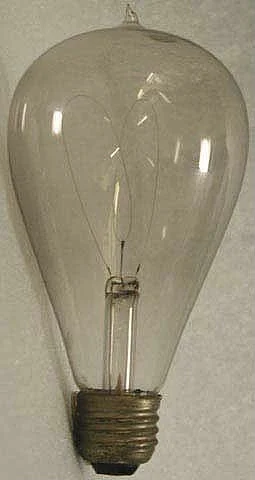
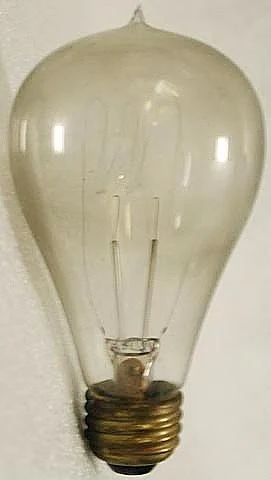
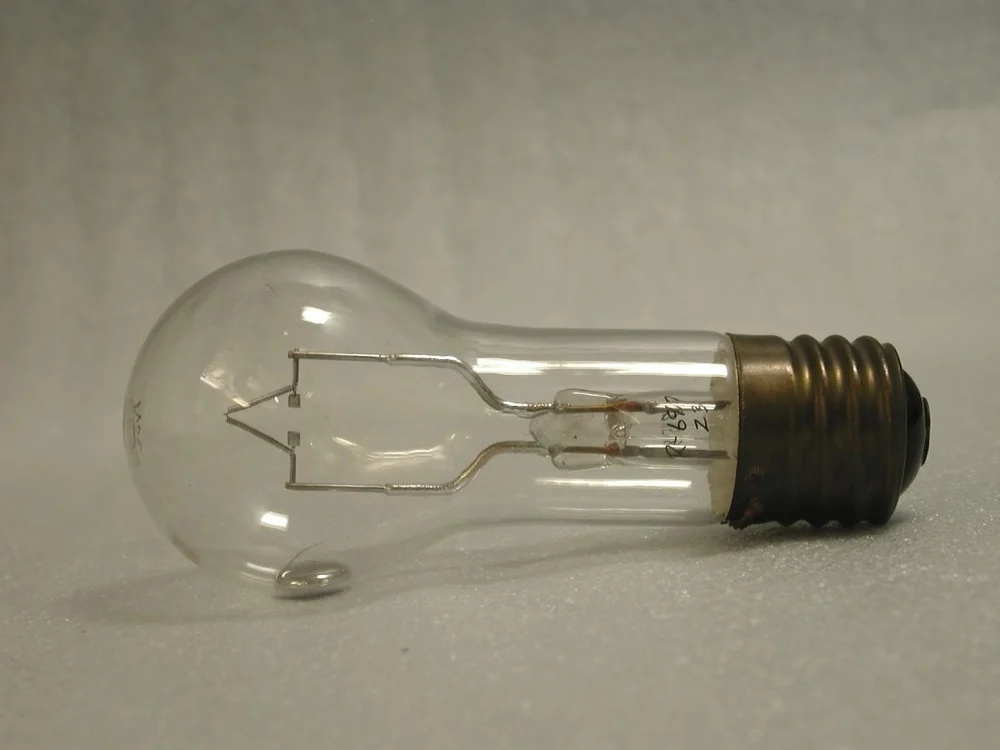
GE tantalum-filament light bulb
The Smithsonian identifies GE as maker of this tantalum-filament lamp, with a brass screw base and a filament held on multiple support hooks. Tantalum lamps were used before tungsten displaced them in the early 1910s; the museum notes their difficulty operating on alternating current.
General Electric-made lamp preserved by the Smithsonian. This is a documented GE product, not a claim that GE invented tantalum-filament lighting.
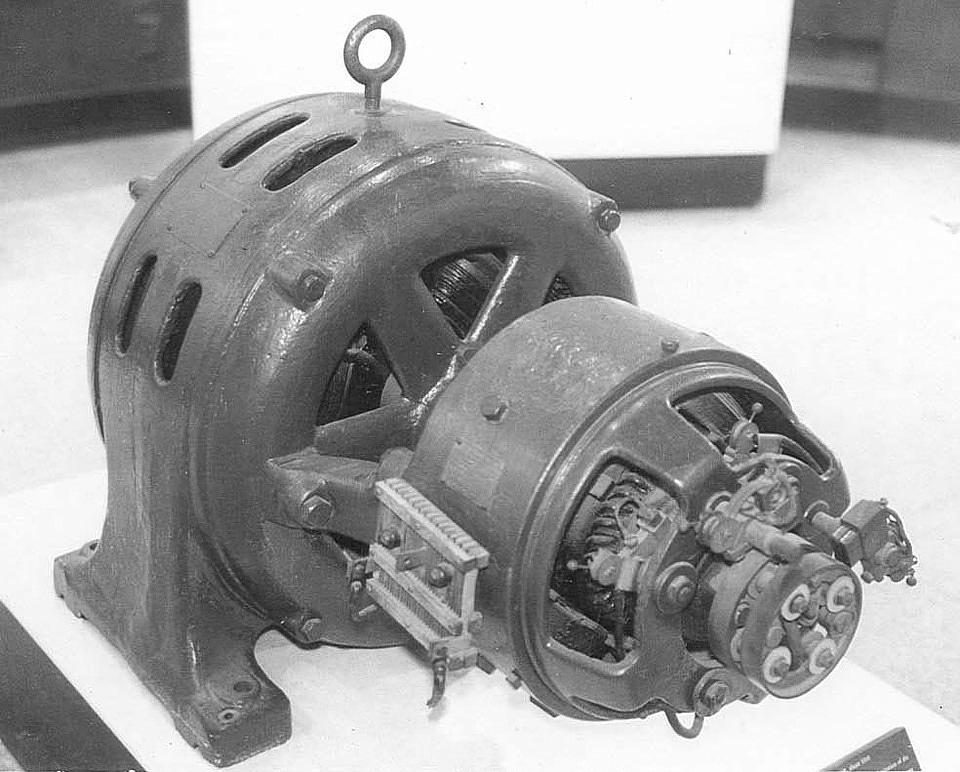
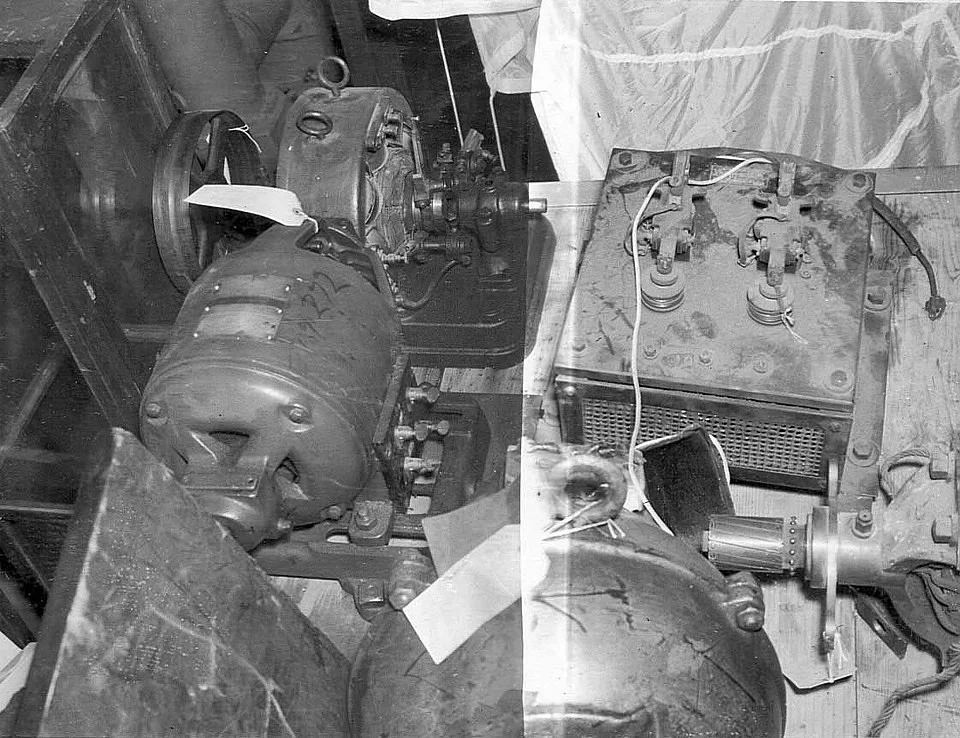
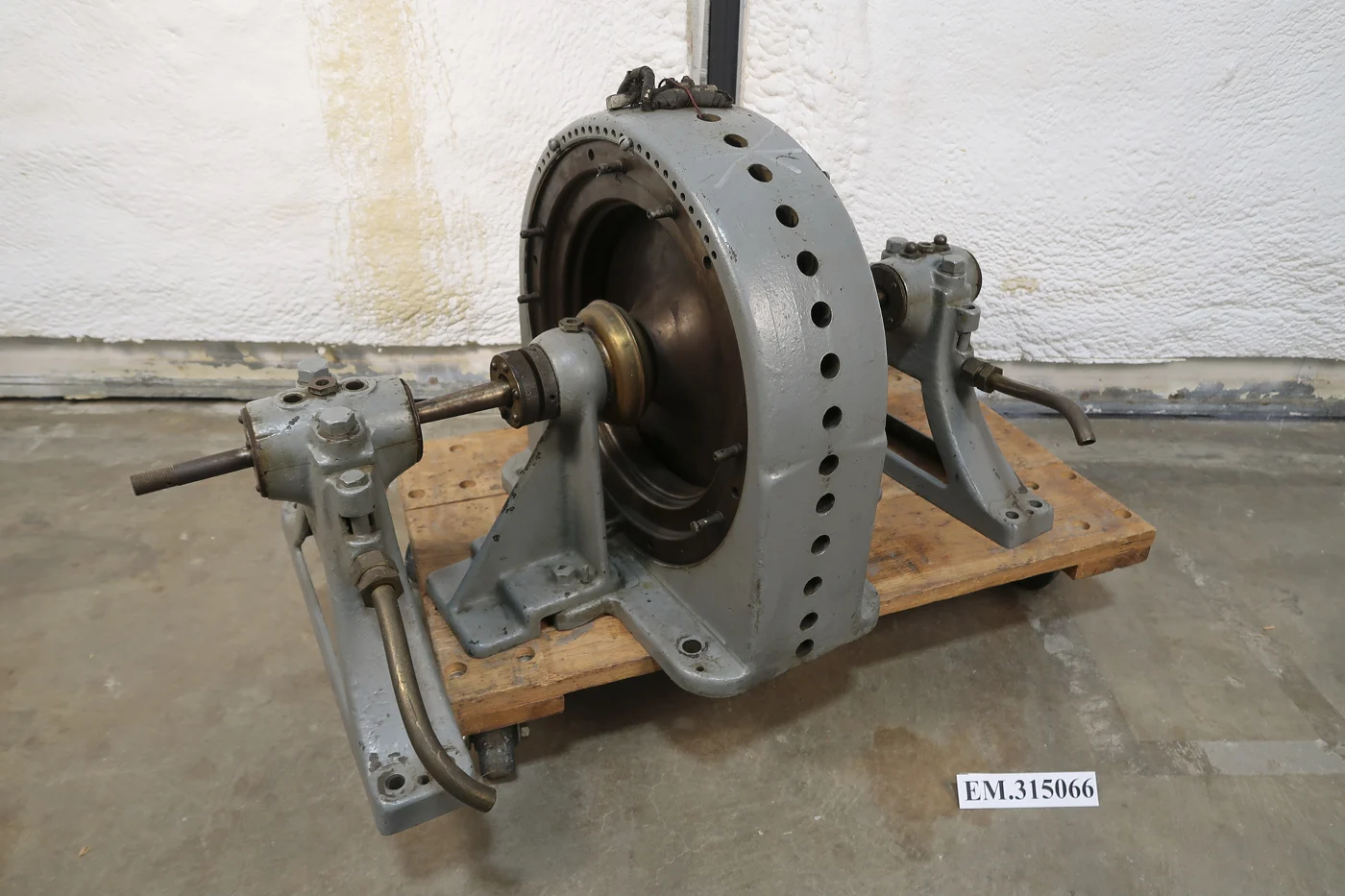
A GE direct-current generator with four field magnets and a specification plate. The museum dates the artifact to approximately 1910 and records a gift from Michigan State University.
Made by General Electric Company; a historical GE artifact, not a claim that GE invented its entire product category.
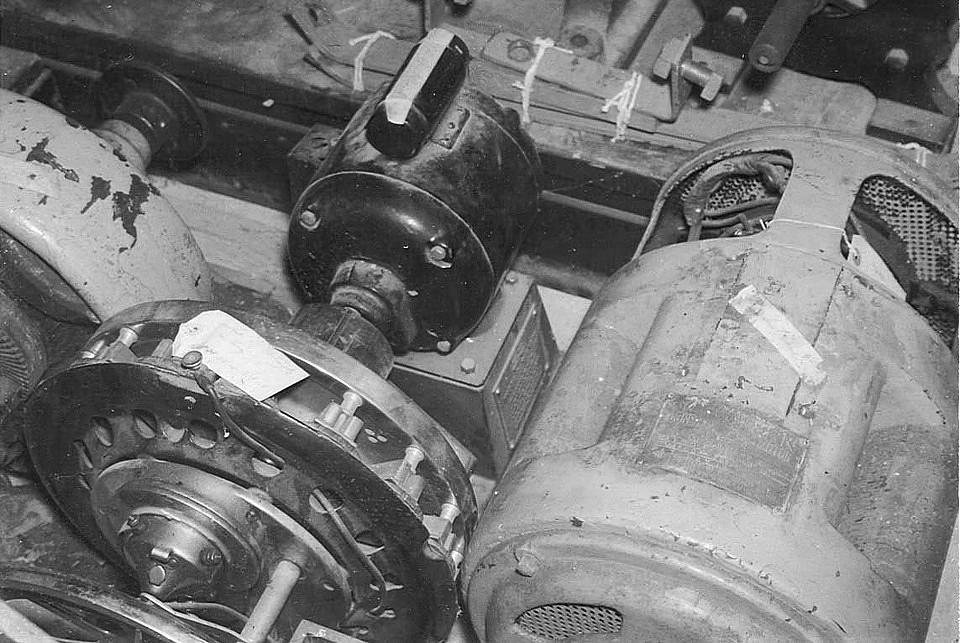
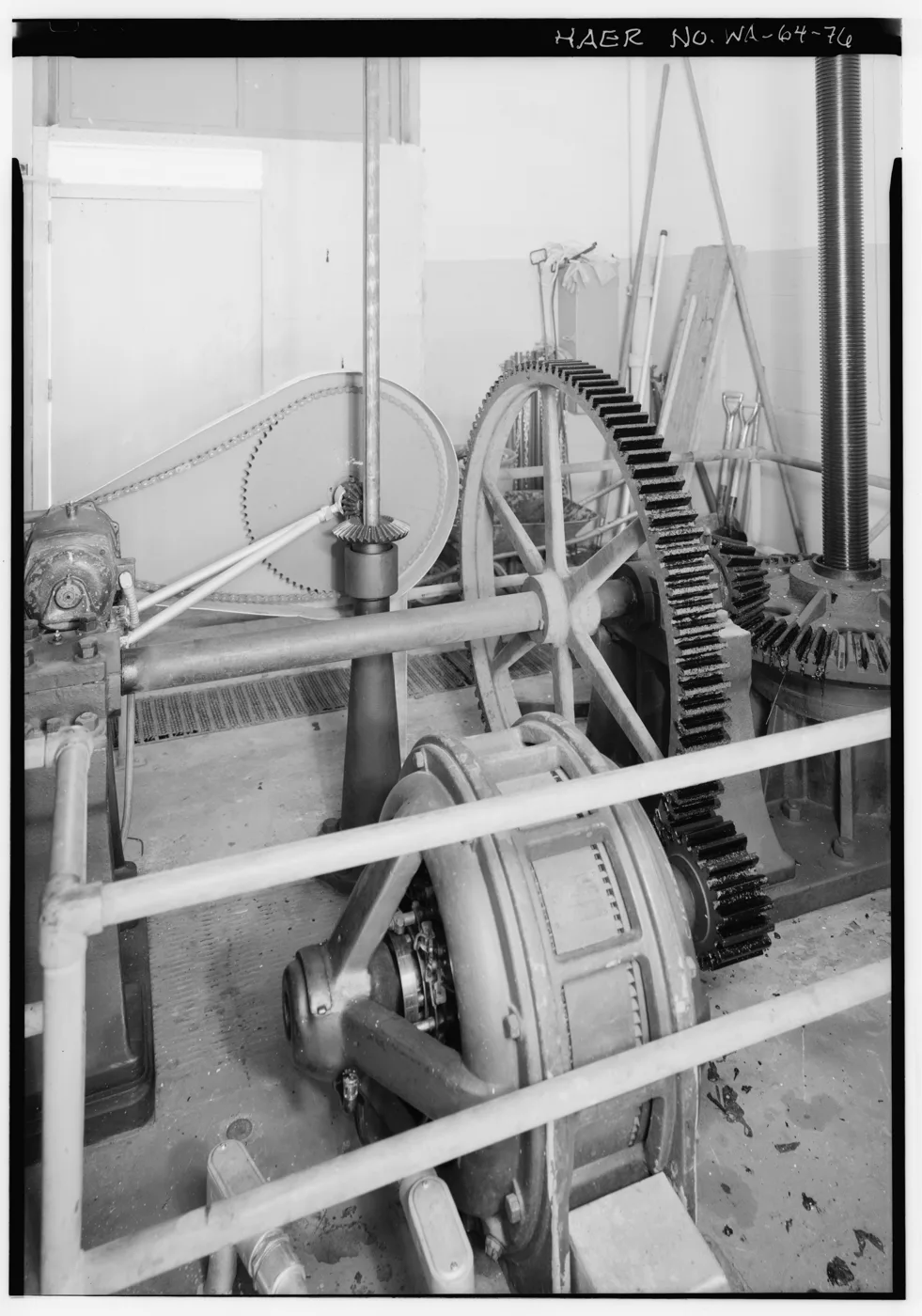
A circa-1911 General Electric induction motor — 25 horsepower, 60 cycles, 220 volts — documented by HAER photographer Jet Lowe at the Snoqualmie Falls hydroelectric plant's tunnel intake building.
Built by General Electric's industrial motor business; GE's power-equipment heritage passed to GE Vernova in 2024.
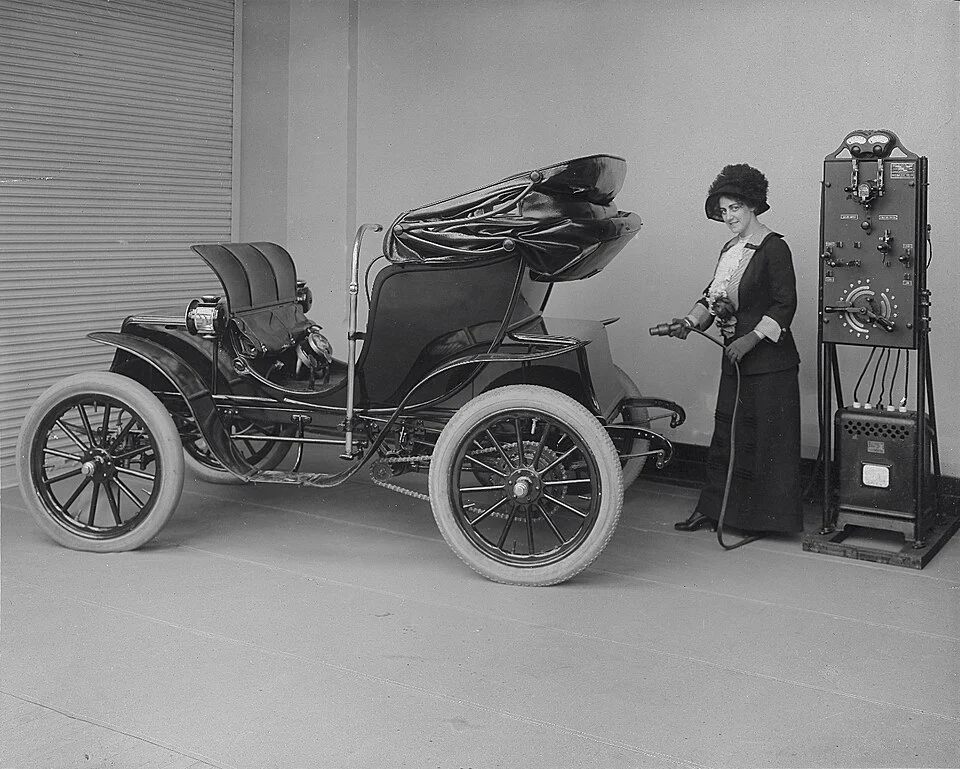
An archival photograph of a woman with a mercury-arc rectifier and electric car, illustrating battery charging equipment. The photograph is dated 1912 by the Commons record, rather than an equipment launch.
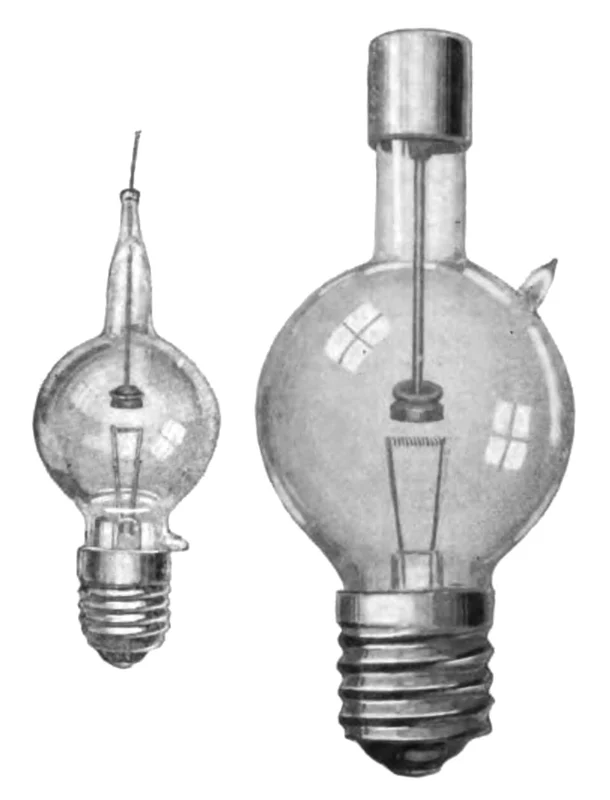
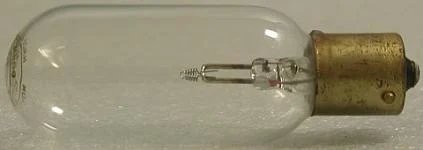
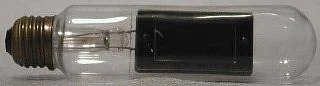
Two GE Tungar rectifier bulbs, rated at 2 and 6 amperes, reproduced from R. E. Russell’s March 1917 article in The General Electric Review. The archive notes scan-cleanup alterations.
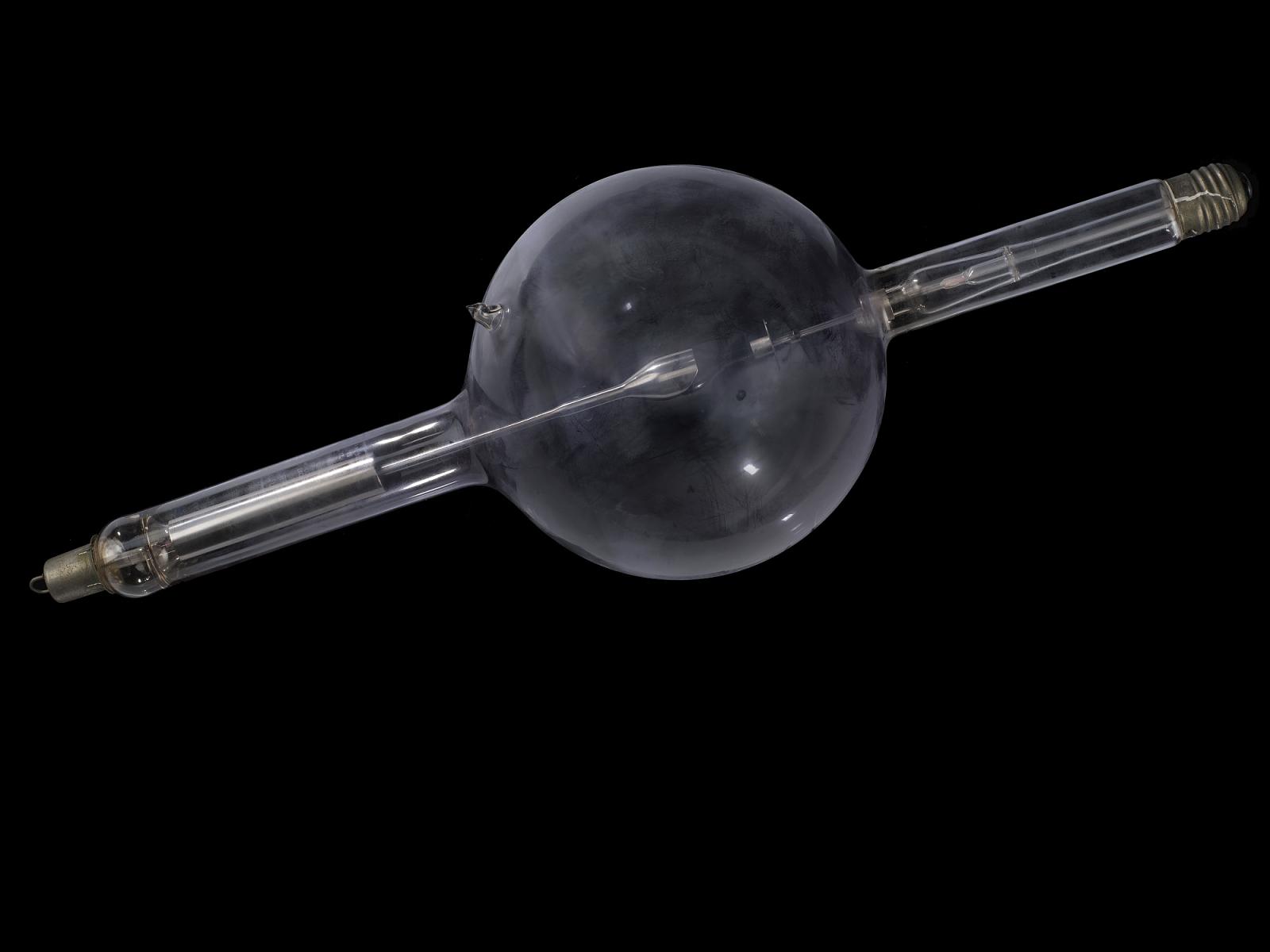
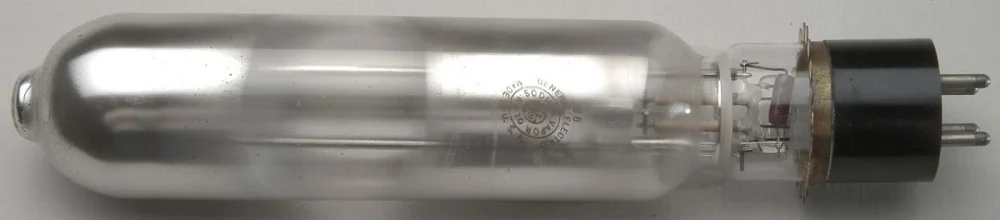
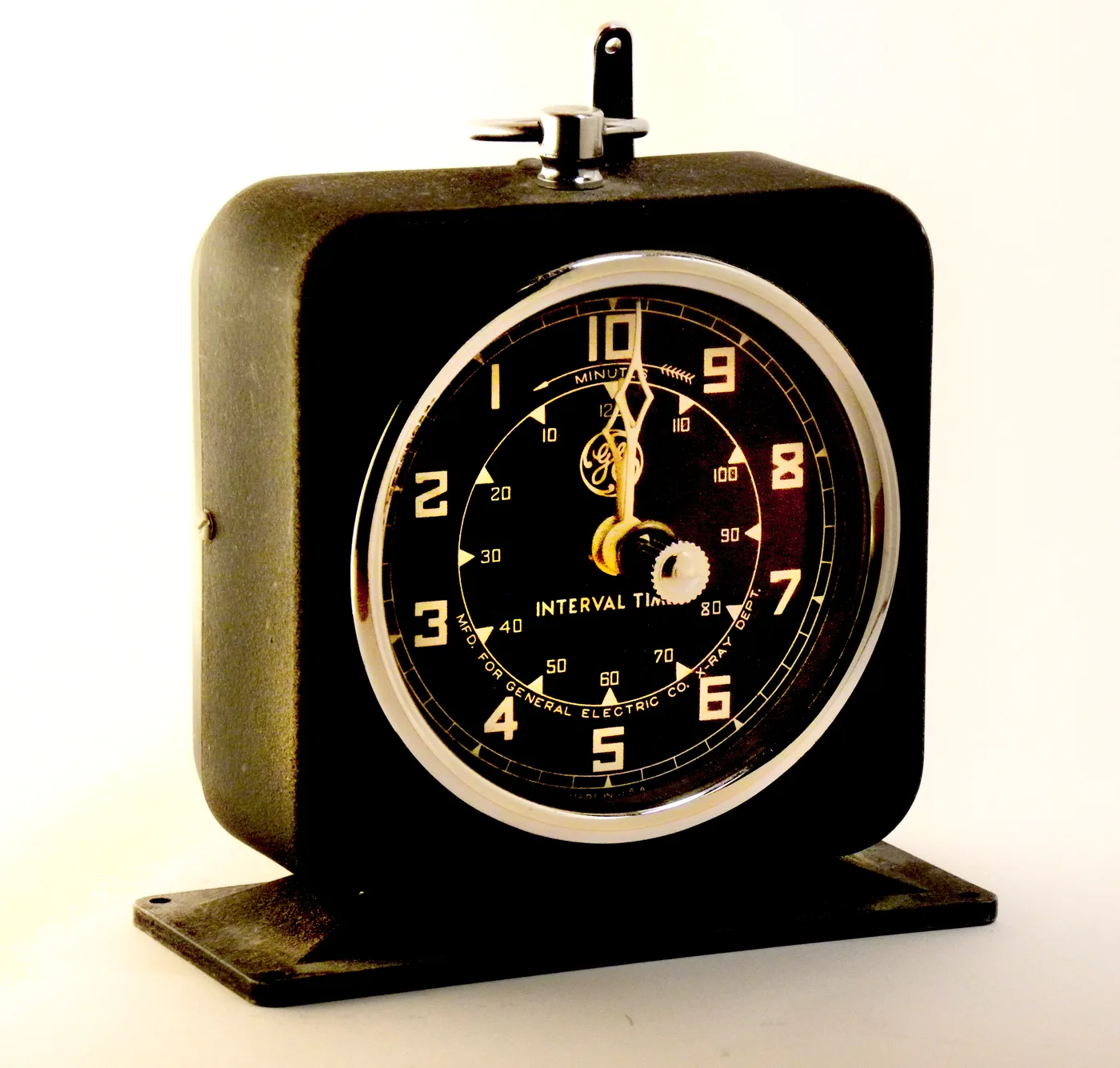
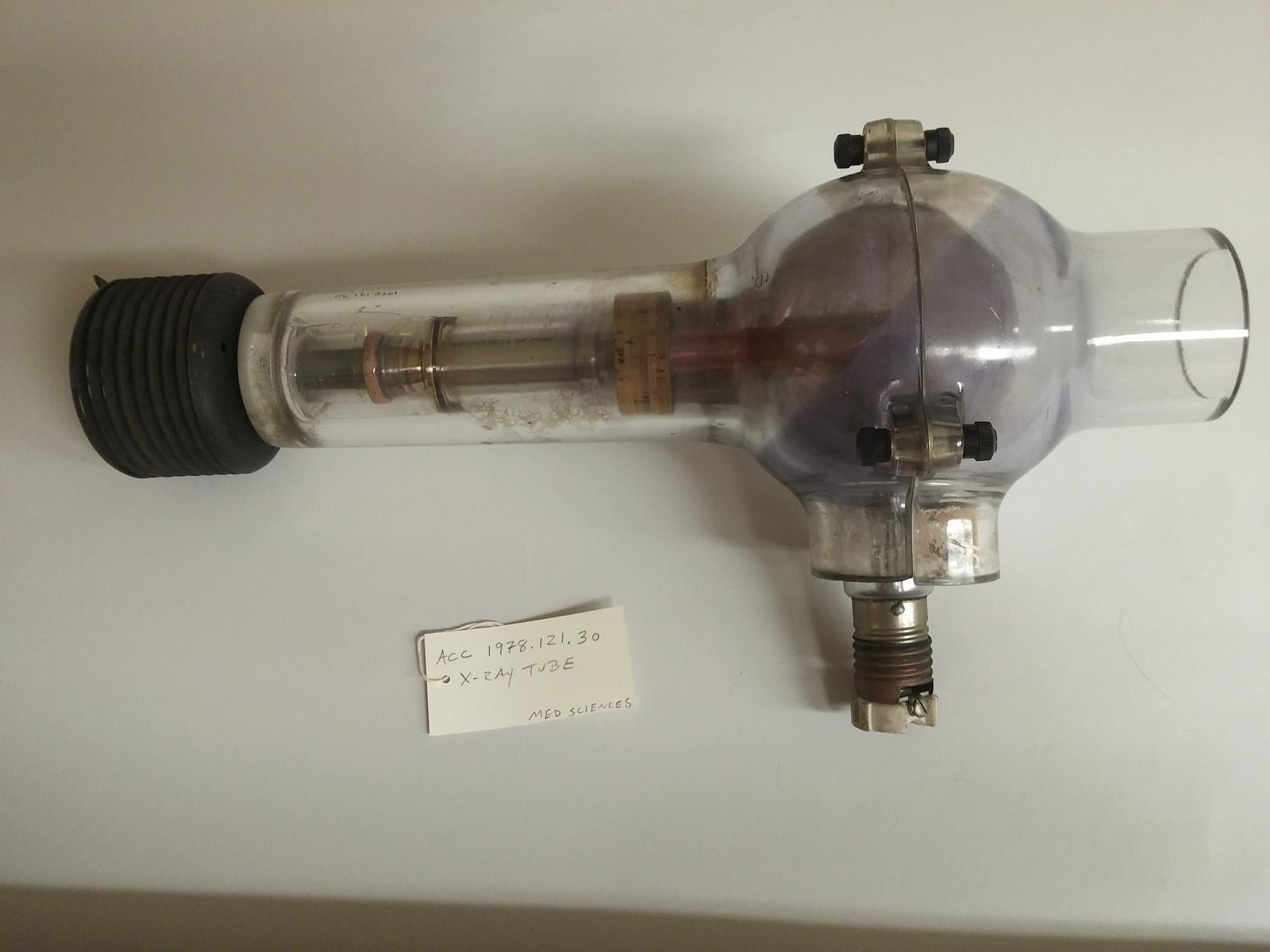
An early Coolidge X-ray tube used at the University of Maryland. The Smithsonian dates this specimen to approximately 1918 and identifies General Electric as maker.
Made by General Electric; the museum describes William D. Coolidge’s hot-cathode tube design. GE HealthCare is independent from GE Aerospace.
Look-alike illustration · not the exact model, laboratory device or museum artifact.
October 31, 1918 · museum object dateDated artifact
Aviation
GE Moss turbosupercharger · Packard Liberty engine
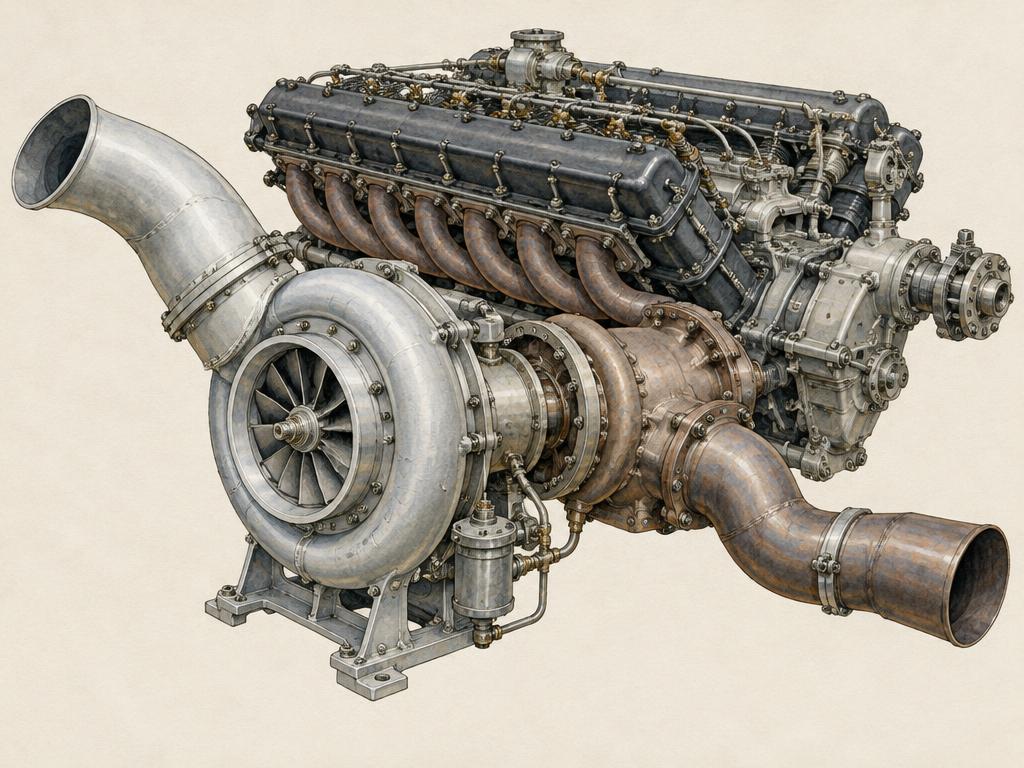
The National Air and Space Museum preserves a turbo-supercharged Liberty 12 Model A engine. Its account explicitly credits Packard with the piston engine and GE with the turbosupercharger assembly, developed at Lynn, Massachusetts, under Sanford Moss using GE turbine and centrifugal-compressor expertise. The dated object is the combined engine, not a separately dated turbocharger launch.
GE-built turbosupercharger on a Packard-built engine. The complete Liberty engine is not attributed to GE; the museum records this specimen as not on display.
Illustration: GE Heritage Village · AI-generated representative artwork · AI-generated artwork · not a historical photograph
Look-alike illustration · not the exact model or museum artifact.
1919 · specimen madeDated artifact
Aviation
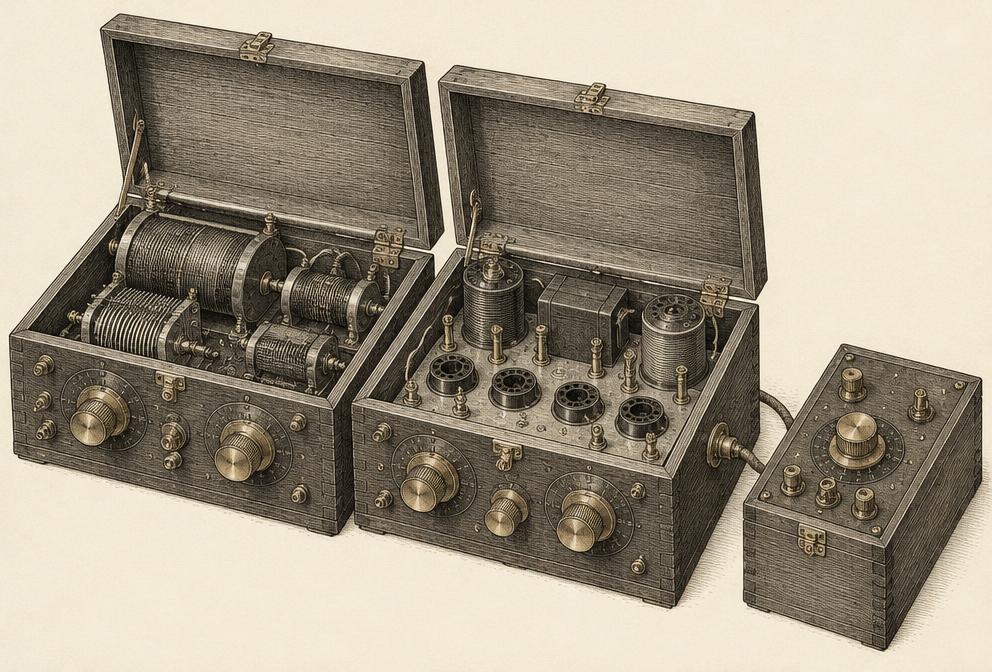
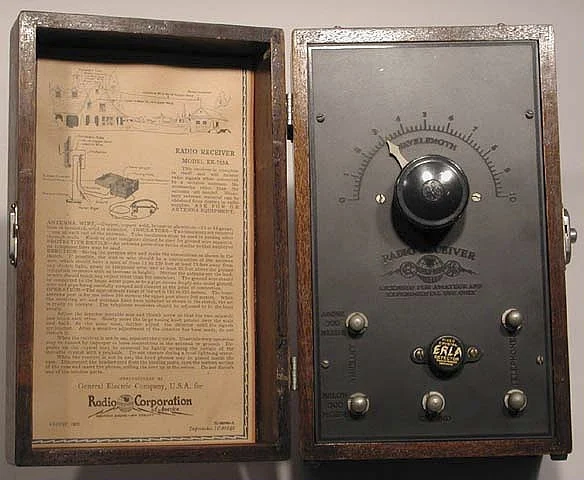
GE / RAF Type 10 aircraft radio receiver
A wooden-cased aircraft wireless receiver with tuner, detector/amplifier and control box for receiving wireless telephone signals. The Smithsonian identifies a five-valve arrangement, with valves missing from the preserved specimen, and markings naming GE, USA, and RAF Type 10.
General Electric Company is the recorded maker; an aviation communications artifact, not a British GEC product or a claim that GE invented aircraft radio.
Photo: Joe Mabel via Wikimedia Commons · CC BY-SA 4.0
1920 · outfit introducedIntroduced
Healthcare
GE portable Coolidge X-ray outfit
A portable Coolidge X-ray outfit used by radiologist Charles A. Waters in the 1920s. The museum states that the outfit was introduced in 1920; that is not necessarily this specimen’s manufacture date.
General Electric-made medical equipment using William D. Coolidge’s hot-cathode X-ray tube design; GE HealthCare became independent in January 2023.
Look-alike illustration · not the exact model or museum artifact.
1920s · museum specimen rangeDated artifact
Healthcare
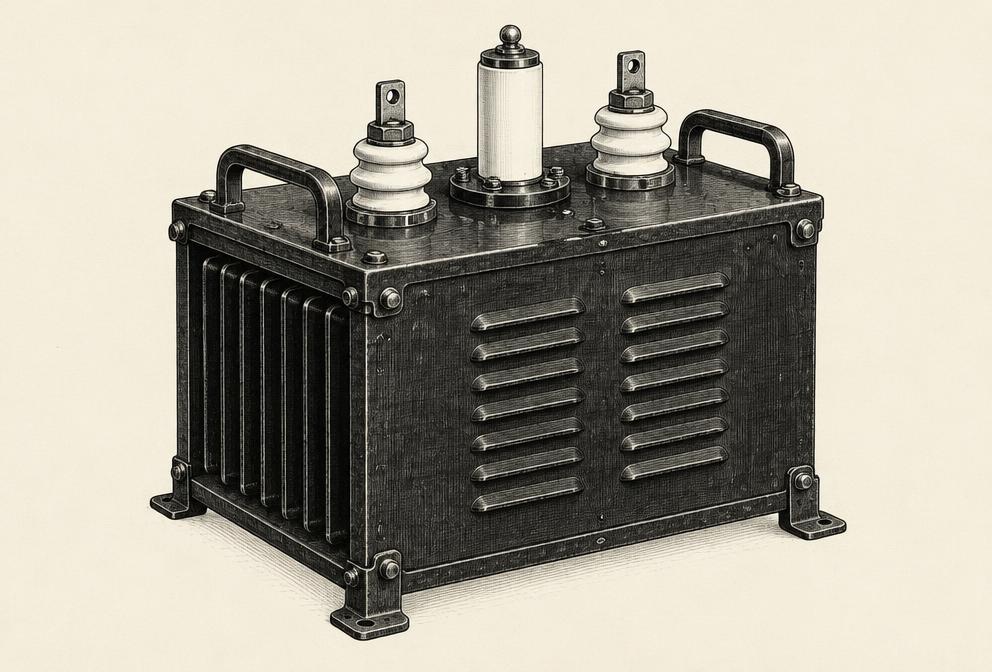
GE Type K916 portable X-ray transformer
Transformer No. 1639439, Type K916, associated with the GE portable X-ray outfit used by radiologist Charles A. Waters. The museum dates manufacture to the 1920s; 1920 is the start of that decade, not an exact making year.
Smithsonian identifies General Electric Company, Schenectady, as maker. A separately cataloged component, not a second copy of the complete portable X-ray outfit.
Illustration: GE Heritage Village · AI-generated representative artwork · AI-generated artwork · not a historical photograph
Symbolic illustration · not the original artwork, archive document or historical scene.
1920–1930 · training-record seriesDocumented use
Education & lighting
NELA School of Lighting training records
The NELA Park collection's School of Lighting series preserves quarterly reports and course descriptions for training sales staff and customers in applying lighting products. The dates describe this document series, not the founding of NELA Park or an invention.
GE Lighting educational and business records preserved by Smithsonian; training documentation, not a GE-made classroom artifact.
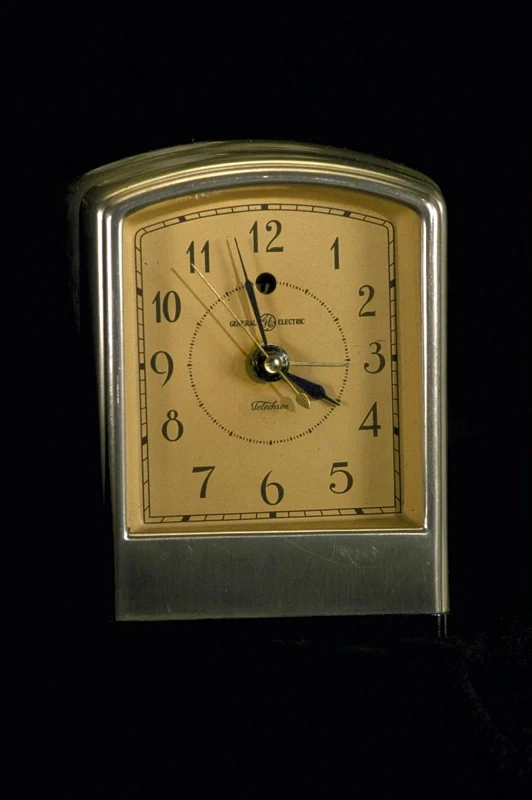
An electric alarm clock with Telechron workings made for General Electric and an Art Deco metal case. The year field is the beginning of the museum’s 1927–1935 range, not an introduction date.
Historical General Electric artifact; maker attribution follows the museum record.
Photo: Michael Rivera via Wikimedia Commons · CC BY-SA 4.0
Look-alike illustration · not the exact model or museum artifact.
1930s · museum datingDated artifact
Healthcare
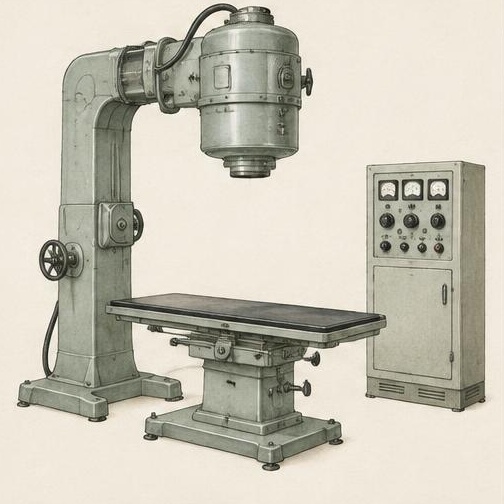
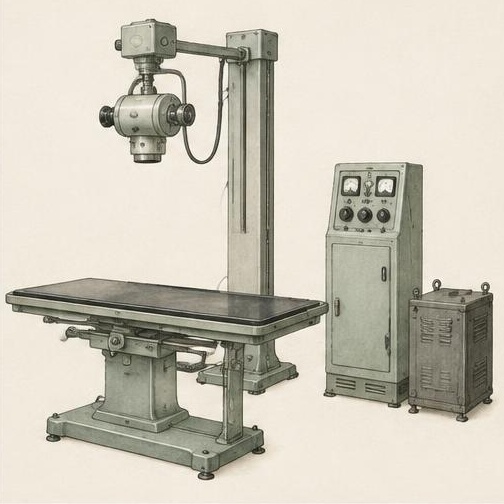
GE Maximar deep-therapy X-ray set
A Chicago-made deep-therapy X-ray set with oil-cooled tube and power supply on a gantry stand, couch and control panel. The museum dates it broadly to the 1930s, not a precise introduction year.
Made by the United States General Electric business or its X-ray division, not the unrelated British GEC. GE HealthCare became independent in January 2023.
Illustration: GE Heritage Village · AI-generated representative artwork · AI-generated artwork · not a historical photograph
Look-alike illustration · not the exact model, laboratory device or museum artifact.
Circa 1930 · museum citationDated artifact
Healthcare
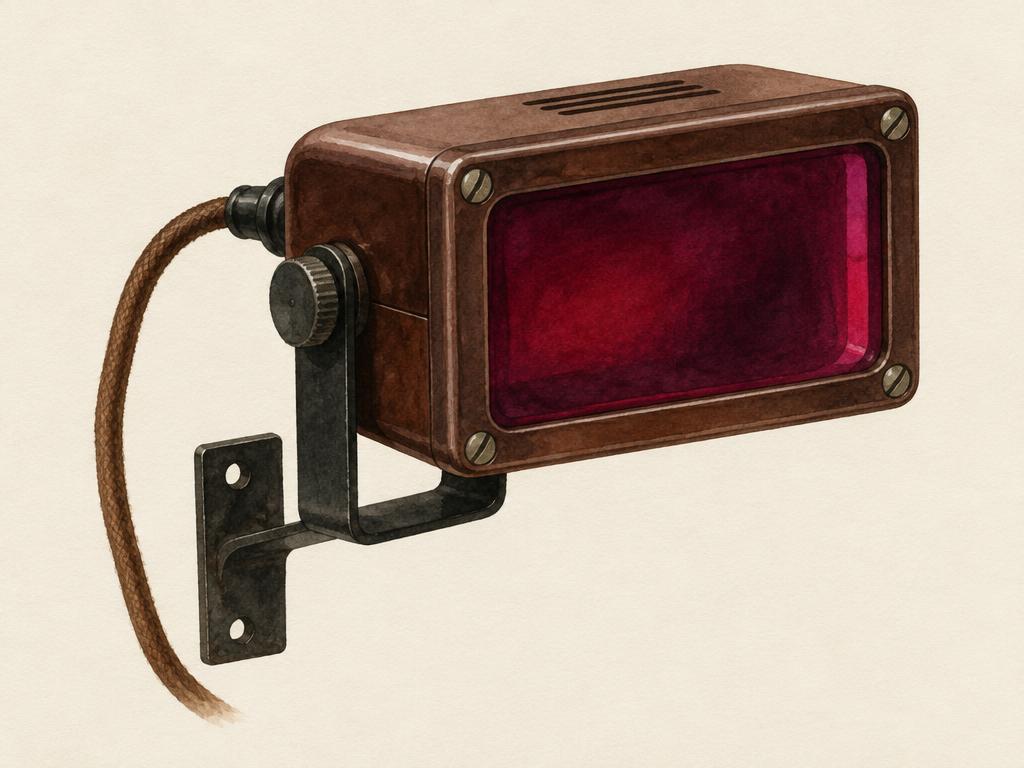
GE X-ray Corporation Model 2 safelight
Ingenium's Canadian collection preserves a Chicago-made Model 2 safelight marked General Electric X-ray Corporation. Its dark red-purple screen provided working illumination for photographic and X-ray film development while protecting the film image. The museum's citation gives circa 1930, not a precise launch date.
General Electric X-ray Corp. is the recorded manufacturer. A film-processing accessory, not an X-ray source or a claim that GE invented darkroom safelights.
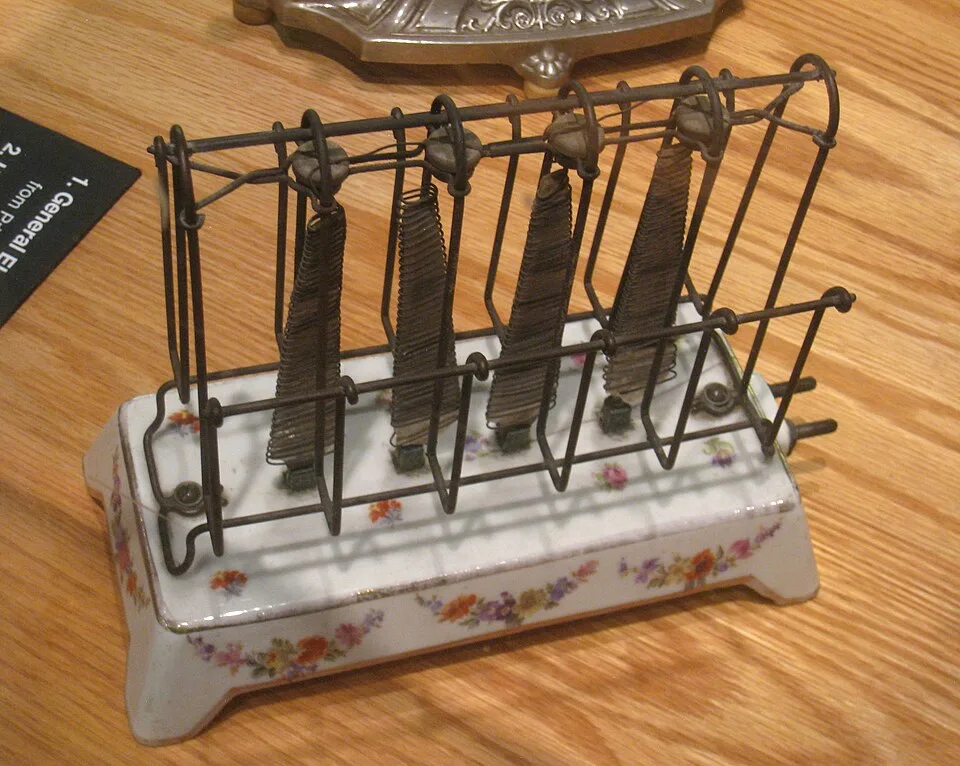
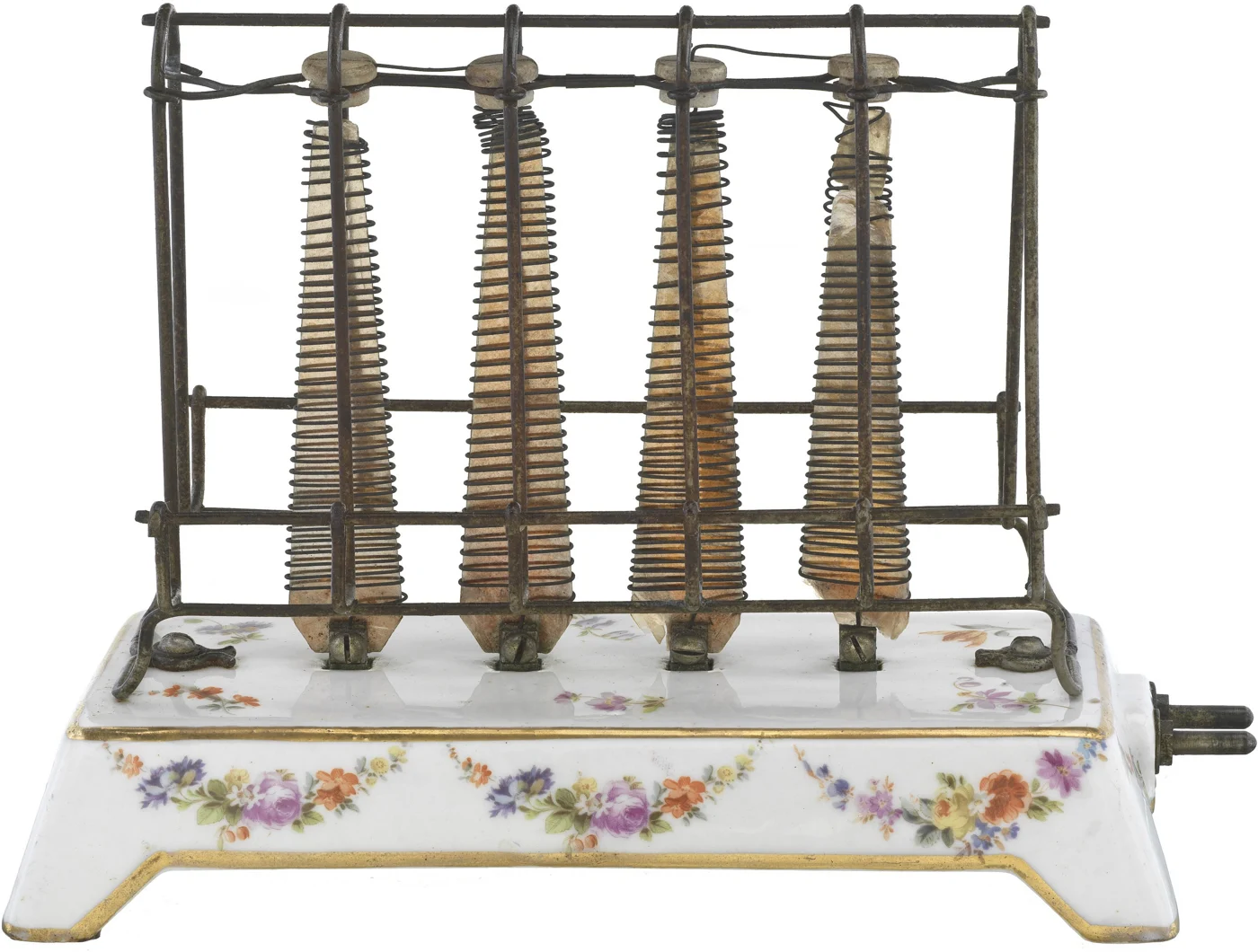
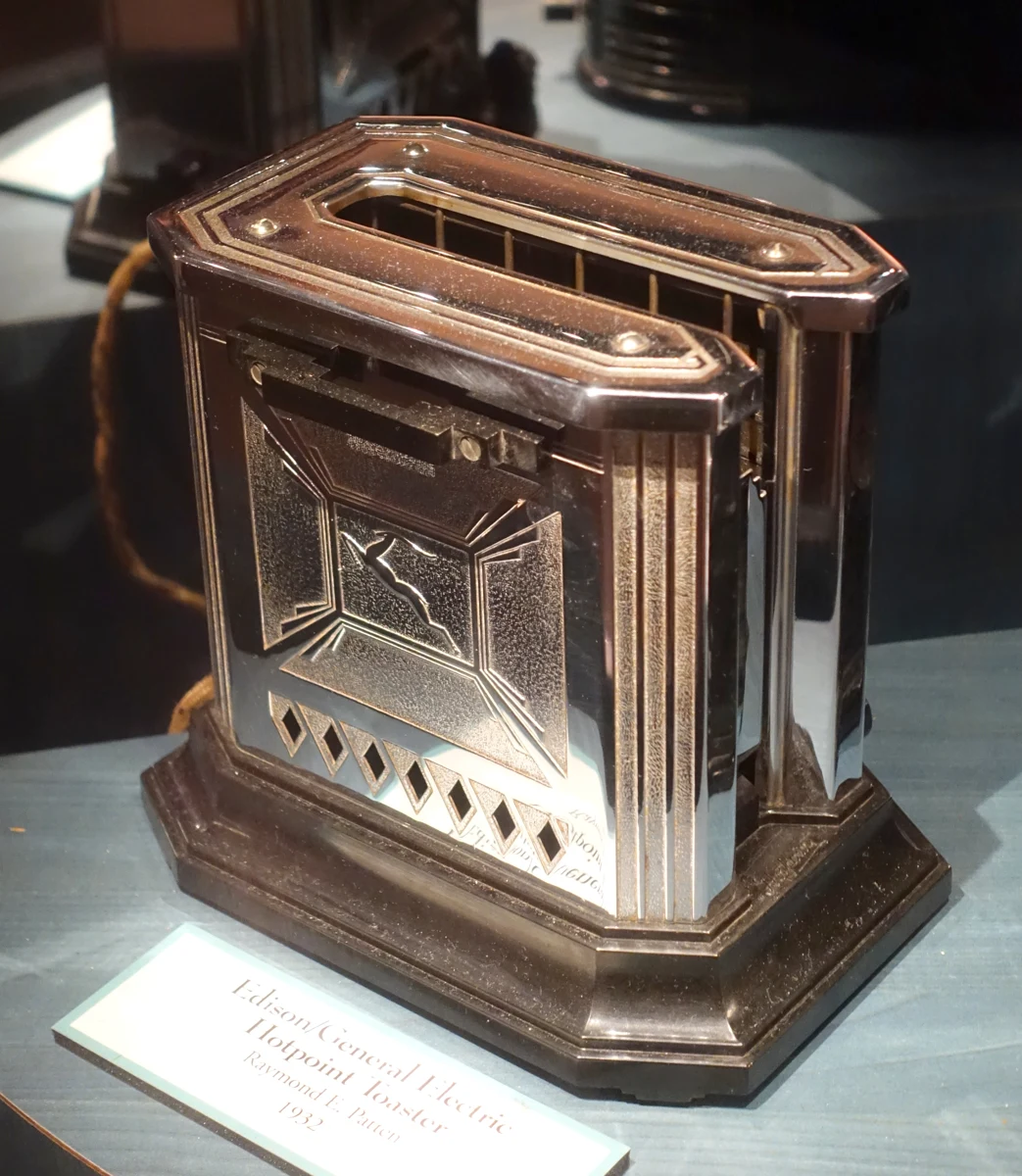
Edison General Electric Hotpoint “Gazelle” toaster
A Hotpoint “Gazelle” toaster attributed to Edison General Electric and designer Raymond E. Patten in the museum-exhibit photograph description. Photograph documentation does not establish GE invention priority.
Historical Edison General Electric / Hotpoint appliance, as attributed by the museum-exhibit photograph.
Look-alike illustration · not the exact model or museum artifact.
1933–1950 · museum date rangeDated artifact
Healthcare
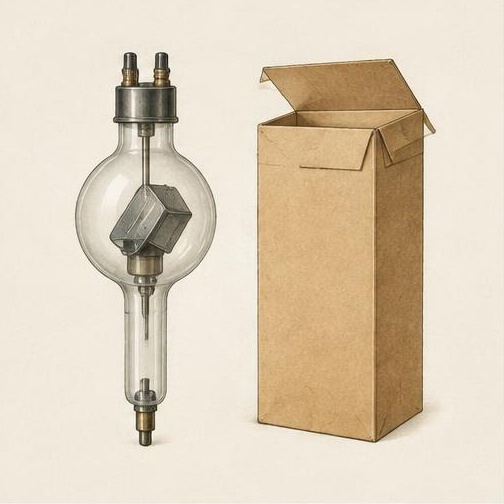
GE CDX-3 dental X-ray tube
A GE CDX-3 dental X-ray tube with a small pipe, preserved in its original box. The museum gives a 1933–1950 date range, not a single launch year.
Made by the United States General Electric business or its X-ray division, not the unrelated British GEC. GE HealthCare became independent in January 2023.
Illustration: GE Heritage Village · AI-generated representative artwork · AI-generated artwork · not a historical photograph
Look-alike illustration · not the exact model or museum artifact.
1933–1938 · installed by 1938Dated artifact
Healthcare
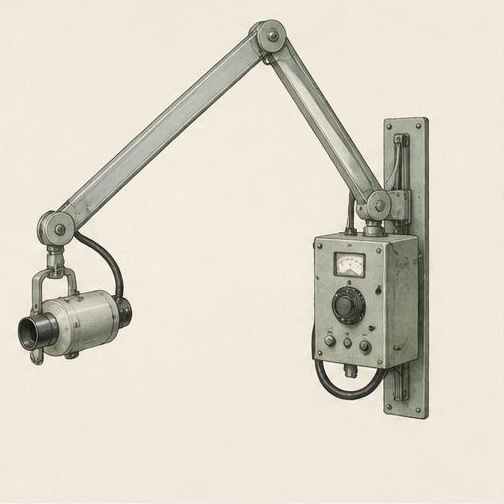
GE CDX-E dental X-ray apparatus
A wall-mounted dental X-ray apparatus identified as made by General Electric Co., U.S.A. The museum dates it 1933–1938 and states it was installed by 1938.
Made by the United States General Electric business or its X-ray division, not the unrelated British GEC. GE HealthCare became independent in January 2023.
Illustration: GE Heritage Village · AI-generated representative artwork · AI-generated artwork · not a historical photograph
Circa 1933Dated artifact
Plastics & materials
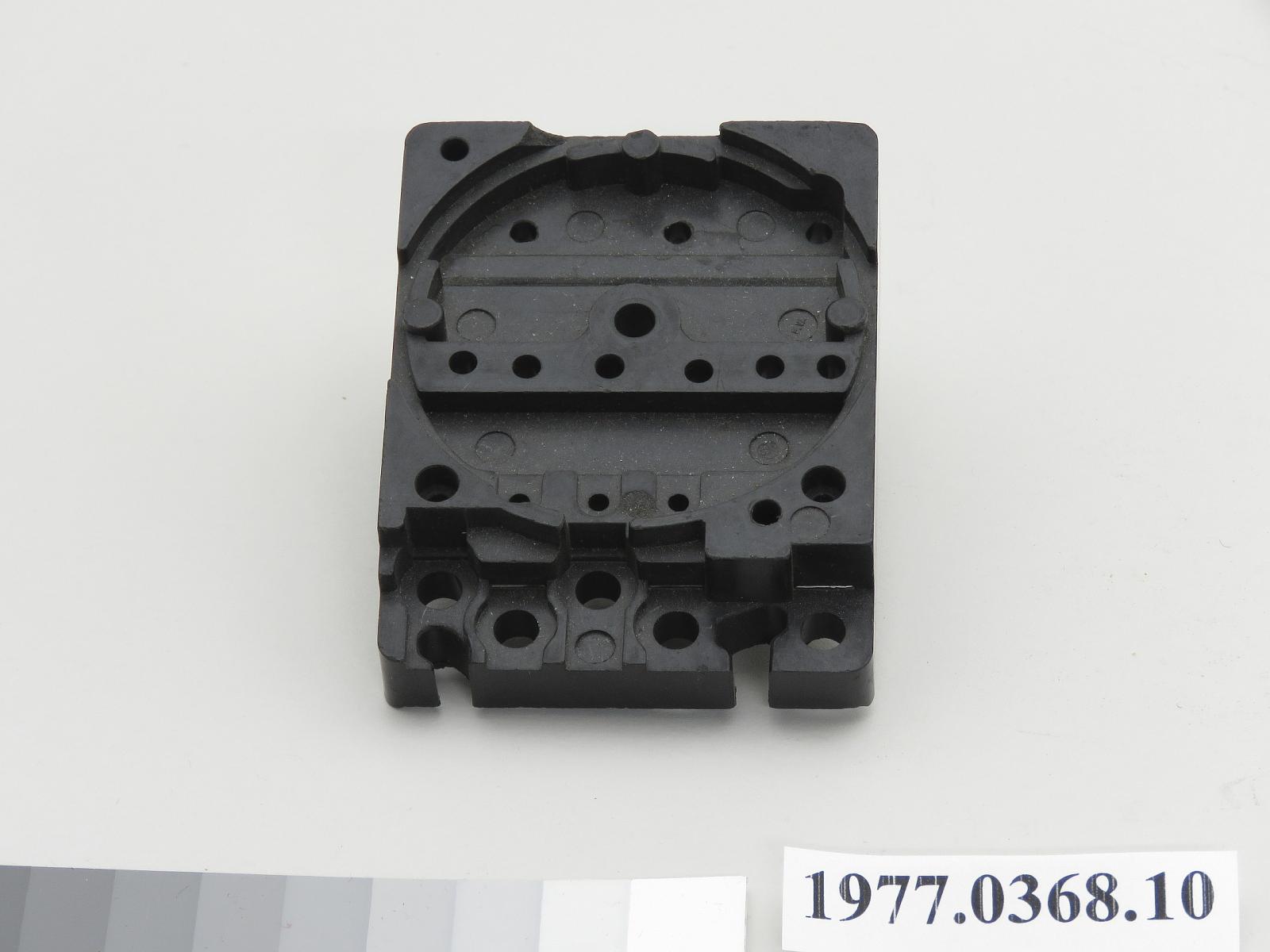
Hotpoint stove switch plate in GE Textolite
A Hotpoint electric-range switch plate made from phenolic plastic. The Smithsonian identifies Textolite as a GE-manufactured phenolic material; the appliance part is cataloged with Hotpoint as maker.
GE relationship is the Textolite material, while Hotpoint is the listed part maker. This is not a claim that GE invented all phenolic plastics.
A General Electric automobile radio receiver, model B-52, dated 1934 in the Smithsonian collection. This is a car-radio model, not an aircraft designation.
Made by General Electric Company; a historical GE artifact, not a claim that GE invented its entire product category.
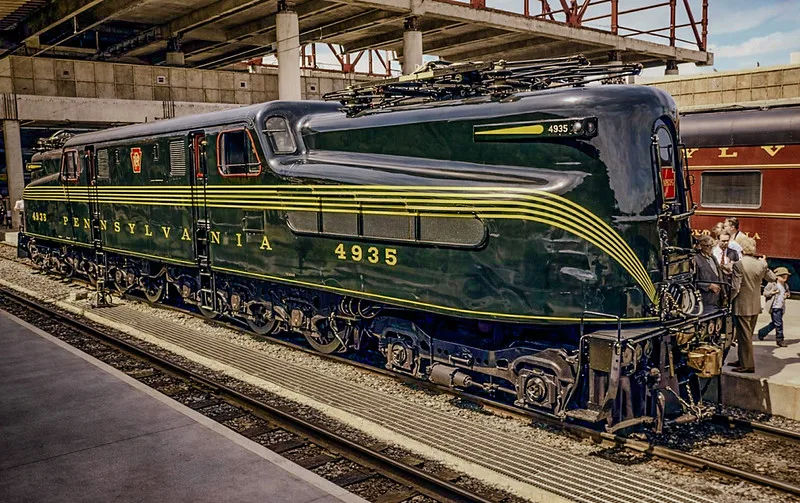
PRR GG1 No. 4935. GE built a share of the 139 GG1 locomotives and supplied electrical equipment; others were built by the Pennsylvania Railroad's Altoona shops.
Historical GE-built and GE-equipped locomotive design shared with the Pennsylvania Railroad.
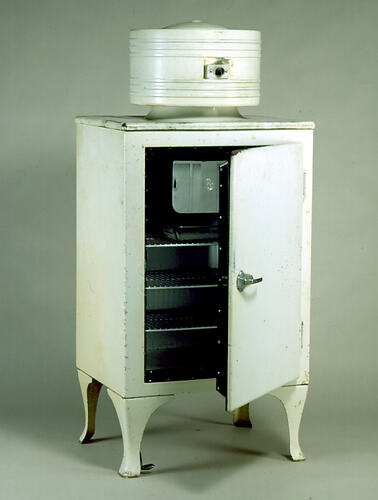
Authentic Museums Victoria photograph · specimen SH 910353.
Post 1935 · museum datingDated artifact
Home & electronics
GE Monitor Top CK-2-C16 · South Africa to Australia
Museums Victoria's distinct CK-2-C16 specimen was US-made and used in Johannesburg before travelling to Australia. The museum says post-1935 manufacture, while the donor recalled a 1935 purchase; these are separate evidence statements, not a precise build date. 1935 serves as the catalog's lower-bound year.
Museum identifies General Electric Corp., Schenectady, as manufacturer. A documented international appliance ownership story, not proof of Australian manufacture or a new GE invention.
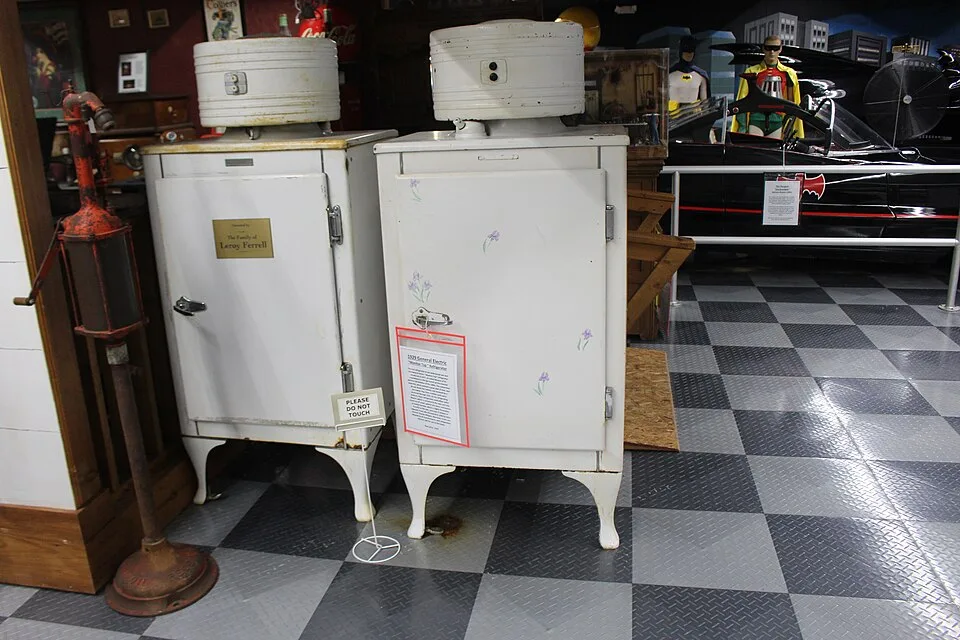
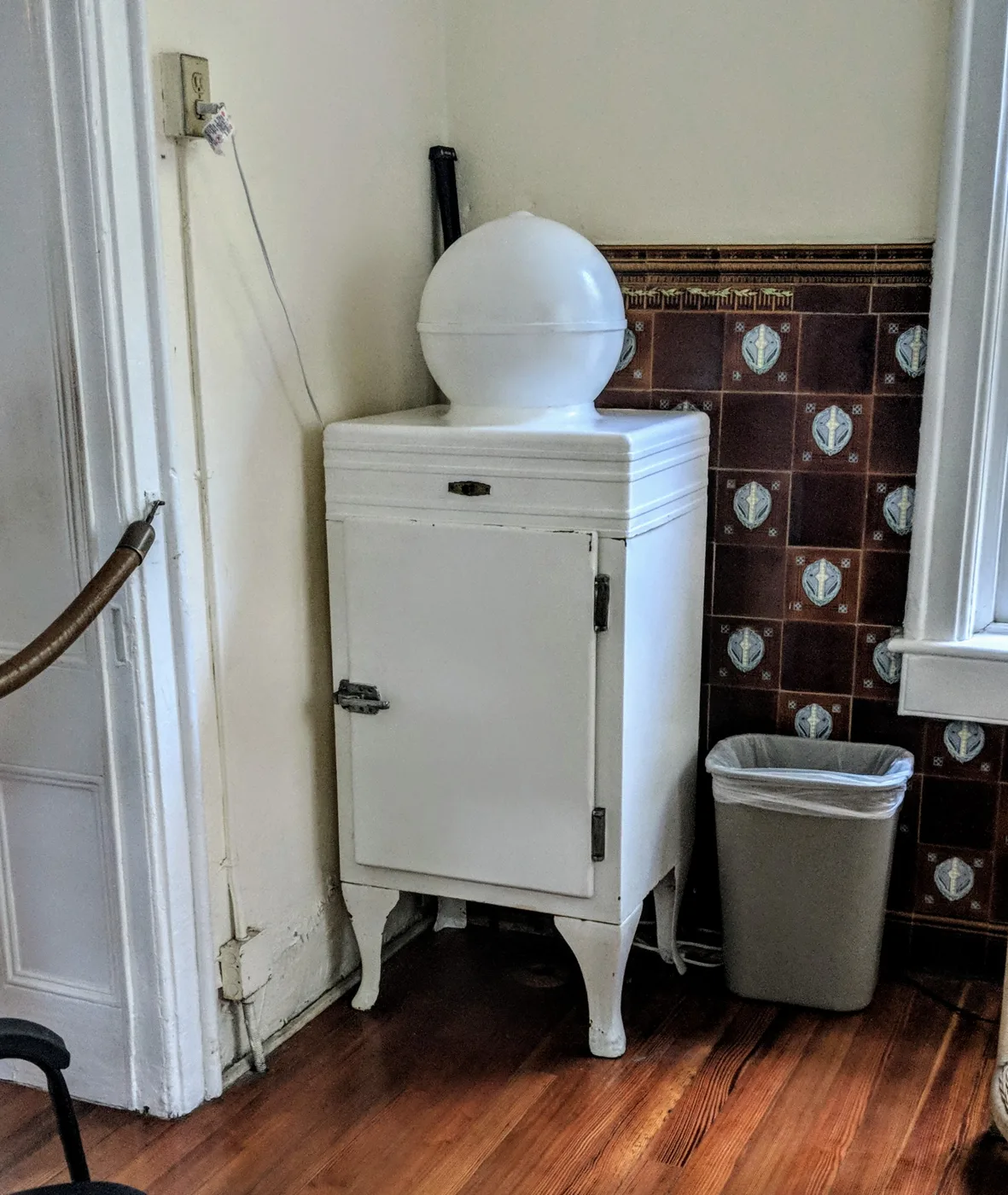
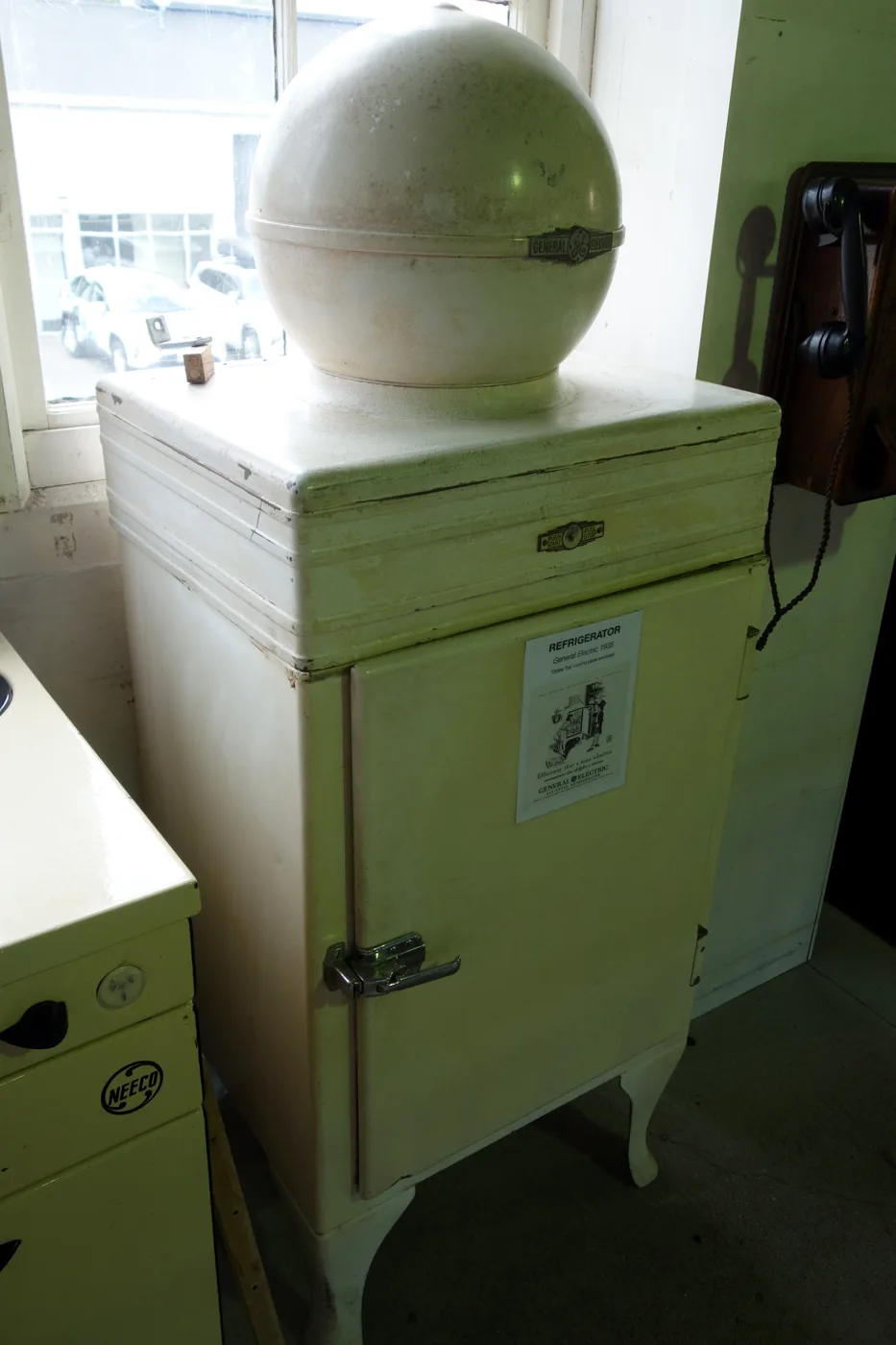
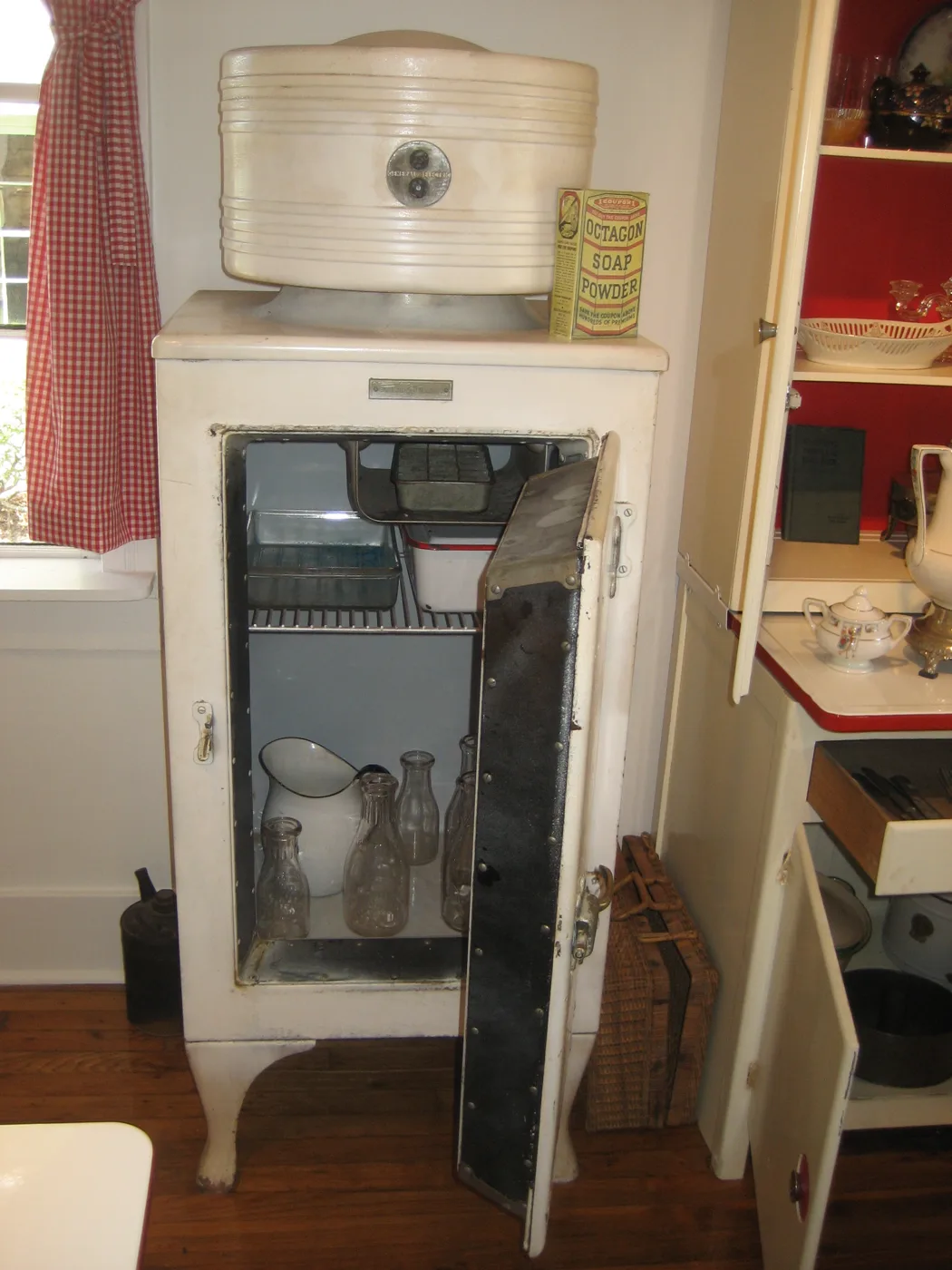
A 1930s General Electric refrigerator preserved at the Ernest Hemingway House in Key West, photographed in 2019; the artifact date follows the archive description.
Made by GE's refrigerator business; GE Appliances was acquired by Haier in 2016 and uses the GE brand under license.
Look-alike illustration · not the exact model or museum artifact.
1938 · museum artifact dateDated artifact
Healthcare
GE Kenotron KX-8 X-ray machine
A GE X-ray machine with couch, control panel, impulse timer, transformer, Bucky diaphragm, screen, tube and accessories. The museum dates the Chicago-made equipment to 1938.
Made by the United States General Electric business or its X-ray division, not the unrelated British GEC. GE HealthCare became independent in January 2023.
Illustration: GE Heritage Village · AI-generated representative artwork · AI-generated artwork · not a historical photograph
Development began 1943Documented model
Aviation
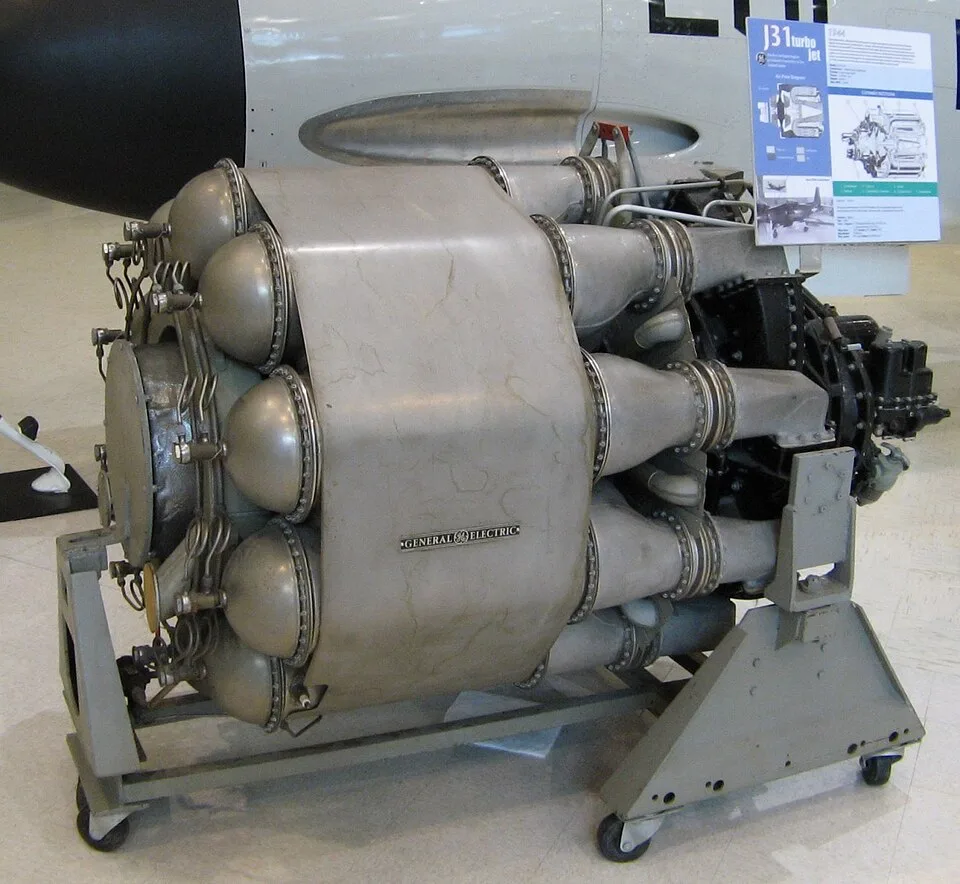
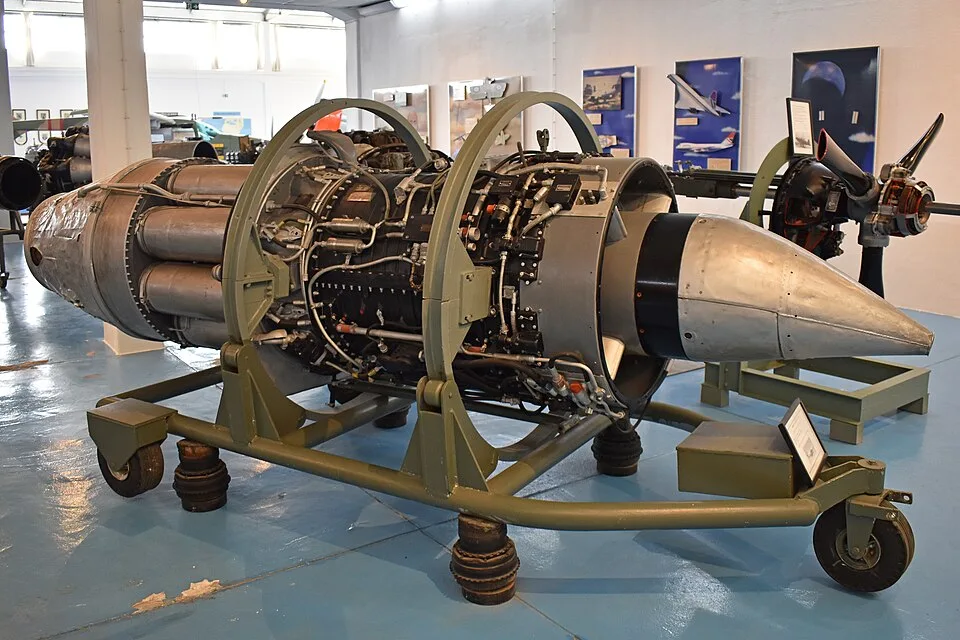
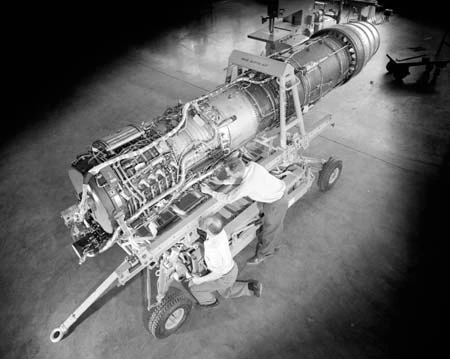
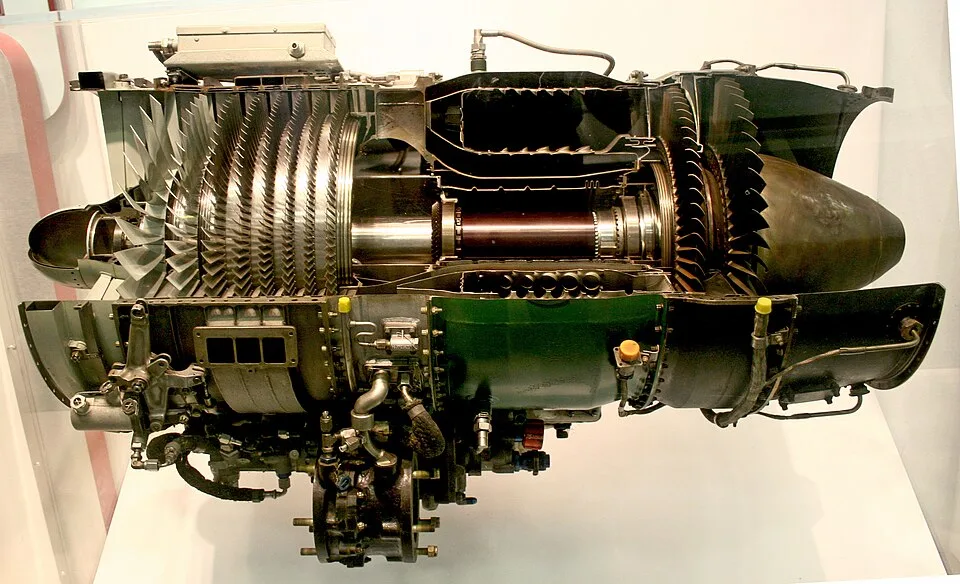
General Electric J31 turbojet
Developed from the Whittle design, the J31 (I-16) was among the first American production jet engines; shown at the National Naval Aviation Museum, Pensacola.
Built by General Electric's aircraft-engine business (today GE Aerospace).
Photo: Ogema1912 via Wikimedia Commons · CC BY-SA 4.0
1945 · dated photograph (not launch year)Documented use
Healthcare
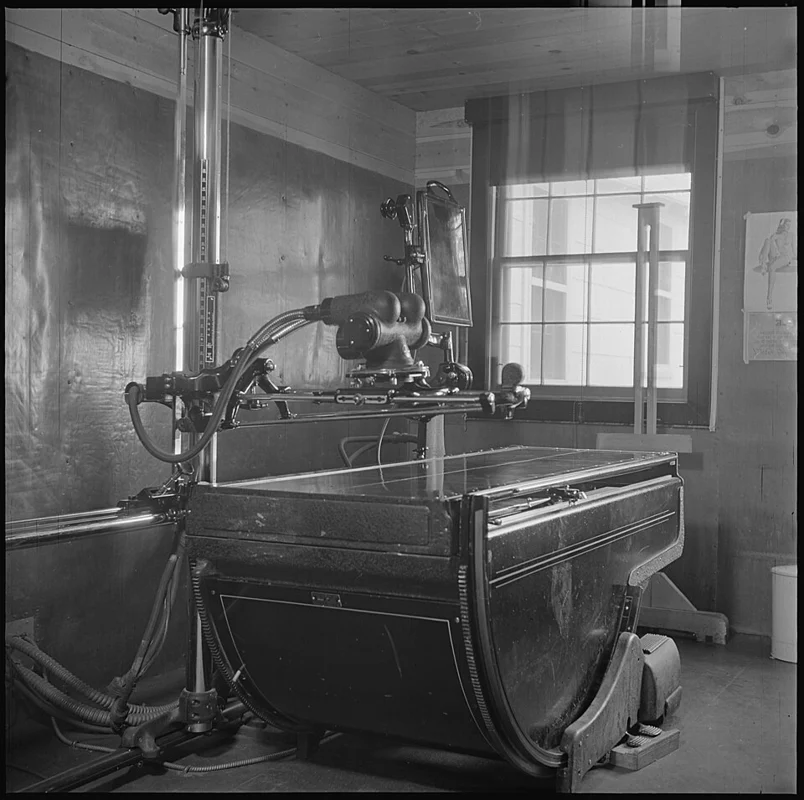
GE X-ray machine · Amache hospital
A General Electric X-ray machine at the hospital of the Amache incarceration camp in Colorado, documented in a War Relocation Authority photograph in October 1945.
Historical GE Healthcare equipment; GE HealthCare became an independent company in 2023.
1946 · documented photograph (not introduction)Documented use
Aviation
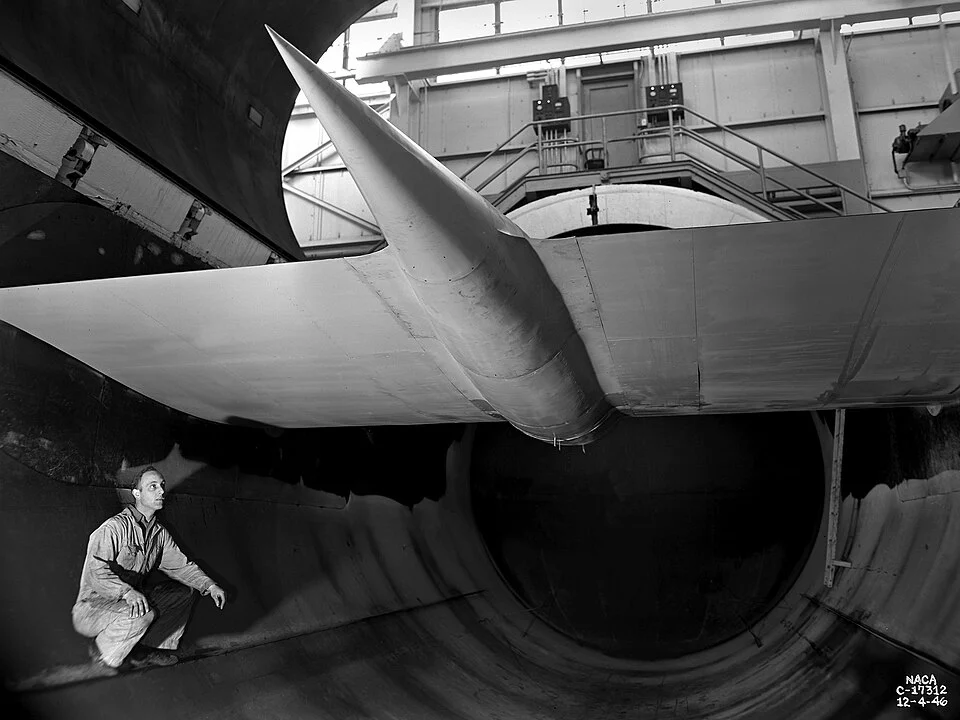
GE TG-100A experimental turboprop (T31 program)
Photographed in the NACA Lewis Altitude Wind Tunnel on 21 December 1946. The archive describes an experimental GE turboprop whose development was cancelled in May 1947; it did not enter production aircraft. Year shown is the documented photograph year, not an asserted product introduction.
Historical General Electric engine; aviation business successor: GE Aerospace.
Look-alike illustration · not the exact model or museum artifact.
1947 · dated componentsDated artifact
Computing & industry
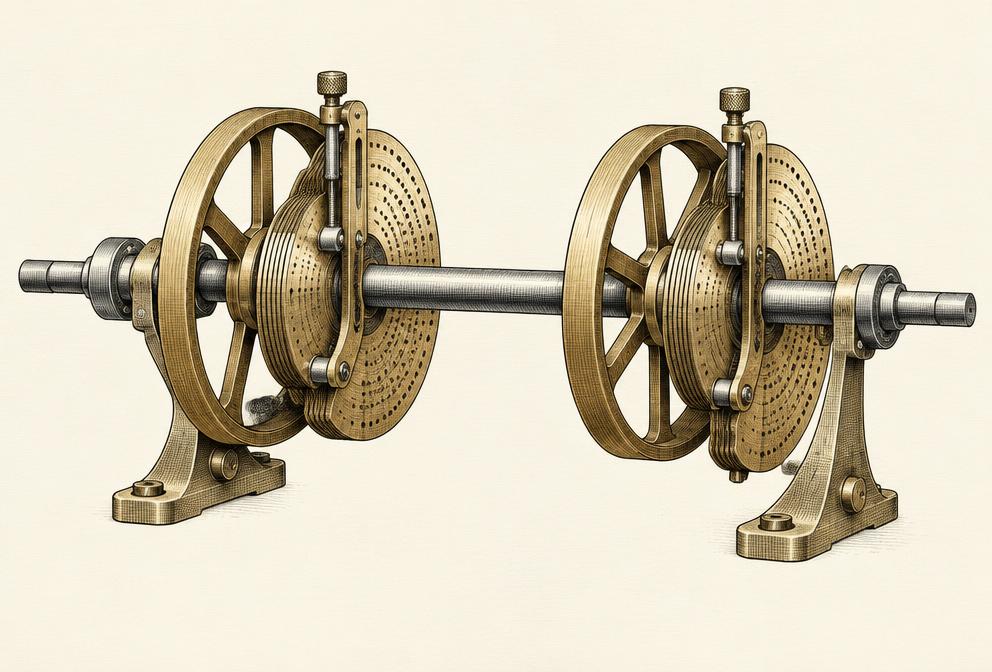
GE-built UCLA differential analyzer integrators
Two wheel-and-disc integrators from UCLA's room-sized mechanical analog computer. UCLA contracted with GE for the instrument, in use by 1947 for university and industrial engineering problems; the Smithsonian preserves it in disassembled components.
Smithsonian identifies General Electric Company as maker. A GE-built computing instrument, not a claim that GE invented the differential analyzer.
Look-alike illustration · not the exact model or museum artifact.
1948 · installation photographDocumented use
Power generation
GE Belle Isle commercial gas turbine
miSci's GE photographic record documents a turbine after installation at Oklahoma Gas and Electric's Belle Isle power station. The museum describes it as GE's first commercial gas turbine; that scoped description is not a worldwide first-invention claim. The photo date is not a manufacturing date.
GE-produced turbine at a customer's power station. miSci reports its later return to GE's Schenectady Works for display and ASME landmark recognition.
Illustration: GE Heritage Village · AI-generated representative artwork · AI-generated artwork · not a historical photograph
Look-alike illustration · not the exact model, laboratory device or museum artifact.
1948 · museum artifact dateDated artifact
Lighting
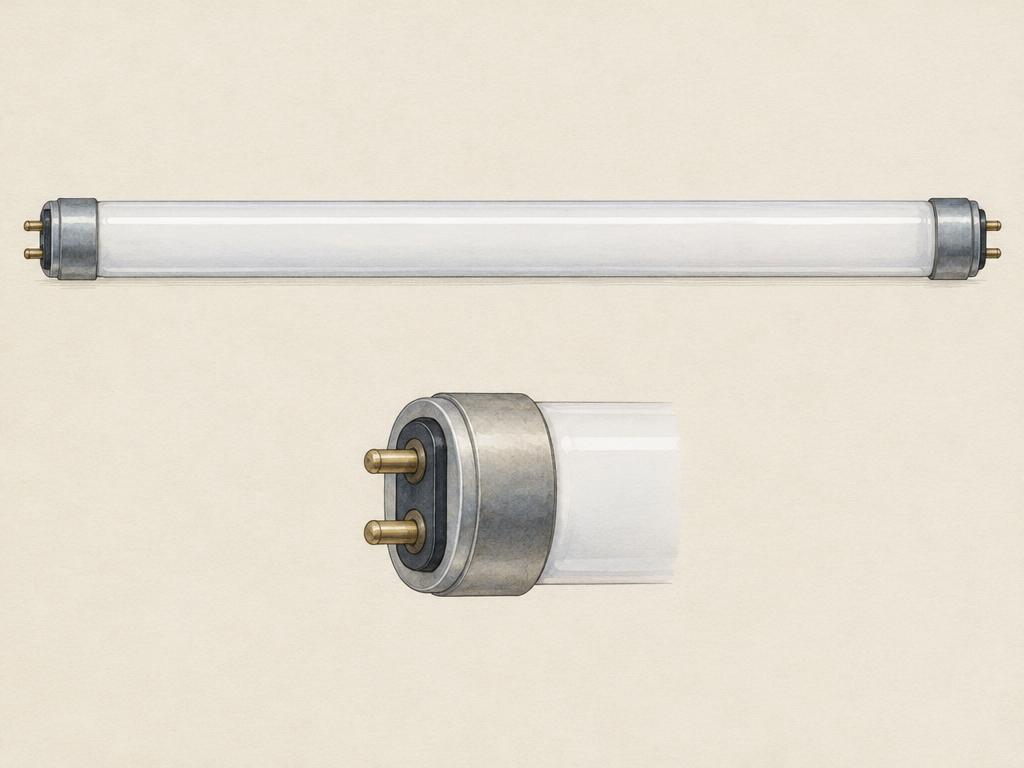
GE Standard Cool White fluorescent lamp
Ingenium identifies this U.S.-made General Electric Standard Cool White lamp as a phosphor-coated fluorescent glass tube with bipin connections. The collection dates the specimen to 1948; this is not the first introduction date of fluorescent lighting.
General Electric is the museum-recorded U.S. maker. An industrial lighting specimen preserved in Canada, distinct from GE's experimental demonstration lamps.
Photo: Daderot · preview extracted and resized · CC0 1.0
January 1949 · documented laboratory use, not introductionDocumented use
Materials & research
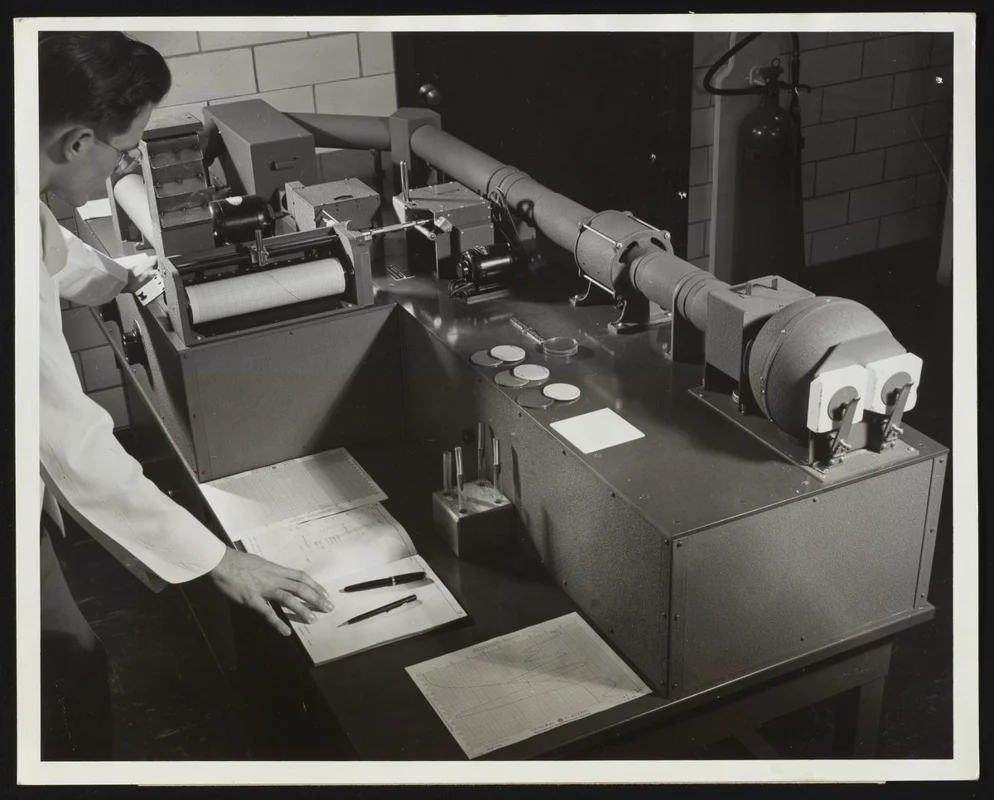
GE recording spectrophotometer for plastics research
A General Electric recording spectrophotometer photographed in the Hercules Powder Company plastics laboratory at Parlin, New Jersey. The museum identifies its use for color matching and testing dyes and pigments in plastics; this is not a claim that GE invented spectrophotometry.
Historical GE instrument used by Hercules Powder Company; the laboratory is not represented as a GE facility.
Look-alike illustration · not the exact model or museum artifact.
Introduced 1949 · specimen date unstatedIntroduced
Measurement & controls
GE Tristimulus Integrator
Mechanical analog color-analysis instrument used with the GE spectrophotometer; this specimen bears a GE identification tag and was donated by Rensselaer Polytechnic Institute's chemistry department.
GE is the recorded maker. The museum credits development to Hugh R. Davidson of GAF and engineering to Lewis W. Imm of Librascope; not a GE invention claim.
Illustration: GE Heritage Village · AI-generated representative artwork · AI-generated artwork · not a historical photograph
Circa 1950Dated artifact
Appliances
GE Vortalex oscillating fan, circa 1950
A General Electric Vortalex oscillating table fan dated circa 1950, from the collections of the Smithsonian's National Museum of American History and photographed in 2024.
Made by GE's appliance business; GE Appliances was acquired by Haier in 2016.
GE Amplidyne motor-generator sets in 1, 3 and 5 kW sizes, shown in a February 1951 General Electric advertisement in Electronics magazine; the Amplidyne was GE's amplifying generator for precise power control.
Made by General Electric's industrial control business; the advertisement is in the public domain for lack of copyright renewal.
Photo: Joe Haupt · preview extracted and resized · CC BY-SA 2.0
1951 · specimen madeDated artifact
Industrial electronics
General Electric Color Television Tube, single beam deflecting
A Smithsonian archive photograph documenting GE Laboratory’s single-beam-deflecting color television tube. The museum dates the experimental tube to 1951; this is not evidence of a retail television launch.
Historical General Electric artifact; maker attribution follows the museum record.
Look-alike illustration · not the exact model or museum artifact.
1954 · specimen madeDated artifact
Healthcare
GE Broadbent-Bolton X-ray cephalometer
A pedestal-model GE90-11 X-ray cephalometer, cataloged as made in Cleveland in 1954. This dental measurement apparatus is unrelated to the later GE90 aircraft engine.
Made by the United States General Electric business or its X-ray division, not the unrelated British GEC. GE HealthCare became independent in January 2023.
Illustration: GE Heritage Village · AI-generated representative artwork · AI-generated artwork · not a historical photograph
Look-alike illustration · not the exact model, laboratory device or museum artifact.
After 1954 · museum citationDated artifact
Lighting
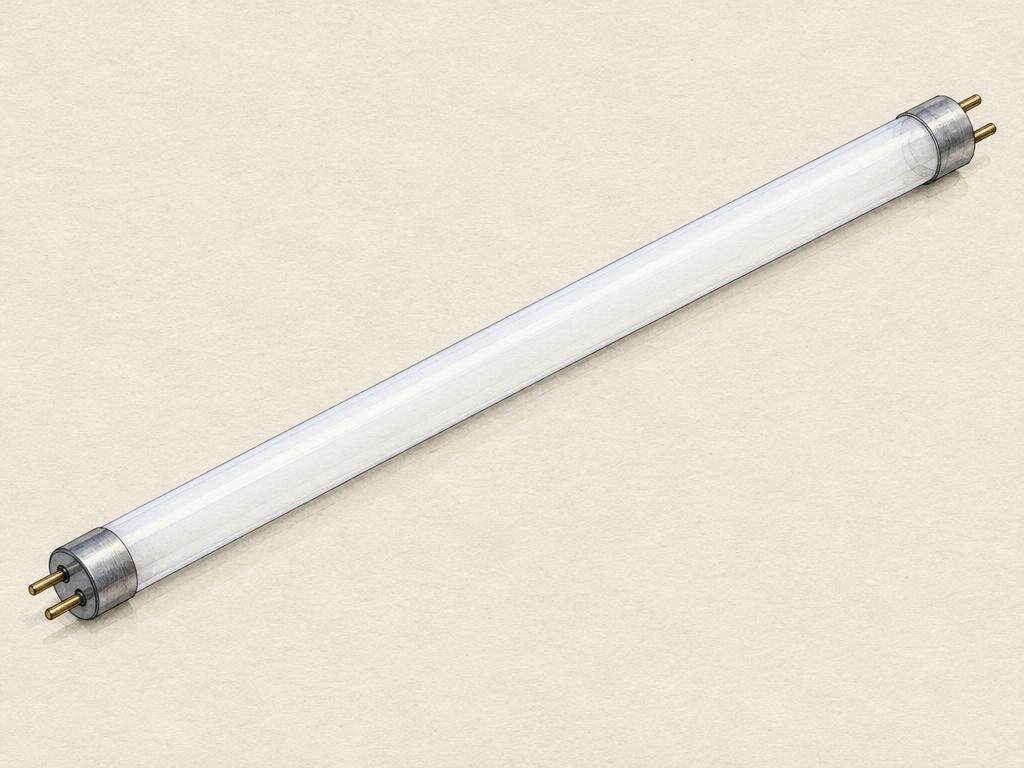
GE F48T12-CW-HO high-output fluorescent lamp
Ingenium preserves this General Electric high-output, cool-white fluorescent tube, made in the United States. The record identifies double-contact connections and a phosphor-coated glass tube. Its date field is 1954, while the formal citation says after 1954; the year here is a lower bound, not an exact manufacturing date. The drawing represents a fluorescent tube type rather than this model's exact end contacts.
General Electric is the recorded manufacturer. A distinct high-output lamp model, not a second copy of the Standard Cool White specimen or a first-invention claim.
Illustration: GE Heritage Village · AI-generated representative artwork · AI-generated artwork · not a historical photograph
Look-alike illustration · not the exact model, laboratory device or museum artifact.
December 16, 1954 · reproducible diamond productionDocumented use
Materials & research
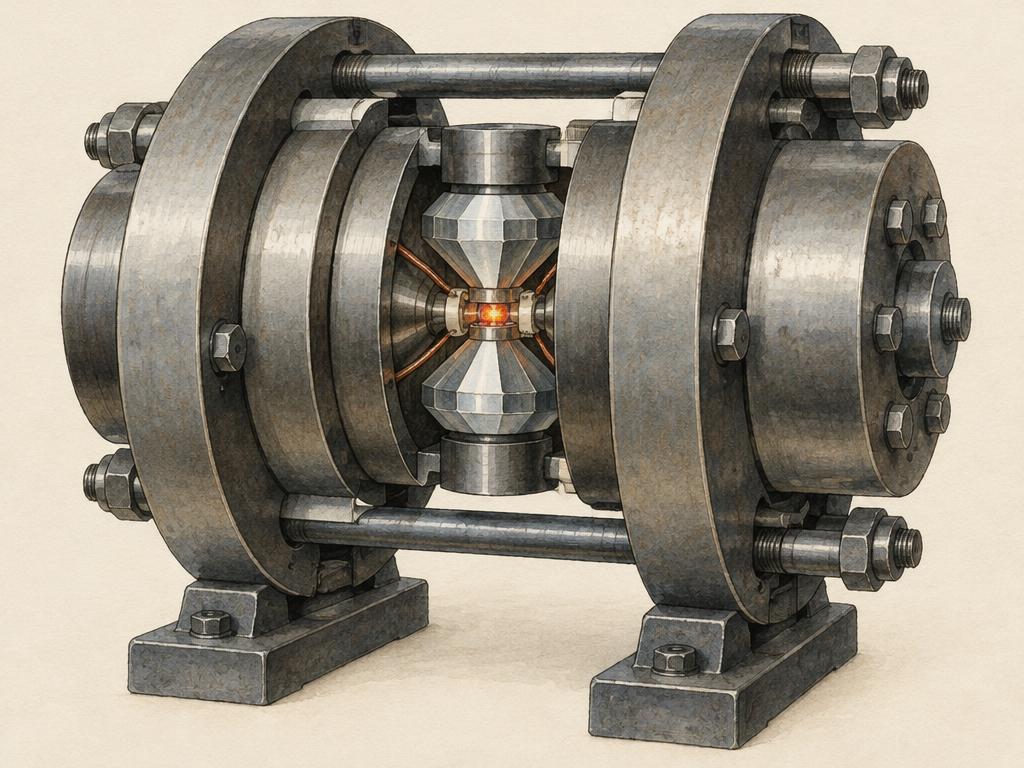
GE industrial-diamond high-pressure apparatus
ASME's engineering landmark records GE's Schenectady research by Francis P. Bundy, H. Tracy Hall and Herbert M. Strong between 1951 and 1954. From December 16, 1954, an improved apparatus consistently produced man-made diamonds at about 55 kilobars and 1,500°C, forming a basis for industrial-diamond production. ASME lists the historical landmark location as Schenectady Museum; current display availability is not established here.
General Electric research apparatus recognized as ASME landmark #198. A verified materials-engineering development, not a claim that GE invented naturally occurring diamonds.
Photo: Bill Bowels · preview extracted and resized · Public domain
1955 artifactDated artifact
Consumer electronics
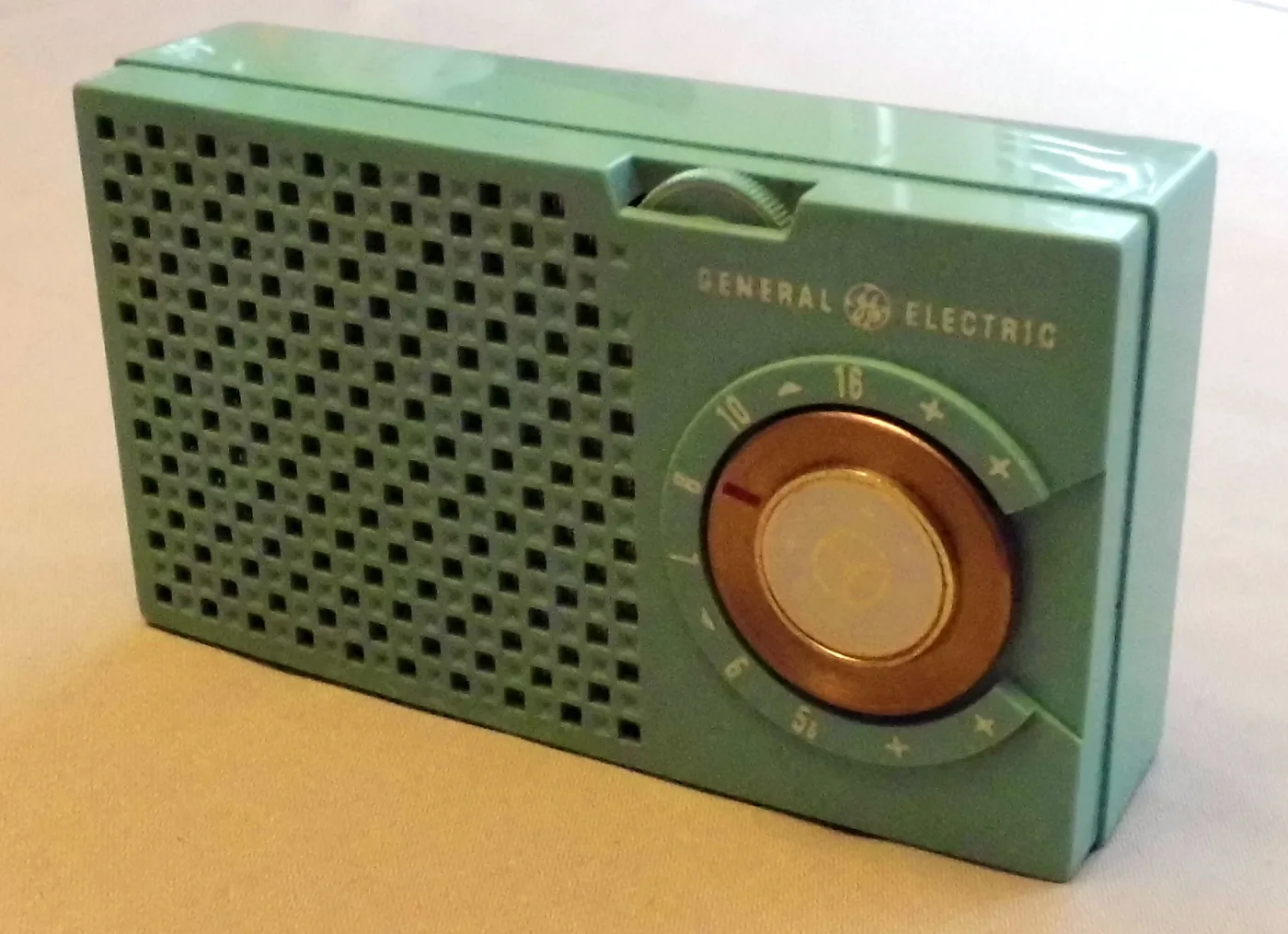
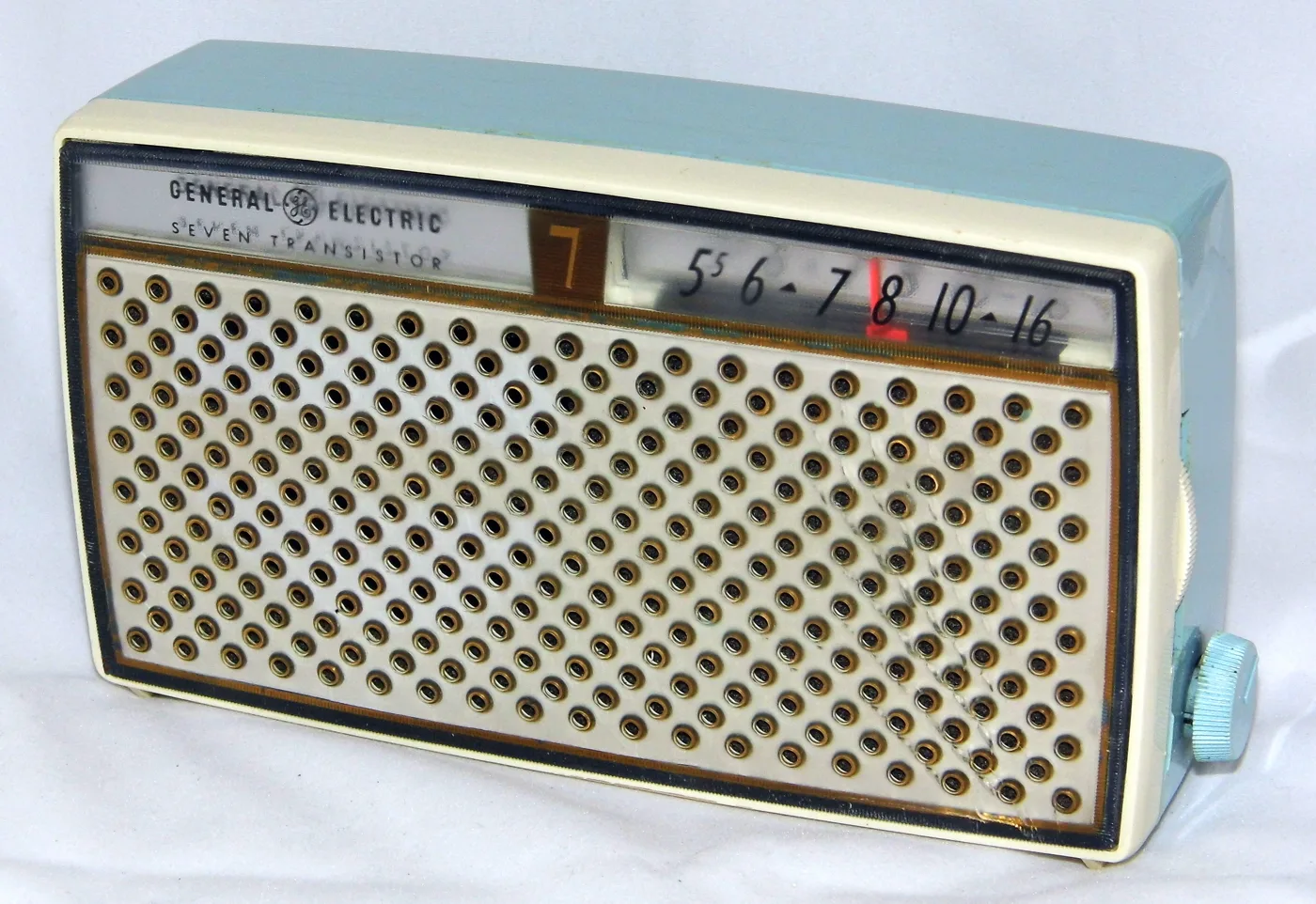
GE model 678 five-transistor radio, 1955
An aqua GE model 678 five-transistor radio, identified by collectors as GE's first commercially produced transistor radio, made in the USA in 1955 and photographed in 2013.
Made by GE's consumer-electronics business, which was sold to Thomson in 1987.
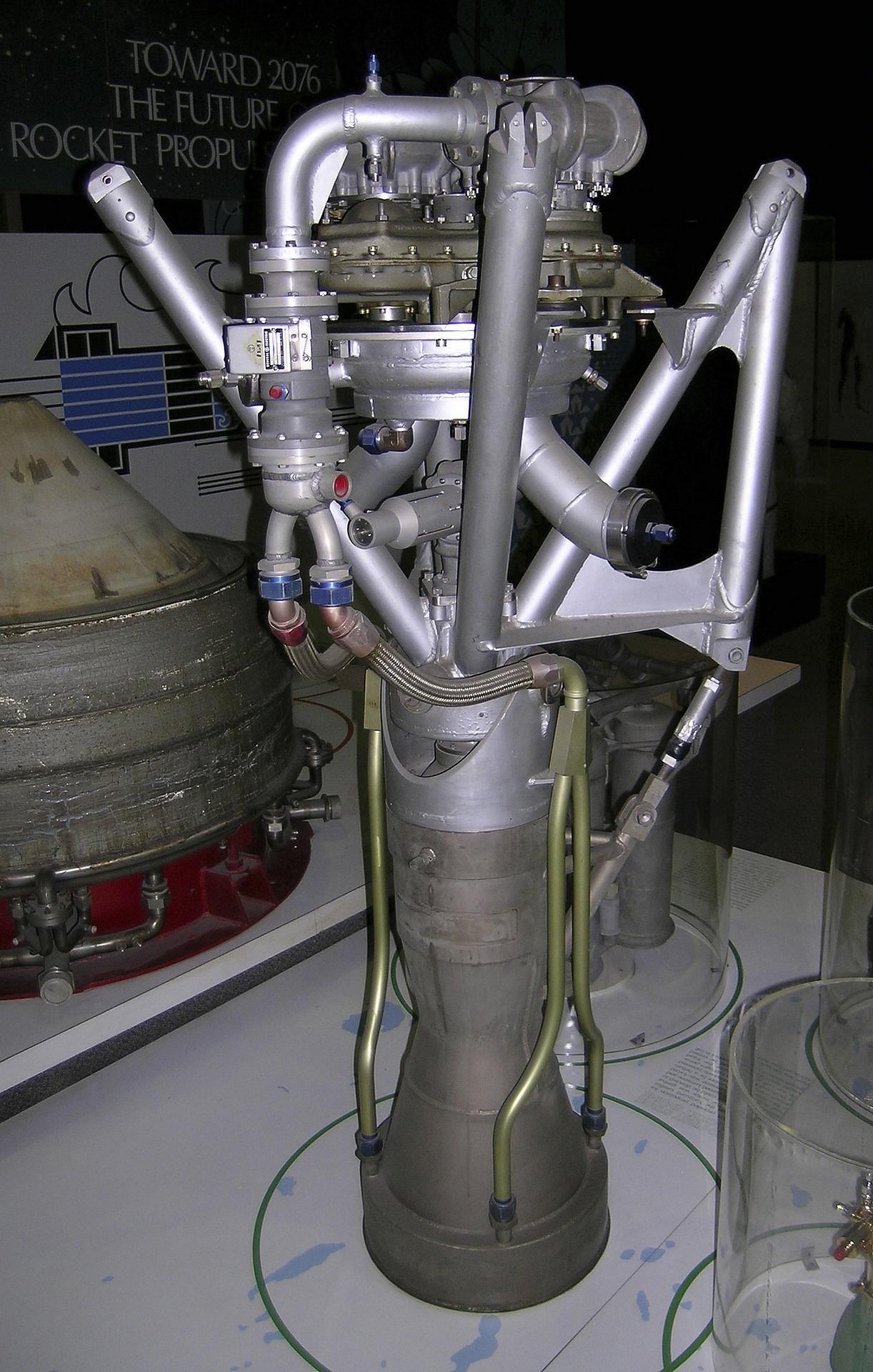
A GE-built liquid-fuel engine for the first stage of the Vanguard launch vehicle. The museum’s artifact date is a range, not a single invention or launch date.
Made by General Electric; preserved in the Smithsonian collection. Historical propulsion work, distinct from current GE Aerospace products.
Photo: Joe Haupt via Wikimedia Commons · CC BY-SA 2.0
Circa 1958Dated artifact
Space & propulsion
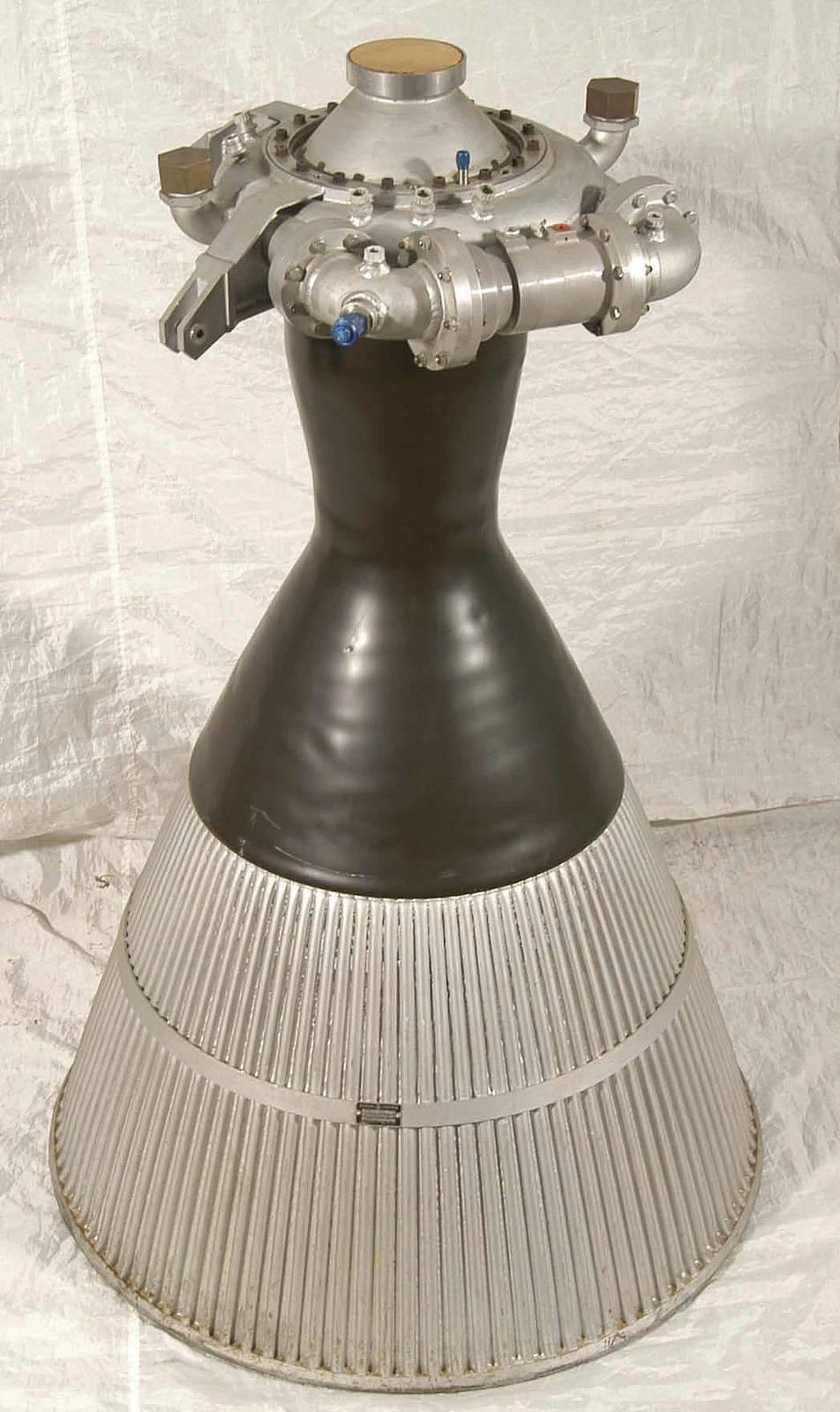
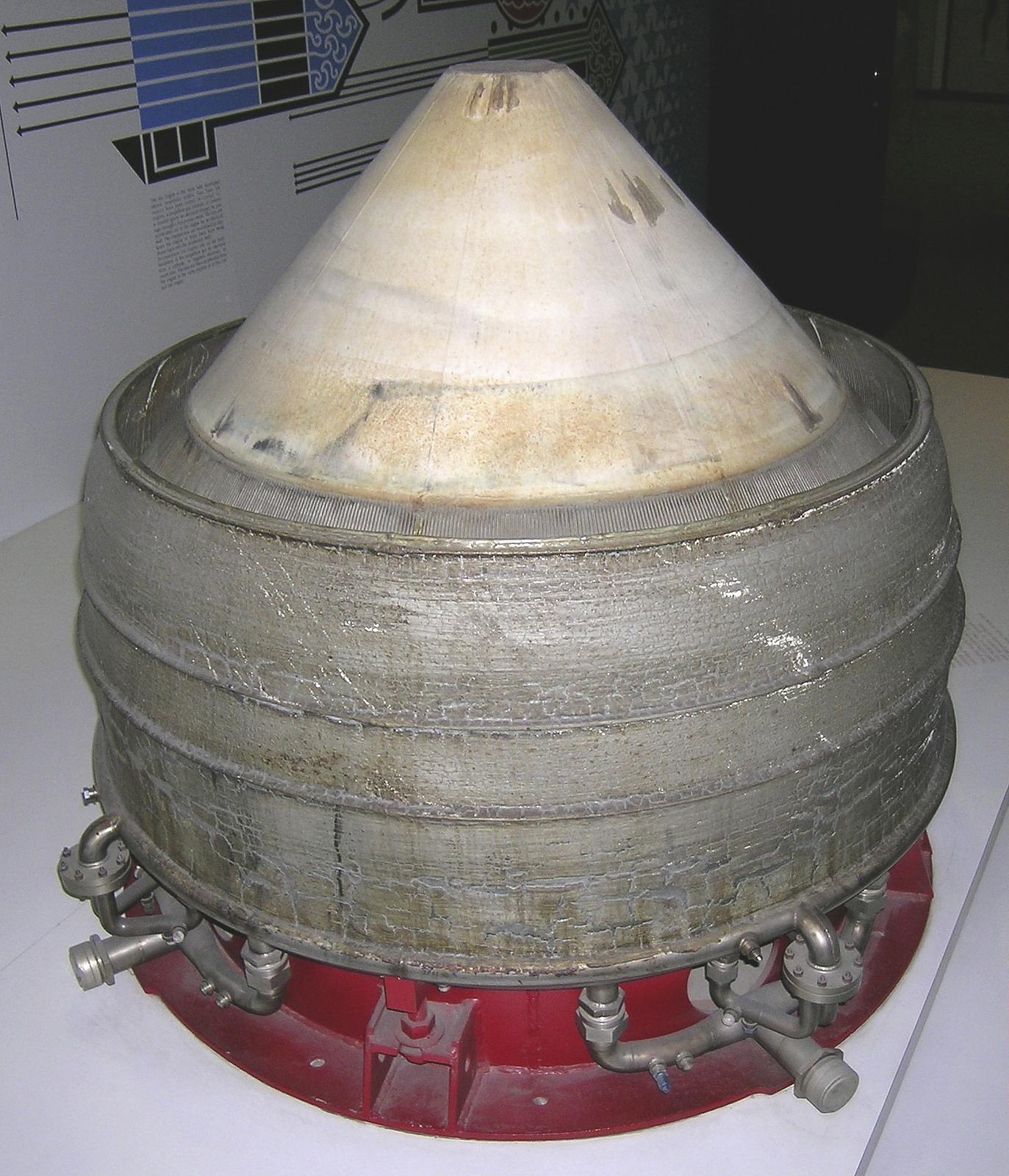
GE X-405H Vega second-stage rocket engine
A liquid-fuel rocket engine developed and built by GE for NASA’s planned Vega launch vehicle. The museum documents its second-stage role and restart capability; the record does not establish operational service.
Made by General Electric; preserved in the Smithsonian collection. Historical propulsion work, distinct from current GE Aerospace products.
Look-alike illustration · not the exact model, laboratory device or museum artifact.
1959 · archived GE brochureDocumented model
Computing & industry
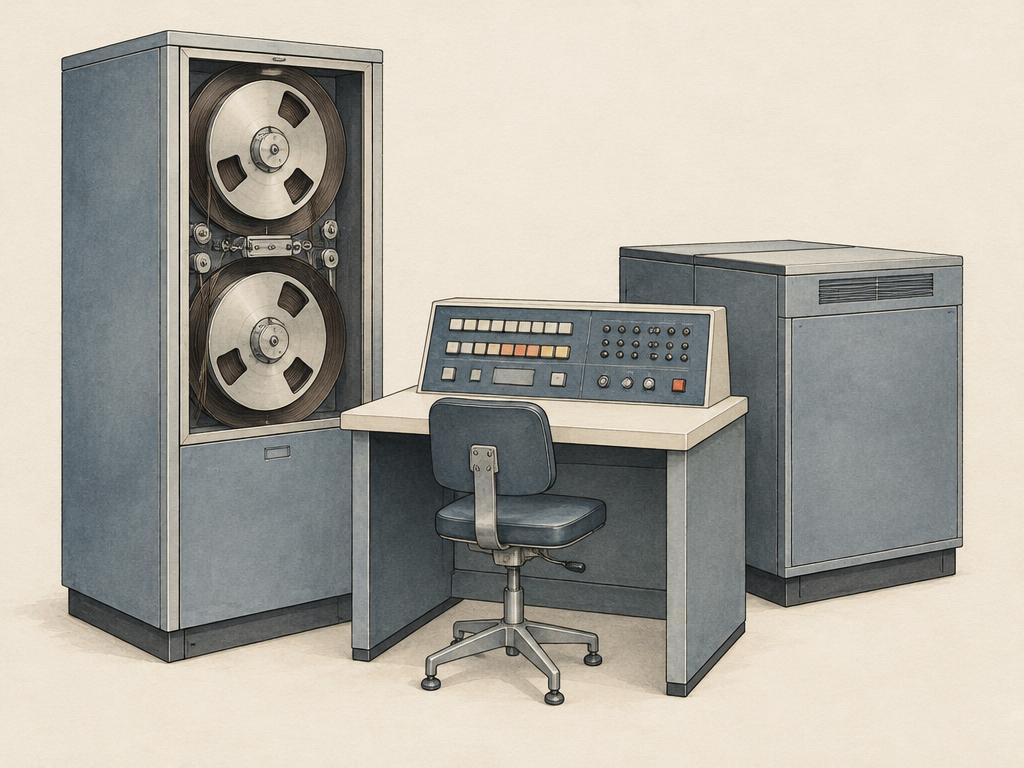
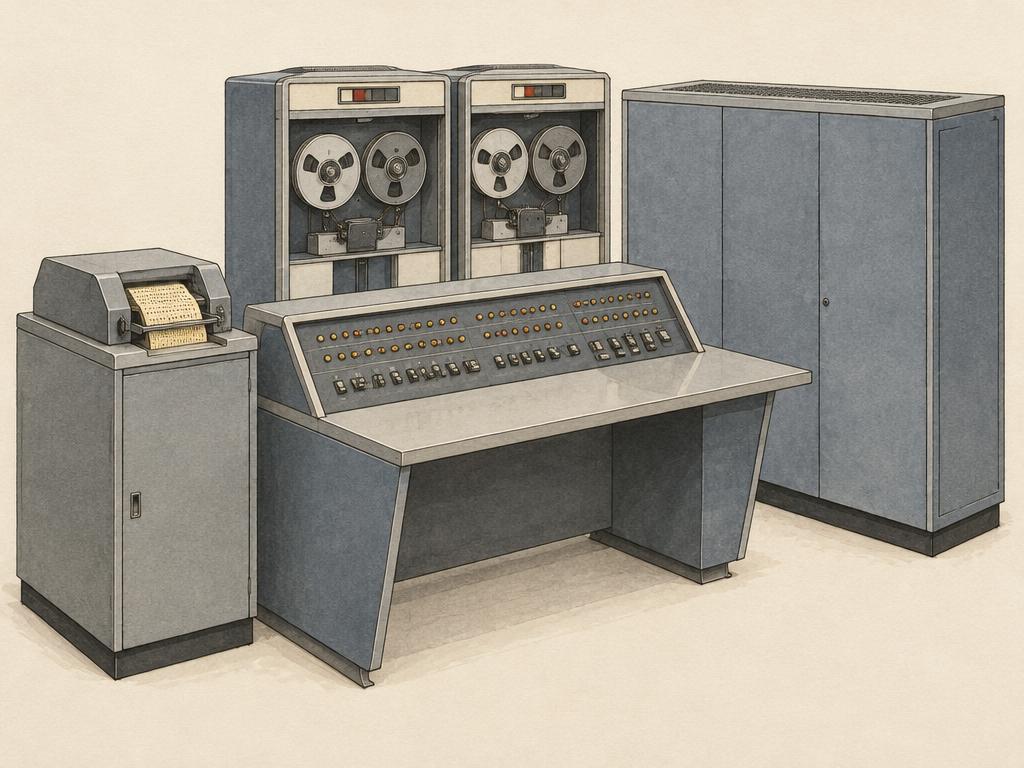
GE 150 business data-processing system
The Computer History Museum preserves GE's ten-page U.S. brochure promoting the GE 150 for business data processing. Its cover shows an operator at a magnetic-tape unit and pictures of peripherals. The 1959 date belongs to the publication, not an independently established launch or installation date; this exhibit documents the computer through its original promotional record.
General Electric Company is the museum-recorded company and copyright owner. Historical GE computer business; sold to Honeywell in 1970. The drawing is not a verified GE 150 installation.
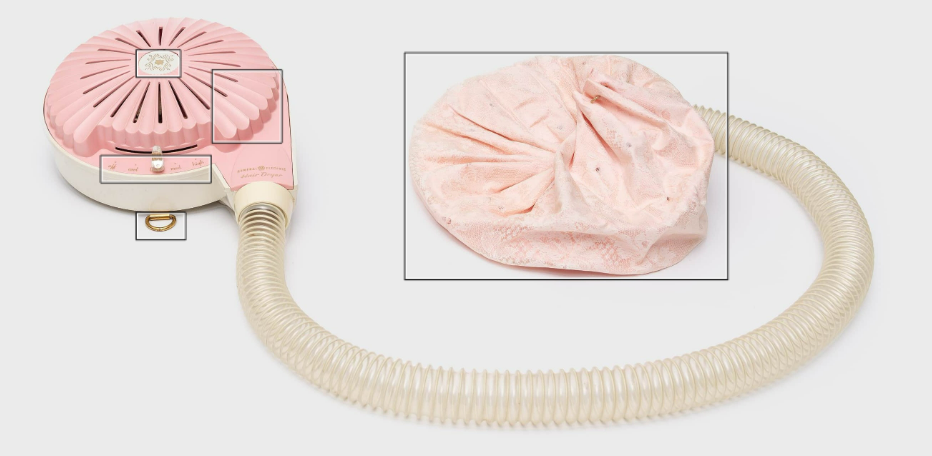
Canadian General Electric portable bonnet hair dryer
A pink 120V blower, flexible hose and lace-covered bonnet stored in a round carrying case. York University attributes it to Canadian General Electric manufacture in Barrie, Ontario during the 1960s. The year 1960 is a decade sorting anchor, not a launch date. The supplied photograph shows the pink blower with its ribbed hose and the lace-trimmed bonnet, including the gold-toned strap hardware the exhibit describes; the round carrying case is not visible in this image. This record documents a product, not a claim that GE invented its appliance category.
Canadian General Electric manufacture in Barrie, Ontario attributed by university exhibit.
Look-alike illustration · not the exact model, laboratory device or museum artifact.
1960 · archived GE brochureDocumented model
Computing & industry
GE 210 business data-processing system
The Computer History Museum's ten-page GE 210 brochure documents a business data processor presented by GE as an automated, high-speed machine. The museum lists the publication year as 1960 and credits General Electric Company. This is model evidence from an original brochure, not a surviving computer's build date or an independently tested performance claim.
Historical General Electric computer system, documented separately from the GE 150 and GE-225. GE's computer business was sold to Honeywell in 1970; the illustration is not an exact model reproduction.
Illustration: GE Heritage Village · AI-generated representative artwork · AI-generated artwork · not a historical photograph
1960 · museum artifact dateDated artifact
Space & propulsion
GE experimental plug-nozzle rocket engine
The museum identifies this as GE’s first flight-weight plug-nozzle rocket-engine model. NASA did not adopt the design; it remains evidence of experimental propulsion development, not operational deployment.
Made by General Electric; preserved in the Smithsonian collection. Historical propulsion work, distinct from current GE Aerospace products.
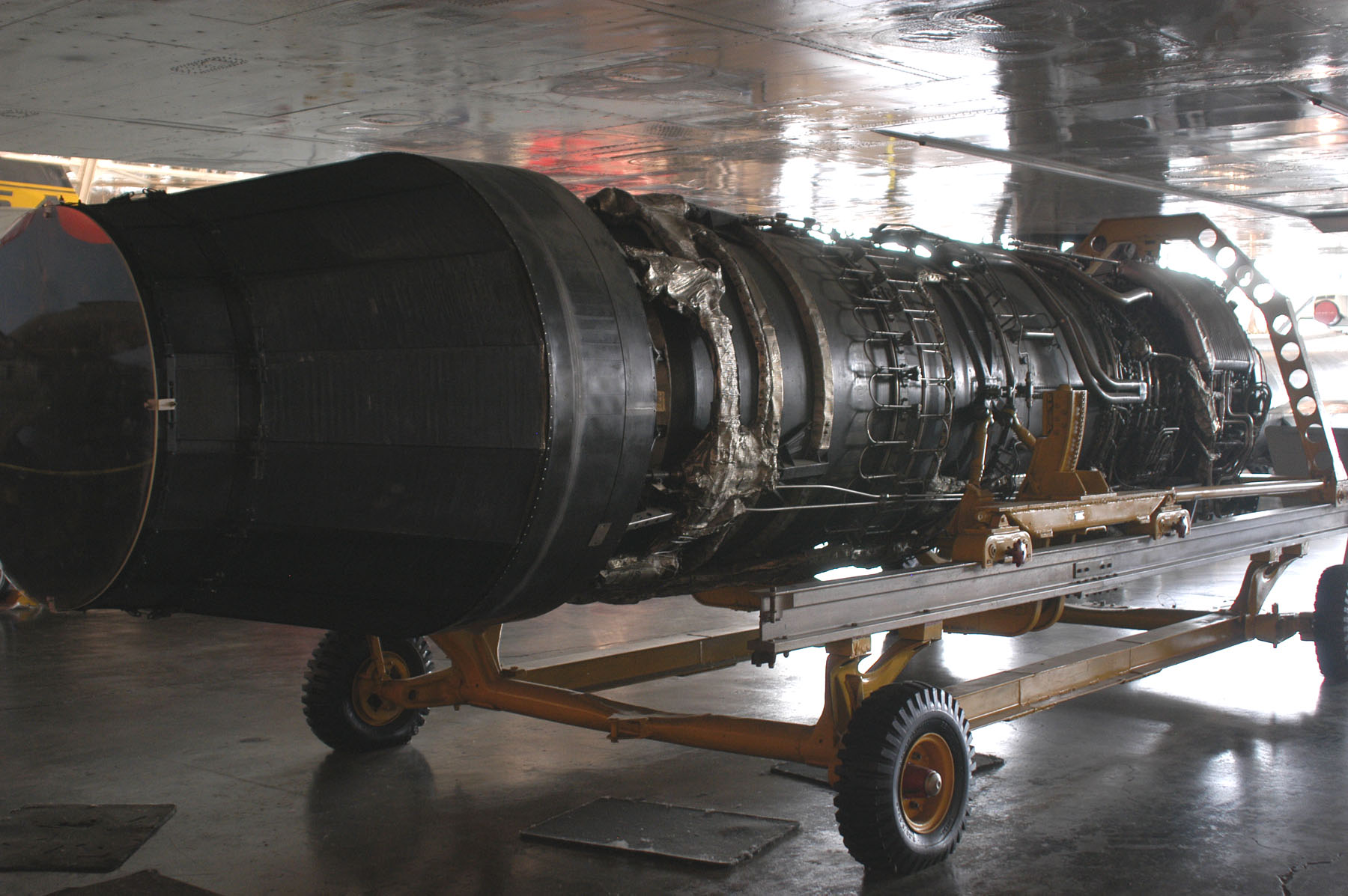
A GE turbojet associated with the North American XB-70 Valkyrie program. The museum gives an approximate early-1960s artifact date and records transfer from the U.S. Air Force. Photograph shows a YJ93 at the National Museum of the U.S. Air Force, not the separately cataloged Smithsonian specimen.
Made by General Electric; preserved in the Smithsonian collection. Historical propulsion work, distinct from current GE Aerospace products.
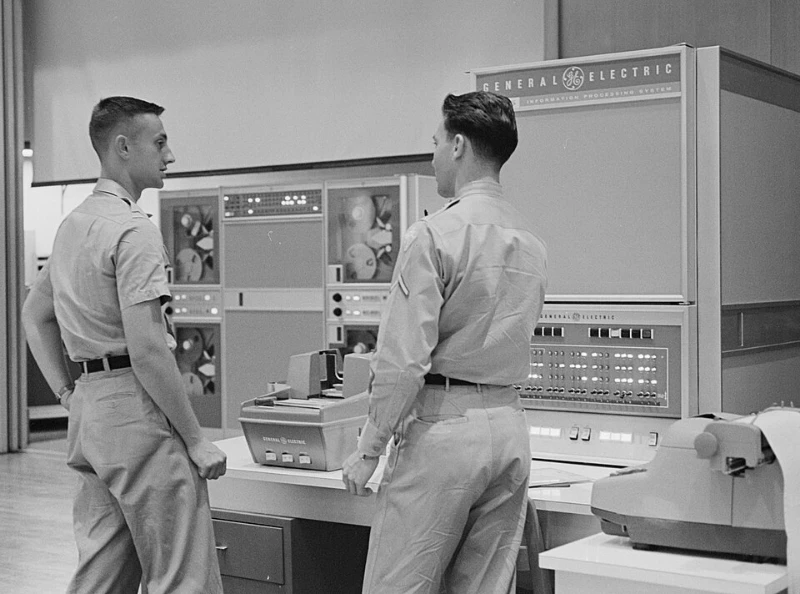
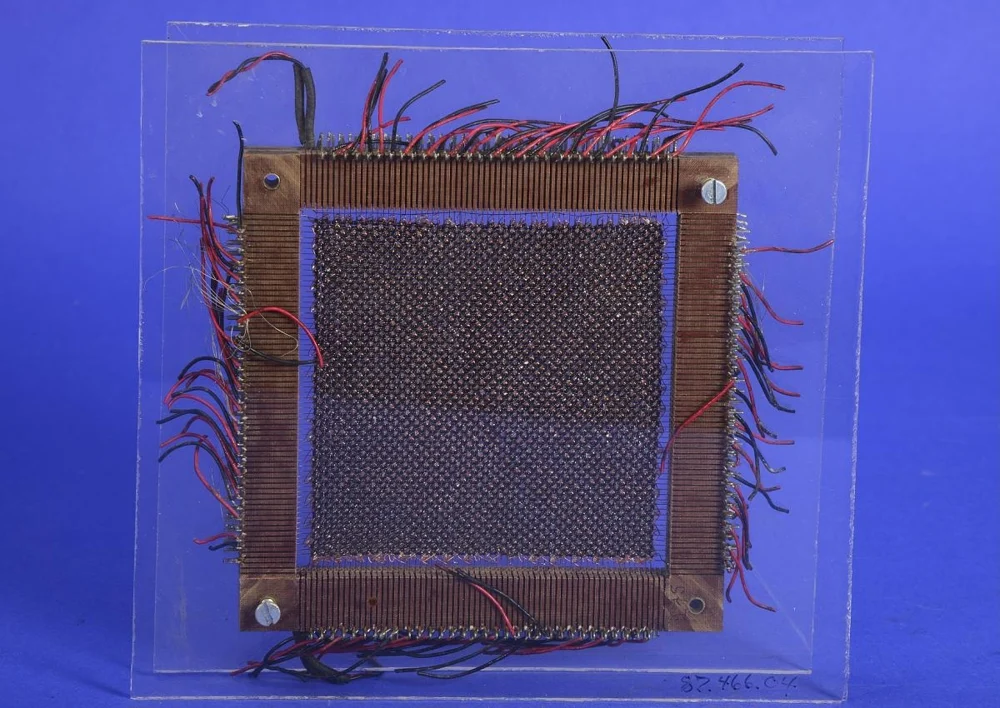
A room-sized magnetic-core-memory computer installed at the University of Queensland in 1962. Photograph shows a GE-225 installation at West Point, not the Queensland machine.
Historical GE computing business; GE sold its computer business to Honeywell in 1970.
Photo: Warren K. Leffler · preview extracted and resized · Public domain
Look-alike illustration · not the exact model, laboratory device or museum artifact.
1962 · documented GE researchDocumented use
Lighting
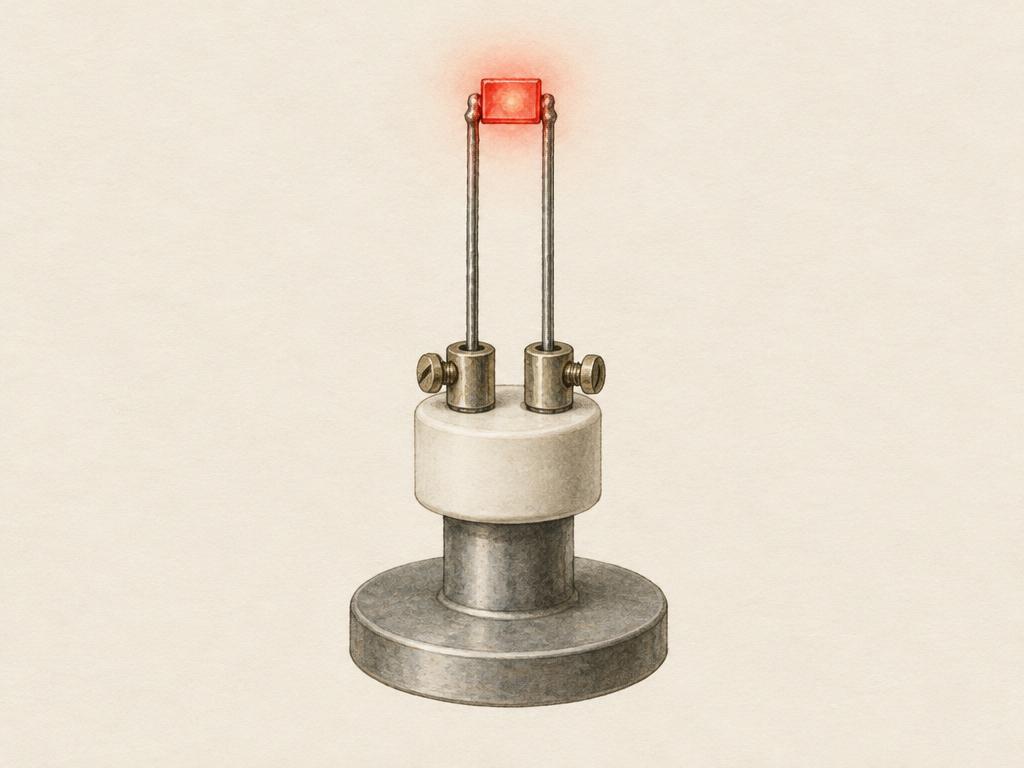
Holonyak's practical visible-spectrum LED at GE
The University of Illinois credits Nick Holonyak Jr., working at General Electric in 1962, with developing the first practical visible-spectrum light-emitting diode. This scoped achievement concerns visible semiconductor light, not every earlier form of electroluminescence or infrared diode. The exhibit documents the research milestone rather than a separately dated museum-held specimen.
Nick Holonyak Jr.'s semiconductor research while employed by General Electric. Later research after his move to Illinois in 1963 is not silently credited to GE.
Illustration: GE Heritage Village · AI-generated representative artwork · AI-generated artwork · not a historical photograph
Representative vintage illustration · not the exact vehicle, model or museum artifact.
Circa 1963 · museum-dated specimenDated artifact
Beauty & grooming
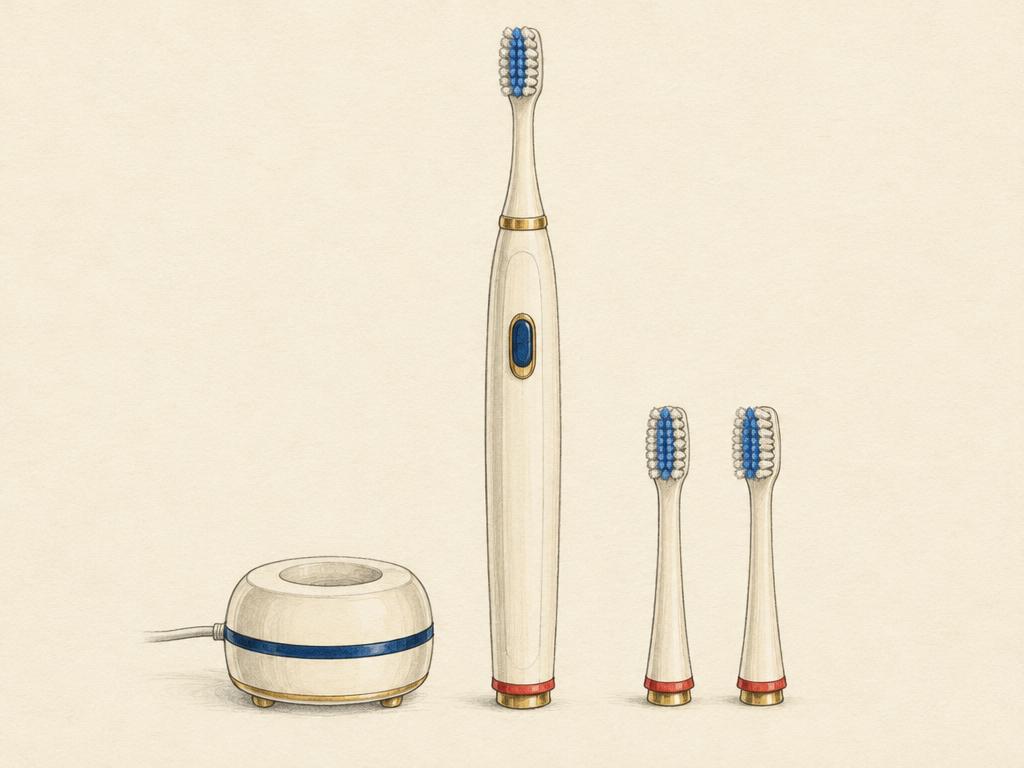
GE Model 5101 cordless electric toothbrush
The Henry Ford preserves a Model 5101 cordless electric toothbrush, dated circa 1963, designed by Mel Boldt and Associates and made by General Electric in Ashland, Massachusetts. The museum transcribes its General Electric Automatic Toothbrush inscription. This is a distinct model from the undated TB 9 already in the village; the museum lists it as not on public exhibit.
GE-made personal-care appliance with separately credited industrial designers. A documented product, not a claim that GE invented the electric toothbrush.
Photo: Alan Wilson from Peterborough, Cambs, UK via Wikimedia Commons · CC BY-SA 2.0
Representative vintage illustration · not the exact vehicle, model or museum artifact.
1965–1971 · research projectDocumented use
Robotics & automation
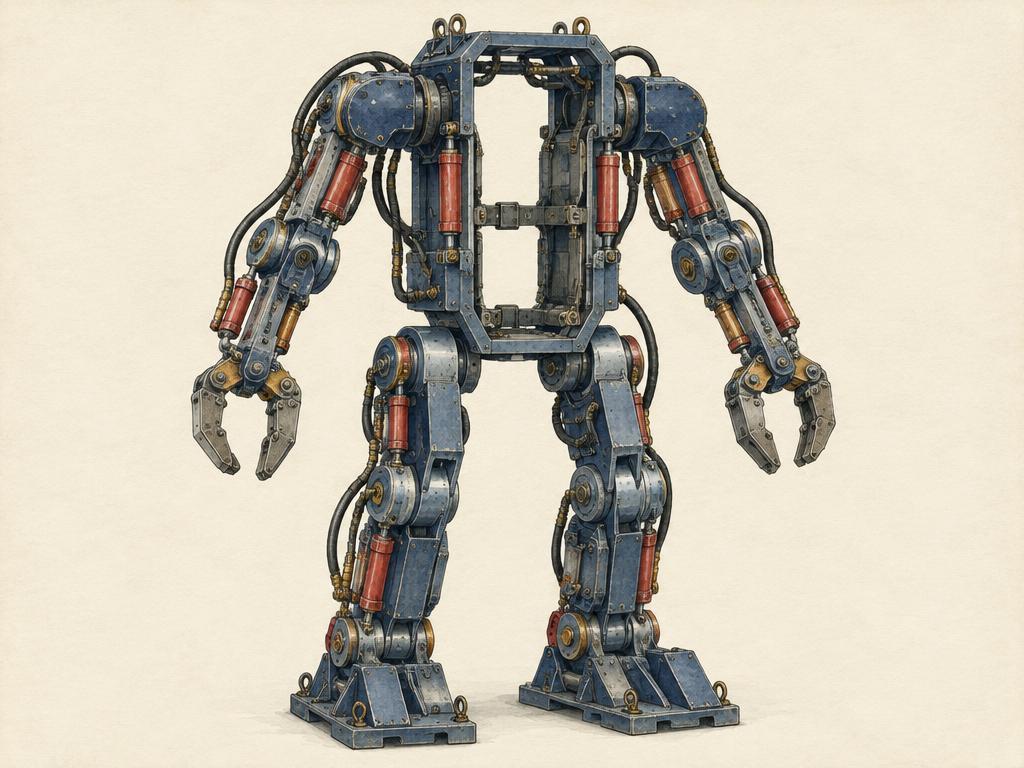
GE Hardiman powered exoskeleton research
Hardiman began in 1965 as an Army–Navy research project for powered human-strength augmentation. GE engineer Ralph Mosher studied force feedback so an operator could sense a load through the machine. Weight, instability and power-supply problems kept it at prototype stage; the project ended in August 1971. The proposed 25-fold strength amplification was a design objective, not proof of a deployable complete suit.
GE-developed experimental human-operated exoskeleton; neither an autonomous robot nor a production wearable. 1965 dates the project start, not a finished product launch.
Illustration: GE Heritage Village · AI-generated representative artwork · AI-generated artwork · not a historical photograph
1965 · documented installationDocumented use
Computing & industry
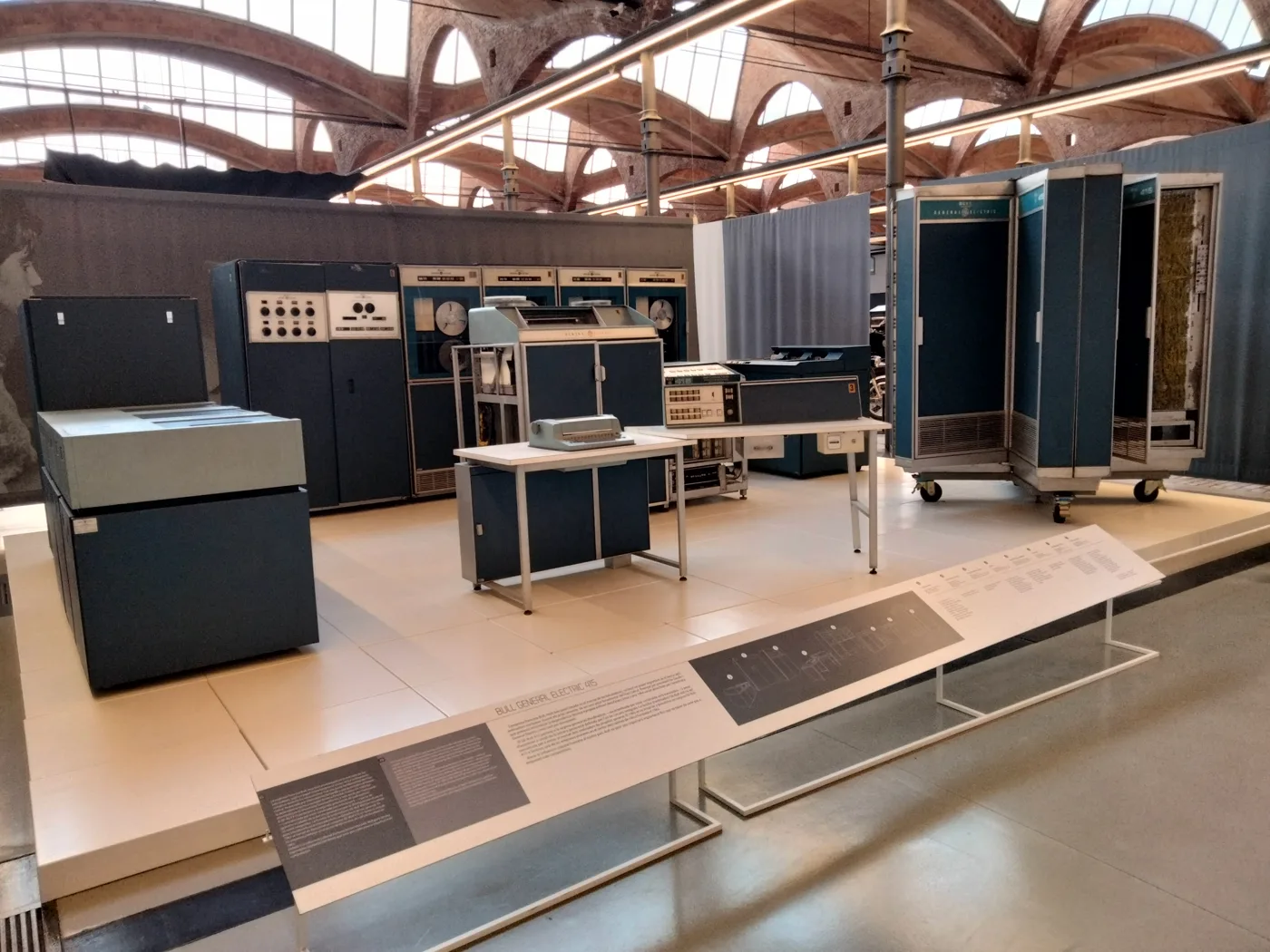
GE-Bull 415 computer · Seresco installation
A transistorized GE-Bull 415 computer preserved at the Museu Nacional de la Ciència i de la Tècnica de Catalunya. The museum documents its installation at Seresco in Barcelona in 1965 and dates the displayed console to 1965; associated Honeywell-Bull disk units are later additions. The photograph's archive filename says 1962, but the exhibit date follows the museum record.
Made by GE's computer department; GE sold its computer business to Honeywell in 1970, and the 400 series was also marketed in Europe with Bull.
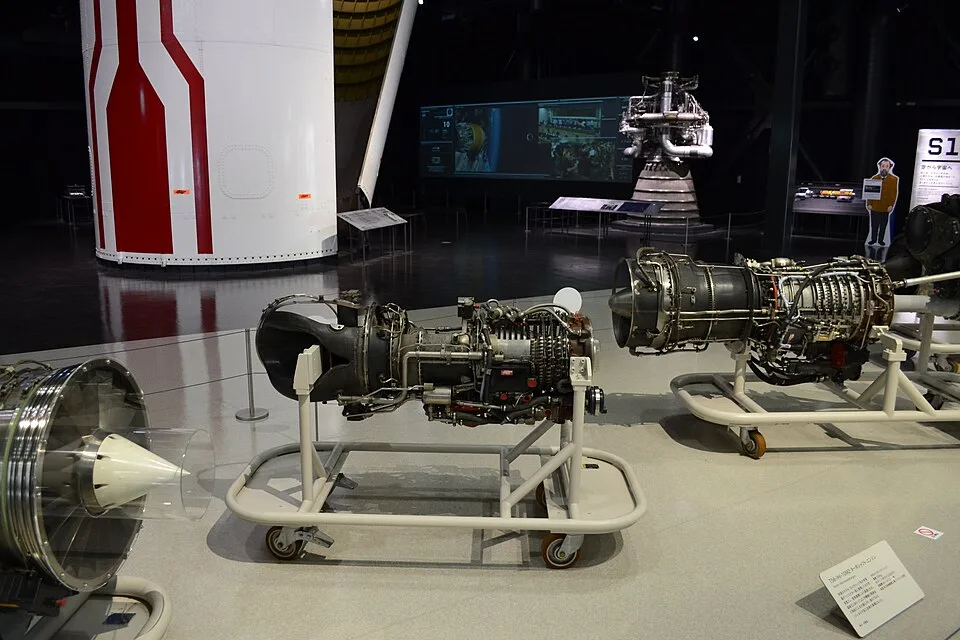
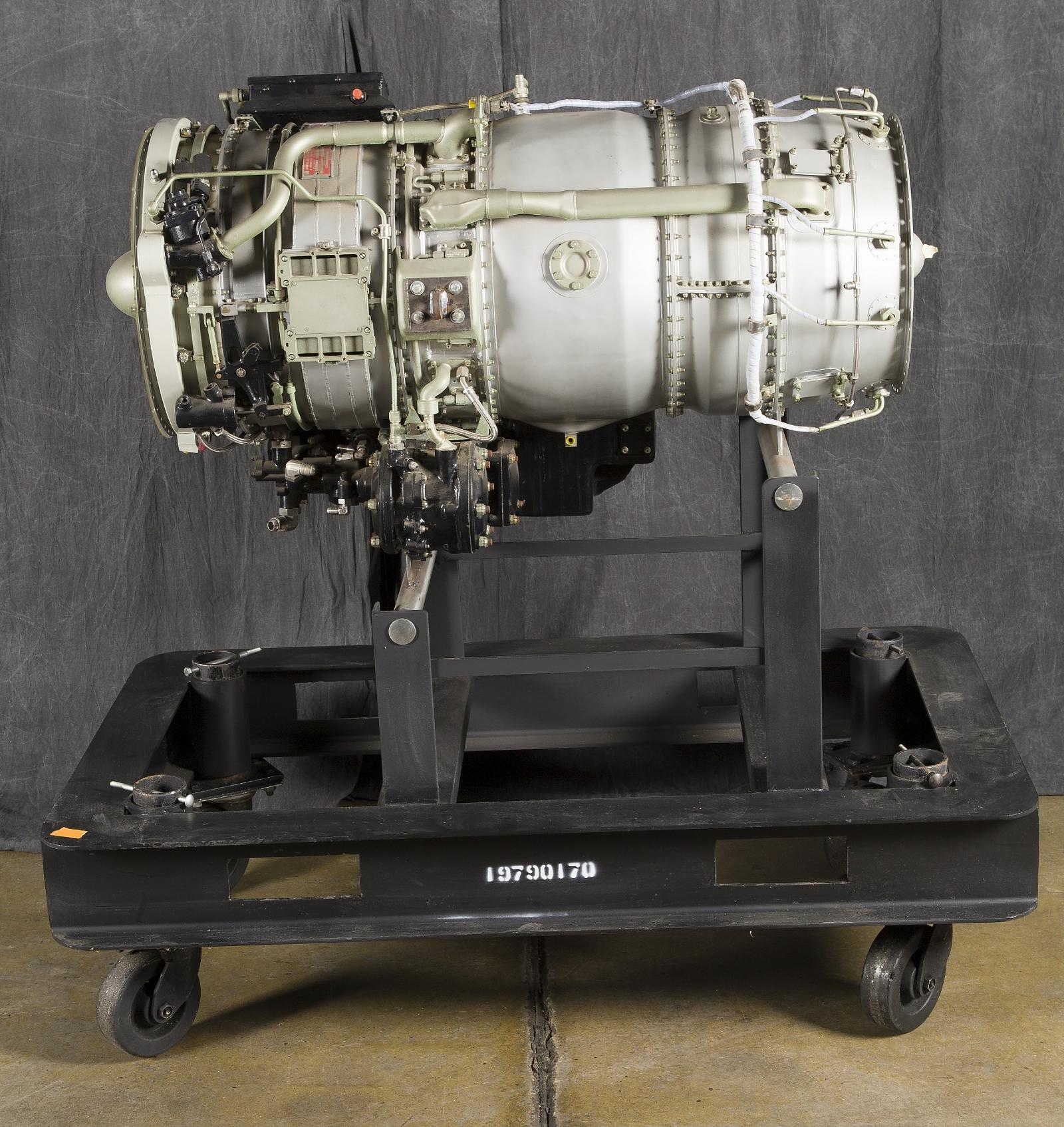
A GE CJ610-6 turbojet derived from the J85 and used on early business jets. The museum dates the artifact 1966–1976 and records this model’s certification in June 1966; the date range is not a single manufacture year.
Made by General Electric; preserved in the Smithsonian collection. Historical propulsion work, distinct from current GE Aerospace products.
Photo: J.W.H. van der Waal via Wikimedia Commons · CC BY 2.5
Representative vintage illustration · not the exact vehicle, model or museum artifact.
1968 · experimental car introducedIntroduced
Rail & transportation
GE Delta experimental electric car
GE Research and Development Center's Bruce Laumeister developed the experimental Delta electric car. miSci dates its photograph of Governor Nelson Rockefeller with the car to 1968 and reports a 40-mile range per charge. The museum connects this research with GE's later Elec-Trak mowing tractors; the range is the museum's reported figure, not a modern performance test.
General Electric research prototype, not a production passenger-car line. GE did not become a mass-market car manufacturer through this project.
Illustration: GE Heritage Village · AI-generated representative artwork · AI-generated artwork · not a historical photograph
Look-alike illustration · not the exact model or museum artifact.
Circa 1968Dated artifact
Aviation
GE4 SST experimental turbojet
An experimental GE engine intended for the Boeing 2707 supersonic transport. Ground testing began in 1968; the aircraft program was canceled in 1971, so this is not an airline-service engine. The museum records a gift from GE and NASA.
Made by General Electric; preserved in the Smithsonian collection. Historical propulsion work, distinct from current GE Aerospace products.
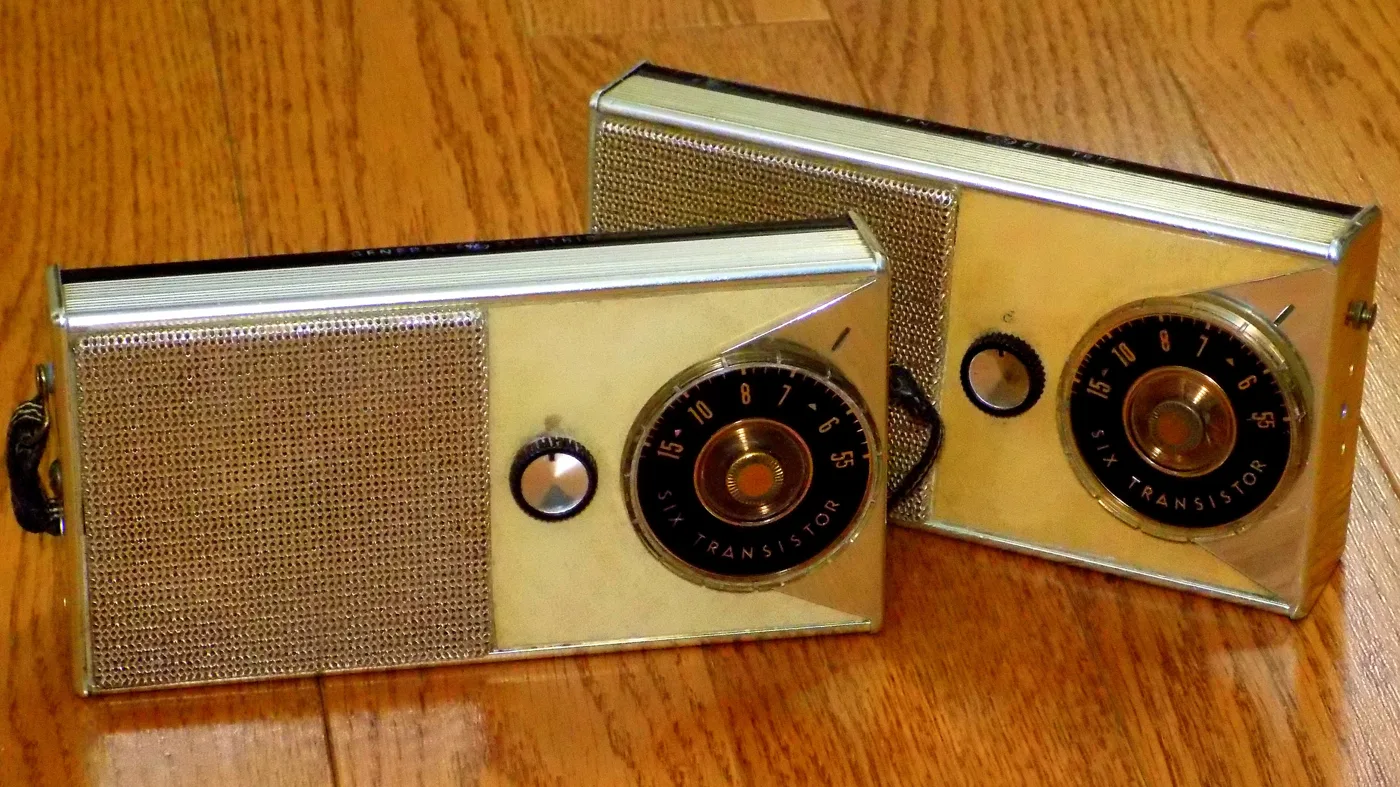
A trio of GE Blue Max transistor radios, models P-2760A, P-2760B and P-2760C, dated circa 1970 by collector identification and photographed in 2019.
GE-branded consumer electronics; GE's consumer-electronics business was sold to Thomson in 1987, and these Japan-made sets show GE's later badge-engineered era.
Photo: Joe Haupt via Wikimedia Commons · CC BY-SA 2.0
Look-alike illustration · not the exact model or museum artifact.
Circa 1970s · museum datingDated artifact
Aviation
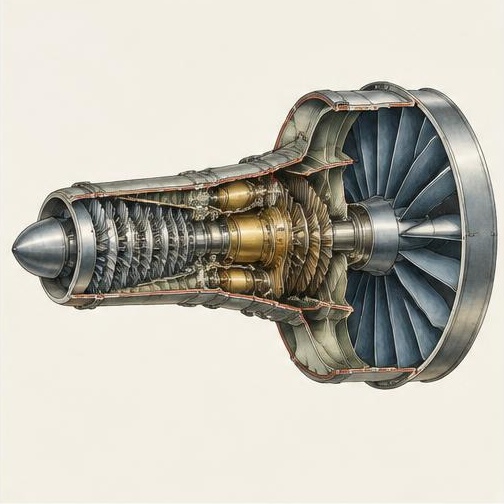
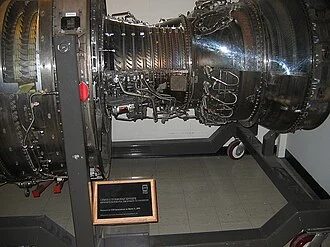
GE CJ805-23 turbofan cutaway
A cutaway of the GE aft-fan turbofan used on the Convair 990. The museum dates the artifact broadly to the 1970s; that dating is not the engine family’s introduction date.
Made by General Electric; preserved in the Smithsonian collection. Historical propulsion work, distinct from current GE Aerospace products.
Illustration: GE Heritage Village · AI-generated representative artwork · AI-generated artwork · not a historical photograph
Representative vintage illustration · not the exact vehicle, model or museum artifact.
August 1970 · delivered to the ArmyDocumented use
Robotics & automation
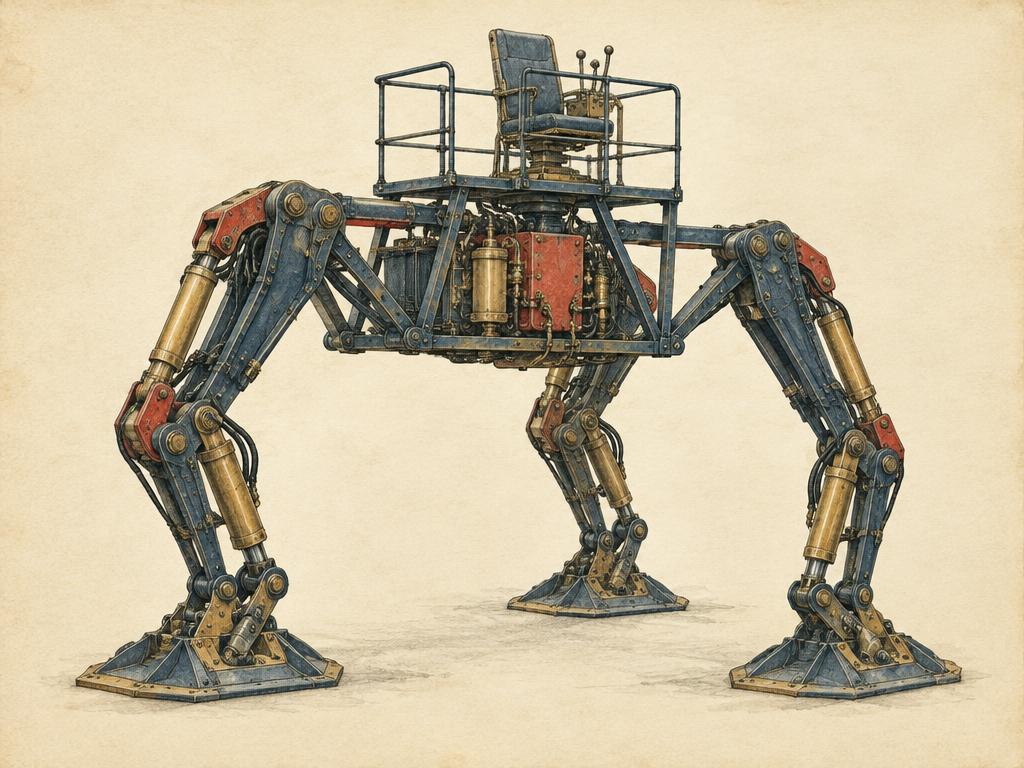
GE Cybernetic Walker · Walking Truck
GE's four-legged experimental walking machine used hydraulics and an operator's movements to negotiate difficult terrain. The U.S. Army Transportation Museum records GE's 1966 commission and delivery in August 1970. It remained a test project rather than entering operational service; the museum documents the preserved walker in its collection.
General Electric-built Army experimental vehicle, also called CAM or the Walking Truck. Human-controlled walking machinery, not autonomous robotics or a fielded production truck.
Photo: Billy McCrorie / Geograph · preview extracted and resized · CC BY-SA 2.0
Documented 1971Documented use
Computing & industry
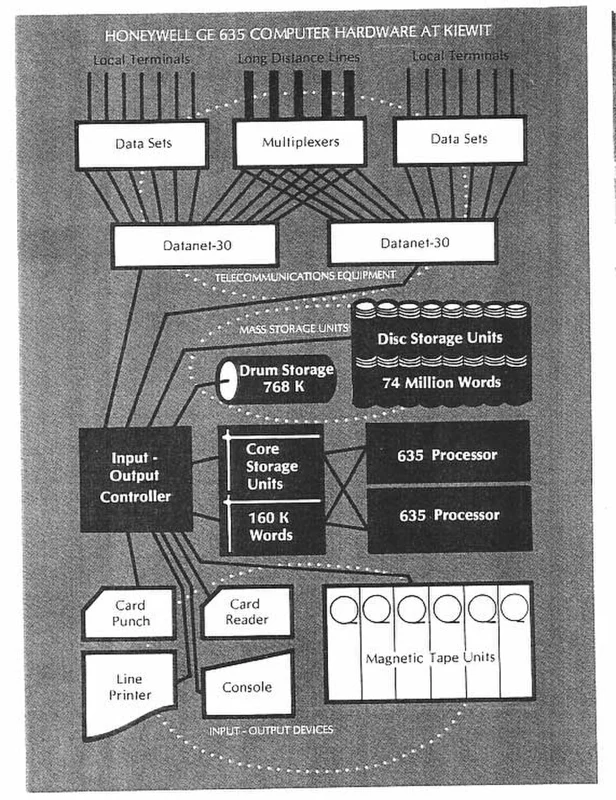
GE-635 computer installation at Kiewit
The Dartmouth publication photographs GE-635 computer hardware at the Kiewit Computation Center in early 1971; the year records documented use, not introduction.
Historical General Electric artifact; GE computer business subsequently transferred to Honeywell.
Look-alike illustration · not the exact model or museum artifact.
1974 · Canadian museum artifactDated artifact
Computing & industry
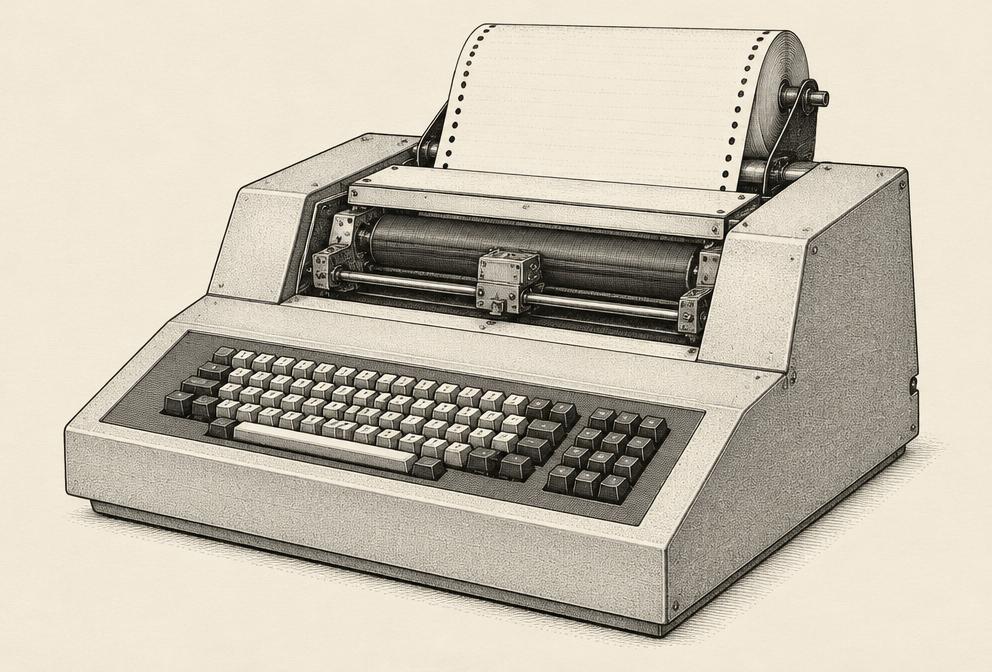
GE TermiNet 300 data-communication printer
Keyboard-modem impact printer for remotely transmitting and receiving computer data, manufactured in Waynesboro, Virginia. Ingenium's Canadian collection catalogs this TermiNet 300 specimen as 1974, distinct from the TermiNet 1200 already in the village.
Manufactured by General Electric Co.; computer input/output equipment, not a newspaper printing press or evidence that GE invented printing.
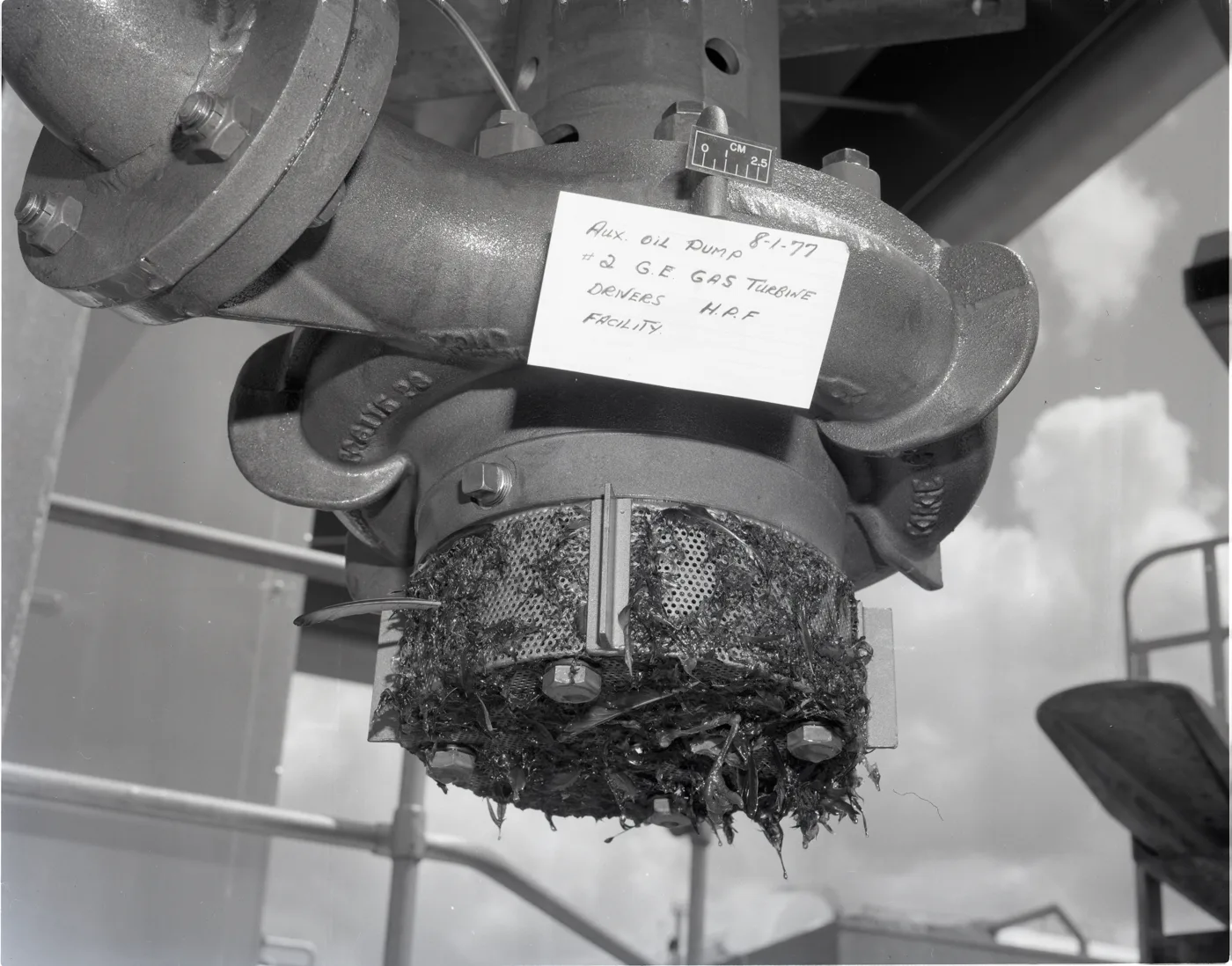
GE drivers on high-pressure-facility oil pump, 1977
An oil pump driven by General Electric drivers in a high-pressure facility, photographed in August 1977 for the U.S. National Archives — GE motors and drives have long powered oilfield and pipeline equipment.
GE motors and drives in oil-industry service; GE's oil & gas equipment business combined with Baker Hughes in 2017.
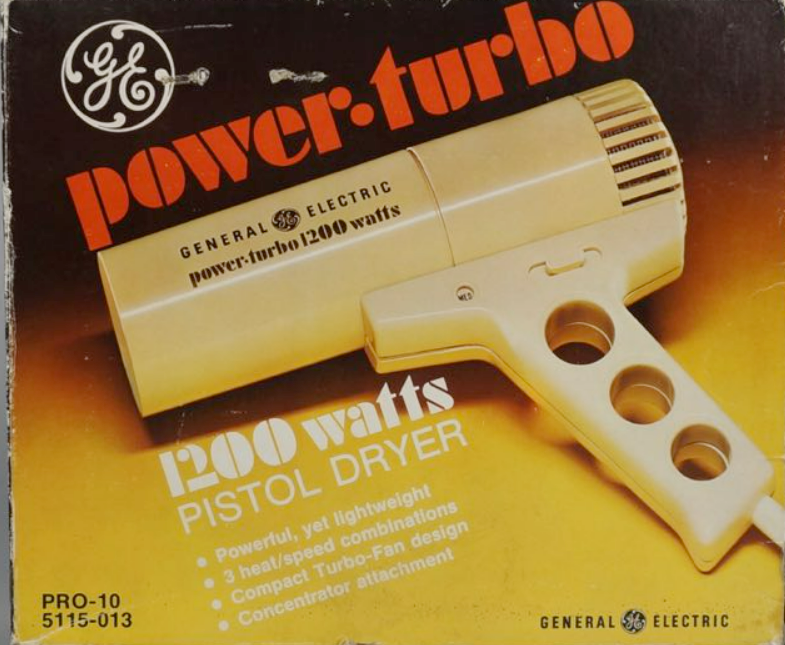
110V handheld pistol dryer; the specialist record states made in Singapore and dates it 1977. The supplied carton photograph shows the printed name power•turbo, 1200 watts, “Pistol Dryer”, model PRO-10 and catalogue number 5115-013. This record documents a product, not a claim that GE invented its appliance category.
General Electric company attribution in specialist record; manufacturing entity not independently verified.
Late 1970s · collector-attributed rangeDocumented model
Beauty & grooming
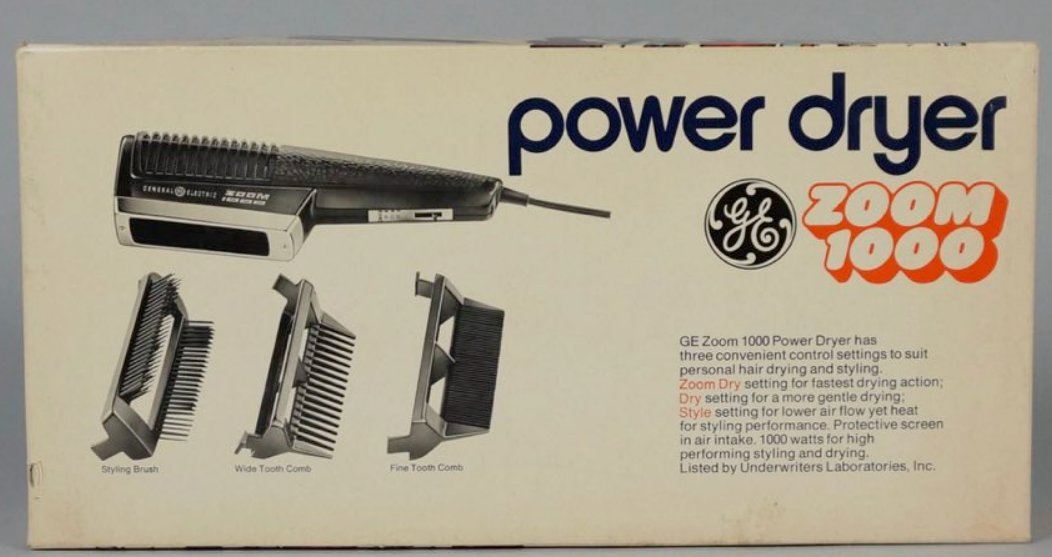
GE Zoom 1000 SD-5 hair styling set
110V handheld styling set; record states made in Japan. The supplied carton photograph shows the printed GE Zoom 1000 power dryer name, the three settings described as Zoom Dry, Dry and Style, 1000 watts, Underwriters Laboratories listing and the Styling Brush, Wide Tooth Comb and Fine Tooth Comb attachments. The year 1977 is a sorting anchor for the collector’s approximate late-1970s dating, not a verified launch date. This record documents a product, not a claim that GE invented its appliance category.
General Electric company attribution in specialist record; manufacturing entity not independently verified.
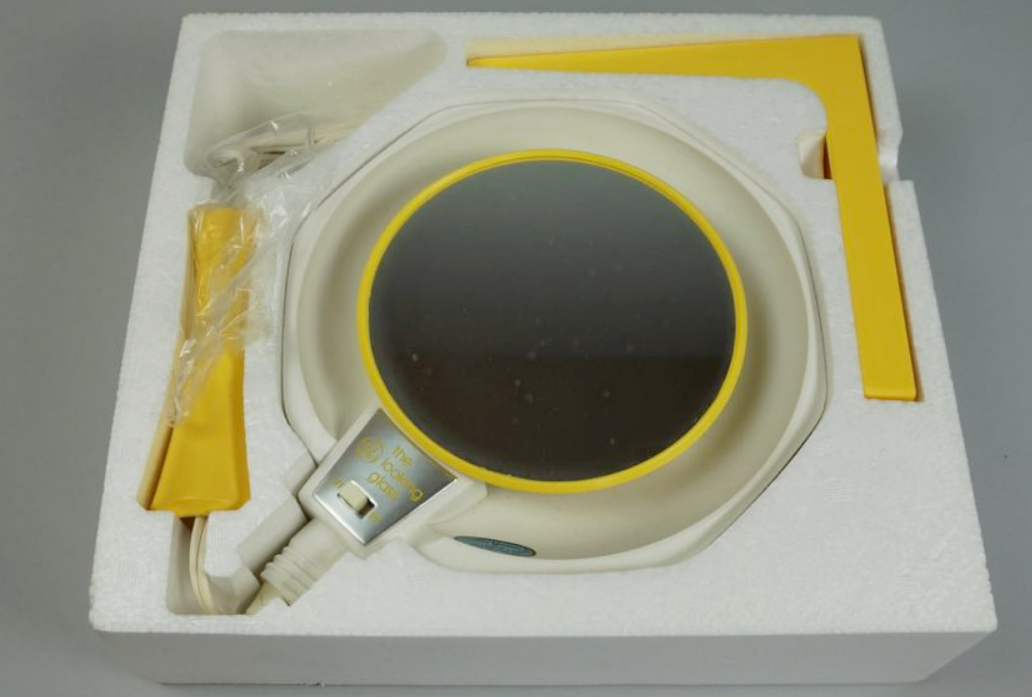
110V electric mirror; the specialist record lists model IM-4, handheld operation, made in Japan and the year 1978. The supplied photograph, identified by the contributor as the IM-4, shows the mirror in its moulded packaging with the printed name “the looking glass”, an OFF switch marking and a yellow stand piece; the model number is not legible in the image. This record documents a product, not a claim that GE invented its appliance category.
General Electric company attribution in specialist record; manufacturing entity not independently verified.
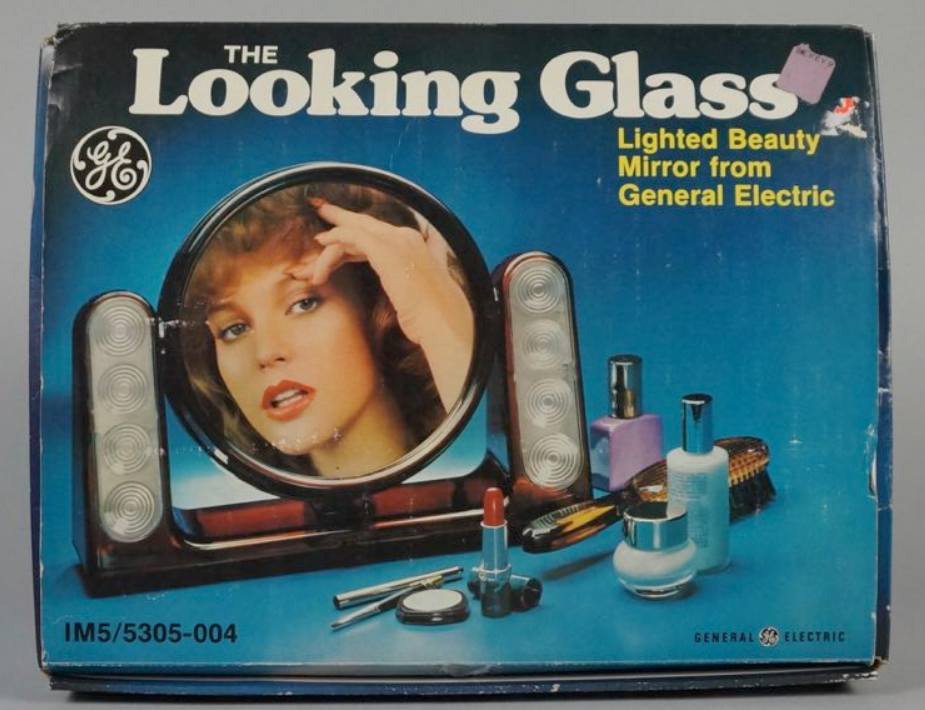
110V stationary electric mirror, distinct from the handheld IM-4; the specialist record lists model IM5, made in Hong Kong and the year 1978. The supplied carton photograph shows the printed model marking IM5/5305-004, the name THE Looking Glass and the line “Lighted Beauty Mirror from General Electric”. This record documents a product, not a claim that GE invented its appliance category.
General Electric company attribution in specialist record; manufacturing entity not independently verified.
Photo: Jeremie M. Yoder for U.S. Navy via Wikimedia Commons · Public domain
1979 photographDated artifact
Wind & renewable energy
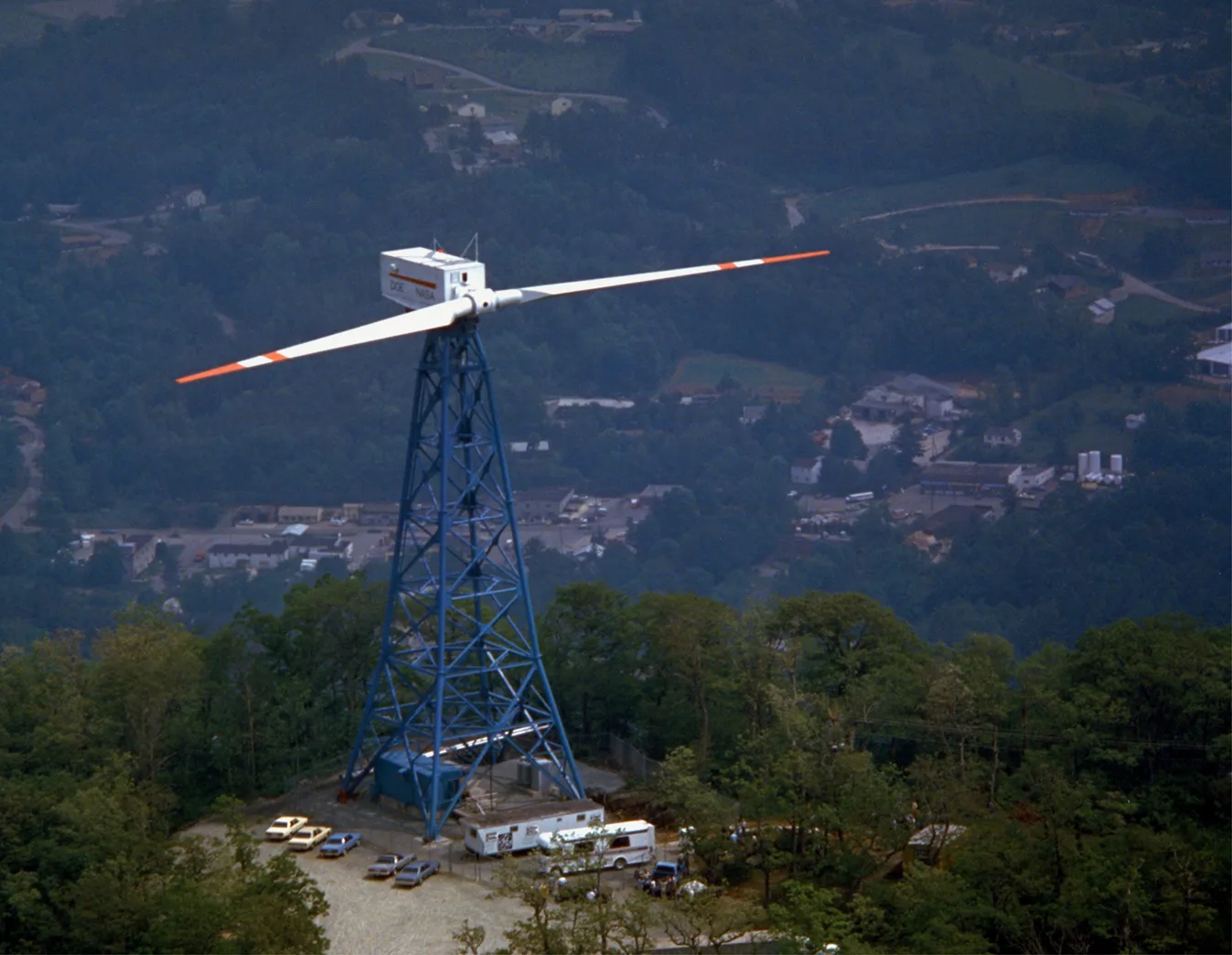
NASA/GE MOD-1 experimental wind turbine
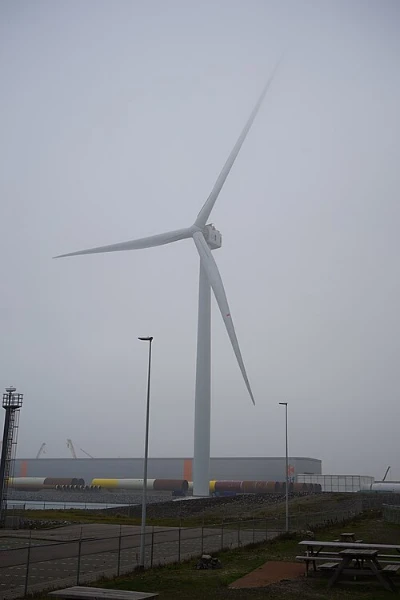
The MOD-1 experimental wind turbine at Boone, North Carolina, in a 1979 NASA photograph; General Electric built the MOD-1 for NASA and the U.S. Department of Energy as an early two-megawatt wind-power prototype.
Built by General Electric under contract to NASA and the U.S. Department of Energy; an experimental predecessor of GE's later commercial wind business (today GE Vernova).
Symbolic illustration · not the original artwork, archive document or historical scene.
1980 · painting dateDated artifact
Finance & corporate heritage
Computers · GE Credit Corporation art commission
Bart Forbes's painting explores computing history. Smithsonian records identify it as one of three industry-themed paintings commissioned by GE Credit Corporation in 1980, with the artist's account confirmed in 2024. The original painting is retained at the linked museum, not reproduced here.
Art by Bart Forbes, commissioned and donated by General Electric Credit Corporation. A finance-related cultural artifact, not a GE-manufactured computer or financial invention.
Illustration: GE Heritage Village · AI-generated representative artwork · AI-generated artwork · not a historical photograph
November 1981 · archive photographDocumented use
Healthcare
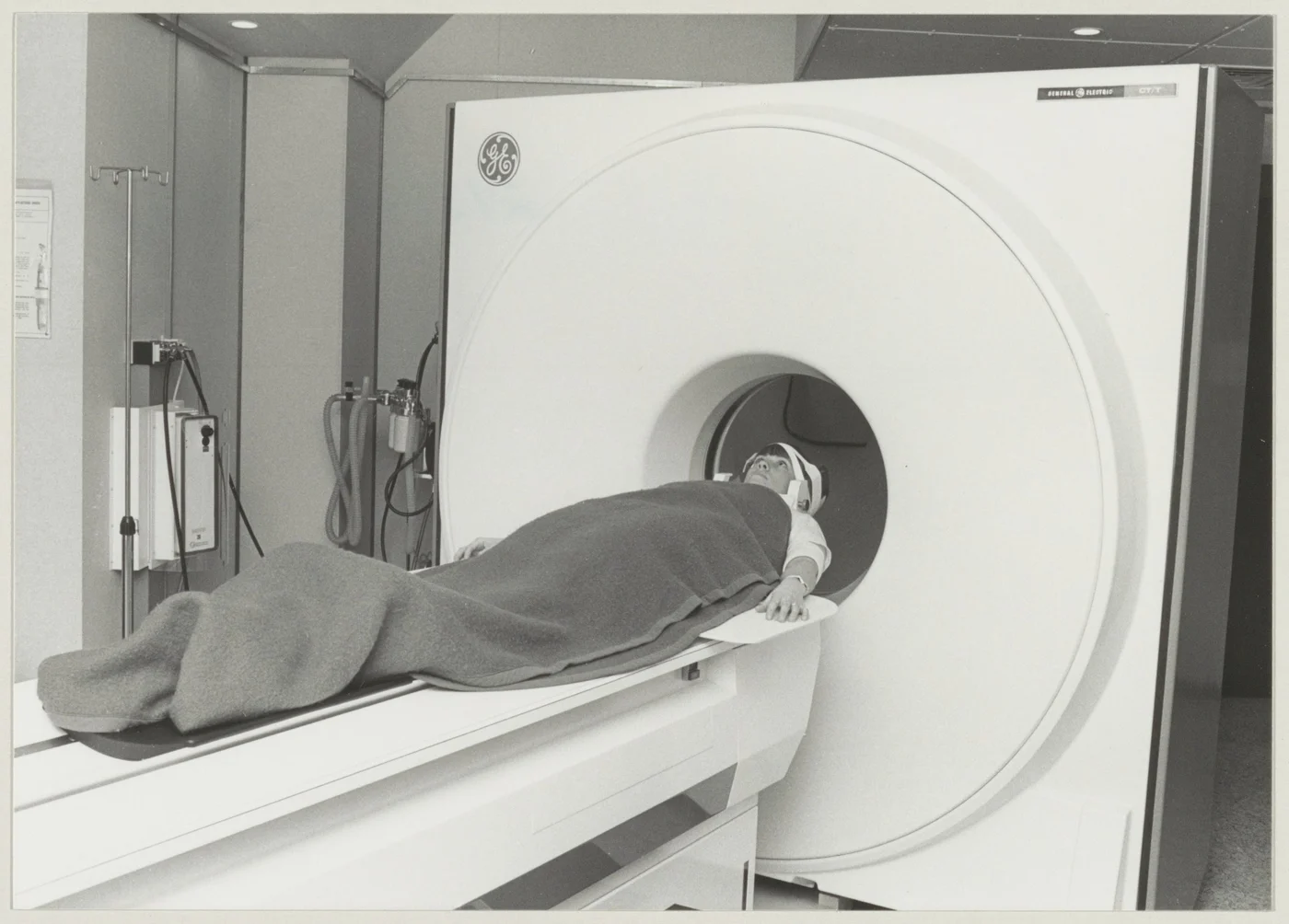
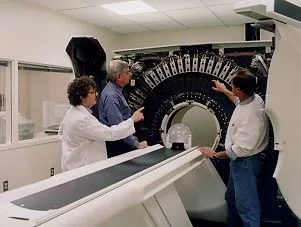
GE CT scanner · Haarlem installation
A GE-branded CT scanner photographed at St. Elisabeths Gasthuis in Haarlem. The archive records the installation; an exact scanner model is not asserted.
Historical GE medical equipment; GE HealthCare became independent in 2023.
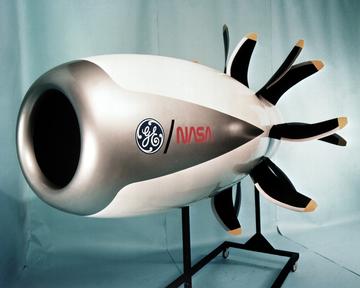
A proof-of-concept GE unducted-fan engine associated with NASA’s Advanced Turboprop Project. The museum describes its counter-rotating fans and flight tests; it is an experimental demonstrator, not a production airline engine. The NASA photograph shows the engine family, not a confirmed photograph of the Smithsonian specimen.
Made by General Electric; preserved in the Smithsonian collection. Historical propulsion work, distinct from current GE Aerospace products.
Photo: Famartin · preview extracted and resized · CC BY-SA 4.0
December 2003 · introducedIntroduced
Energy & power
GE LMS100 gas turbine
An intercooled, 100-MW-class turbine combining heavy-duty-frame and aeroderivative technology. The photograph shows an LMS100PA supercore on a maintenance stand, not a complete power plant.
Power-generation product family now at independent GE Vernova.
Photo: Hotdiggity46290 · preview extracted and resized · CC BY-SA 4.0
2004 · documented photograph (not introduction)Documented use
Aviation
CFM International CFM56-3 turbofan · GE/Snecma JV
A mounted CFM56 turbofan displayed in MIT’s Building 33 hangar, photographed on 27 November 2004. The archive filename identifies the -3 variant. Year shown is the documented photograph year, not an asserted product introduction.
CFM International 50/50 GE and Snecma (now Safran Aircraft Engines) joint venture; not solely a GE product. https://www.cfmaeroengines.com/about/
Photo: Milan Suvajac · preview extracted and resized · CC BY-SA 4.0
2005 · documented photograph (not introduction)Documented use
Aviation
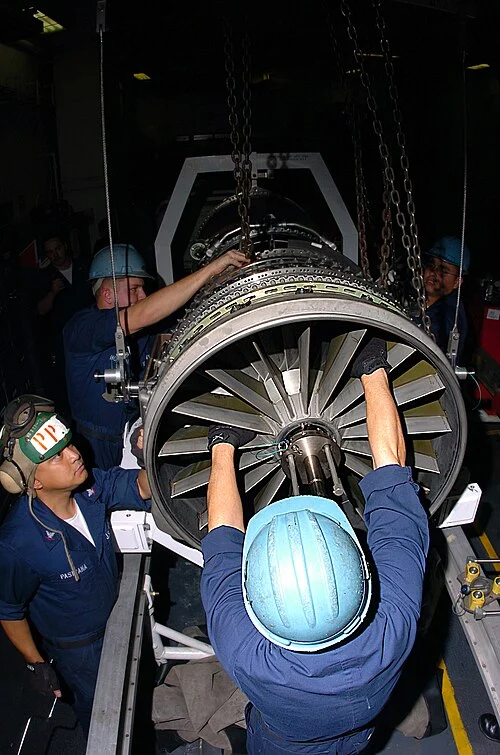
GE F414 turbofan
US Navy maintainers install a fan module on an F414 aboard USS Carl Vinson on 3 February 2005. The official caption identifies its use in F/A-18E/F Super Hornet aircraft. Year shown is the documented photograph year, not an asserted product introduction.
Historical General Electric engine; aviation business successor: GE Aerospace.
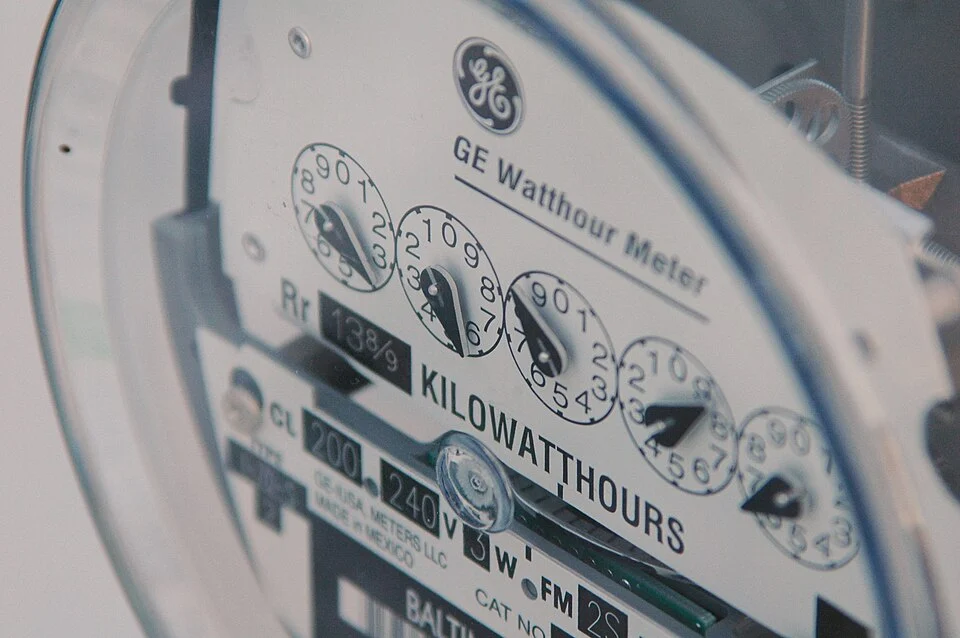
A General Electric watthour meter documented by a photograph uploaded in October 2005. The upload establishes an archive record, not a manufacture or introduction year.
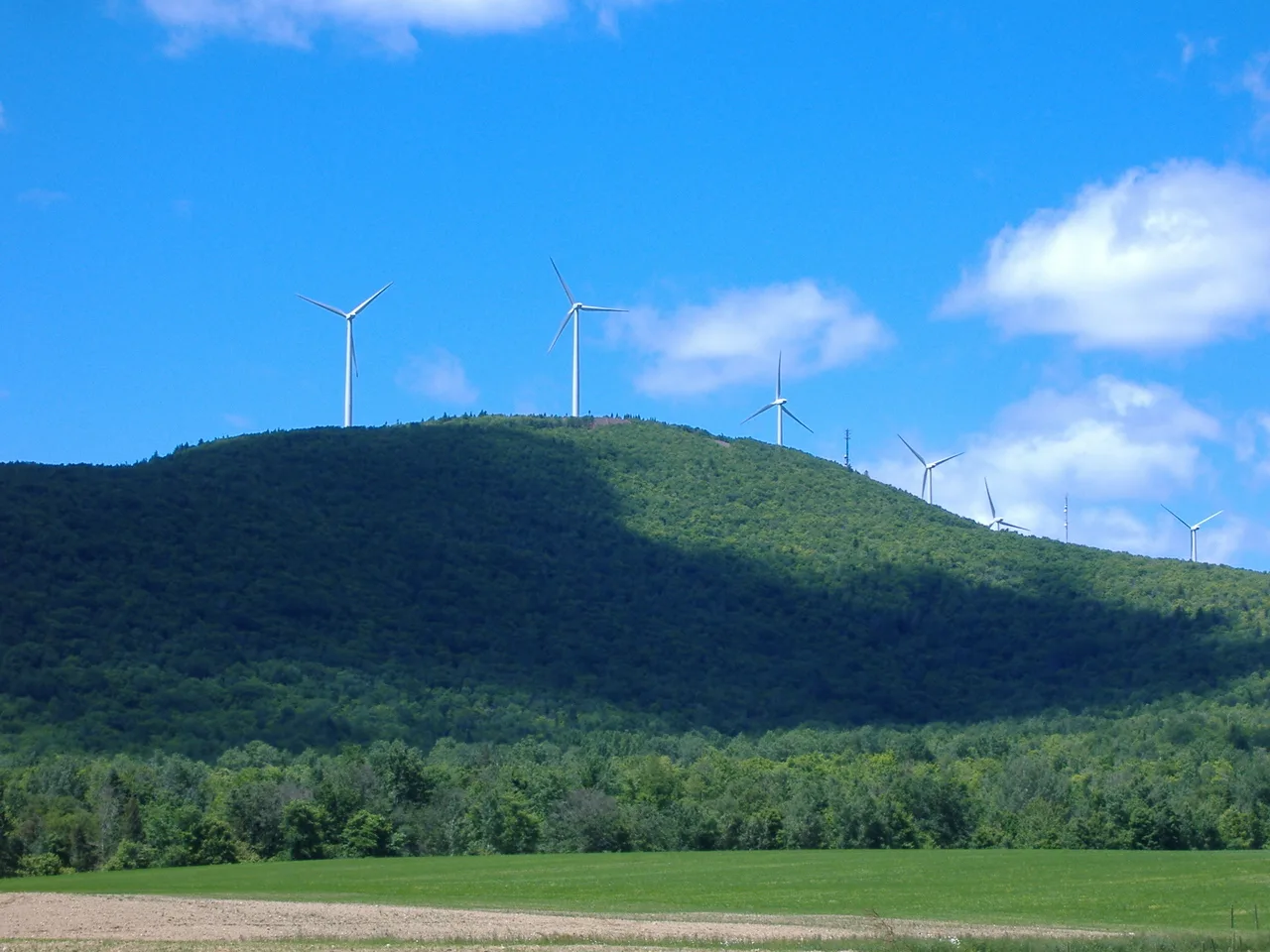
GE 1.5 MW turbines at the Mars Hill Wind Farm in Maine, photographed in June 2007; Mars Hill was among the early utility-scale wind farms built with GE's 1.5 MW platform.
Built by GE's wind-energy business, which became part of the independent GE Vernova in 2024.
Photo: Michael Surran via Wikimedia Commons · CC BY-SA 2.0
Photographed 2007Documented model
Aviation
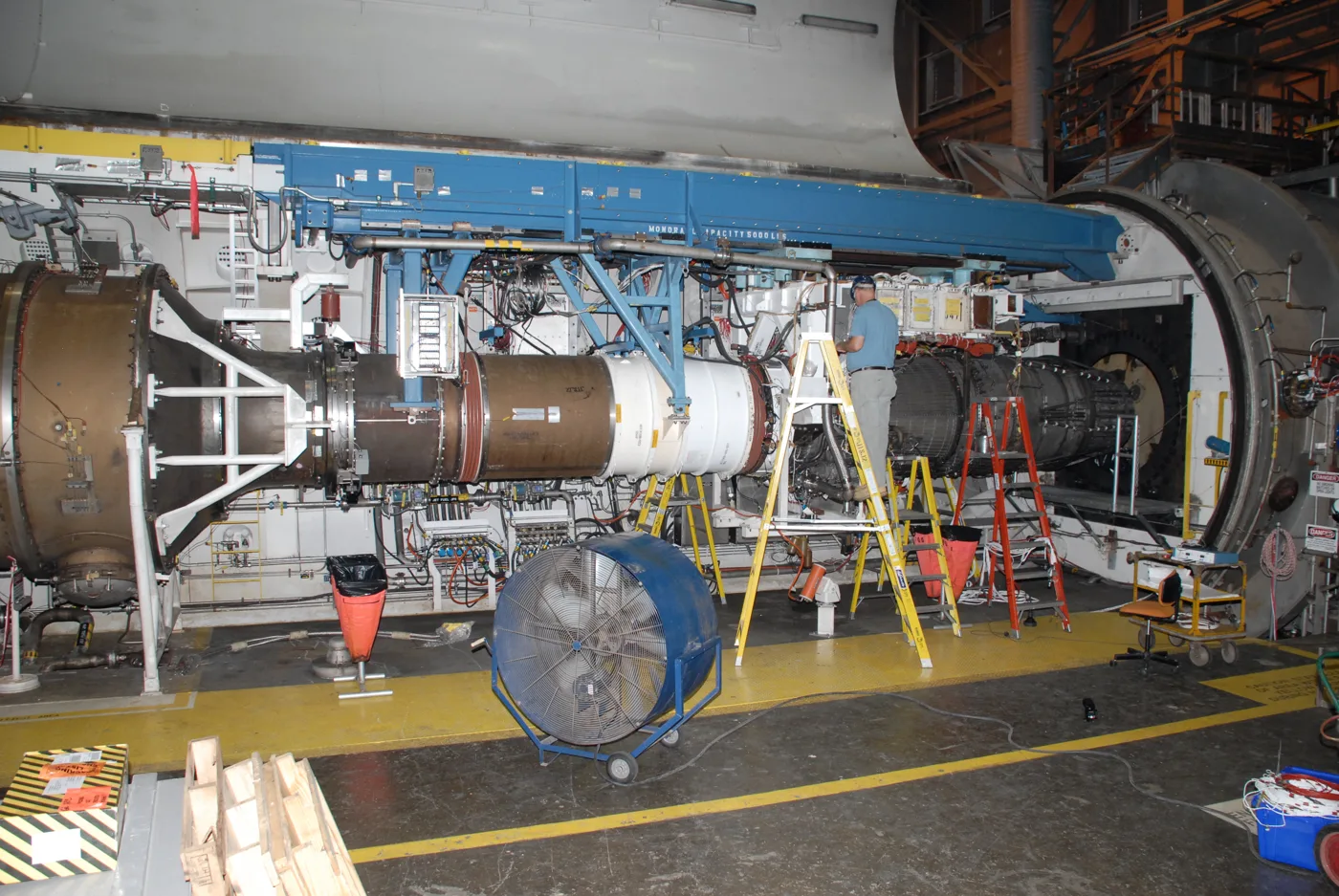
GE F101 turbofan
A GE F101 engine being installed for testing at Arnold Engineering Development Center in August 2007; the F101 was developed in the 1970s to power the B-1 Lancer bomber.
Built by GE's aircraft-engine business, today GE Aerospace.
2007 · documented photograph (not introduction)Documented use
Aviation
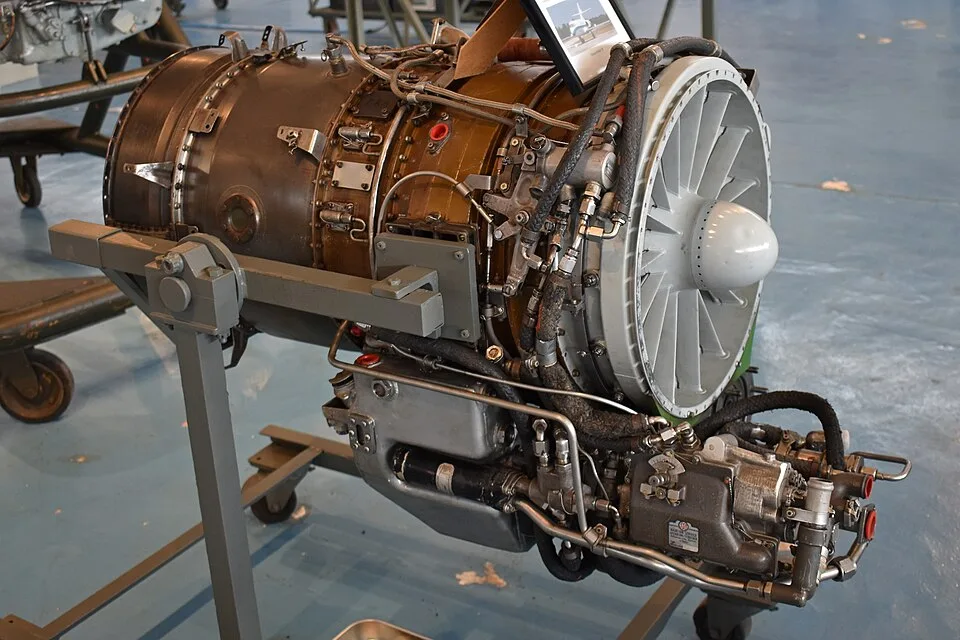
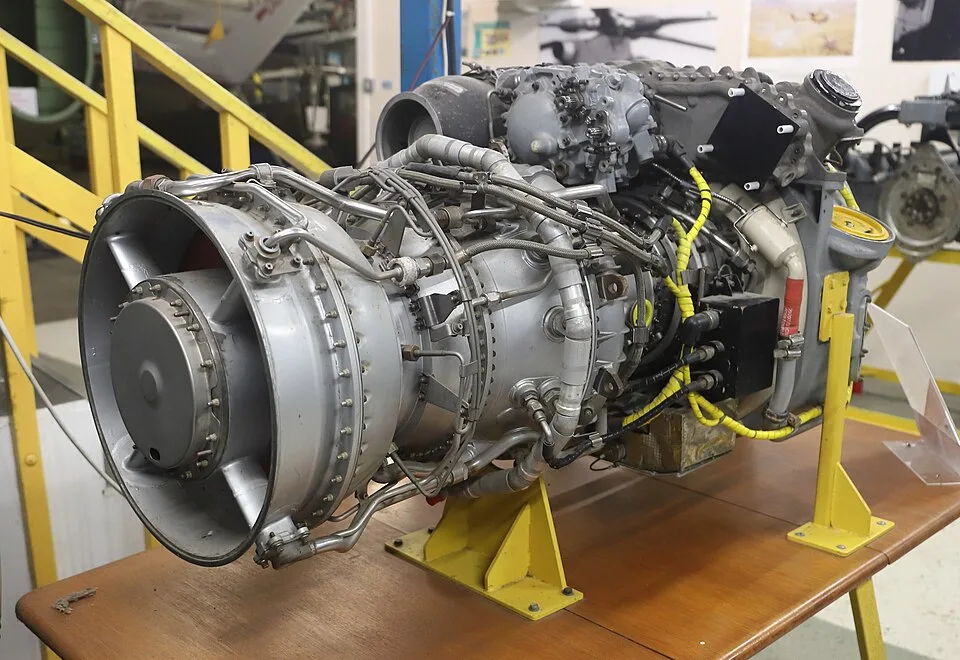
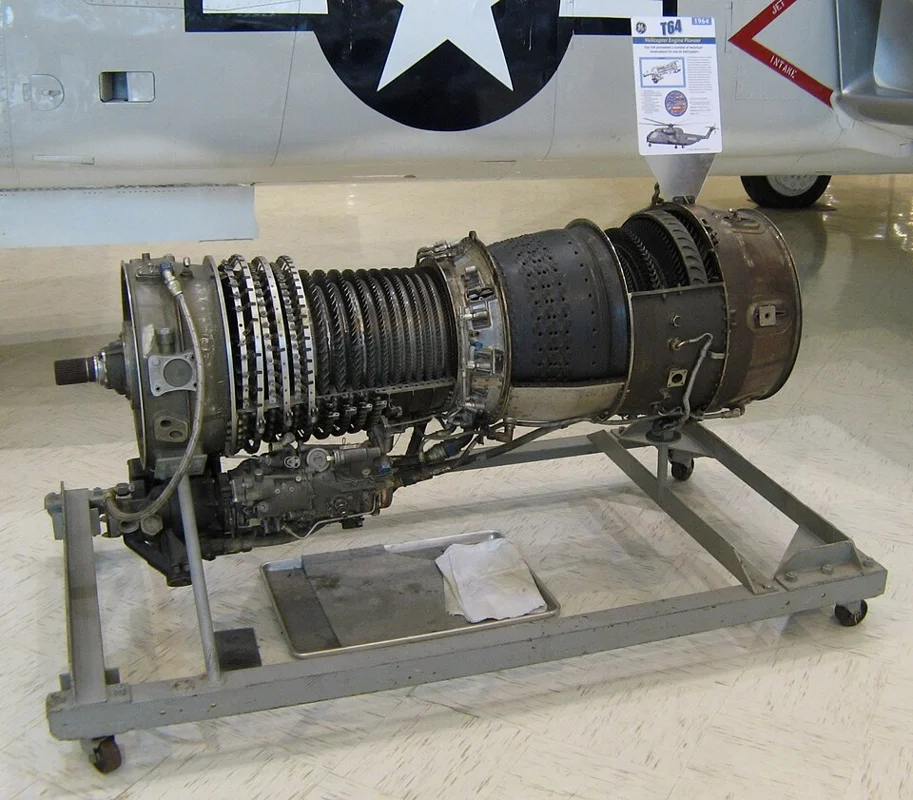
GE T64 turboshaft
A General Electric T64 turboshaft displayed at the Naval Aviation Museum in Pensacola, Florida. Year shown is the documented photograph year, not an asserted product introduction.
Historical General Electric engine; aviation business successor: GE Aerospace.
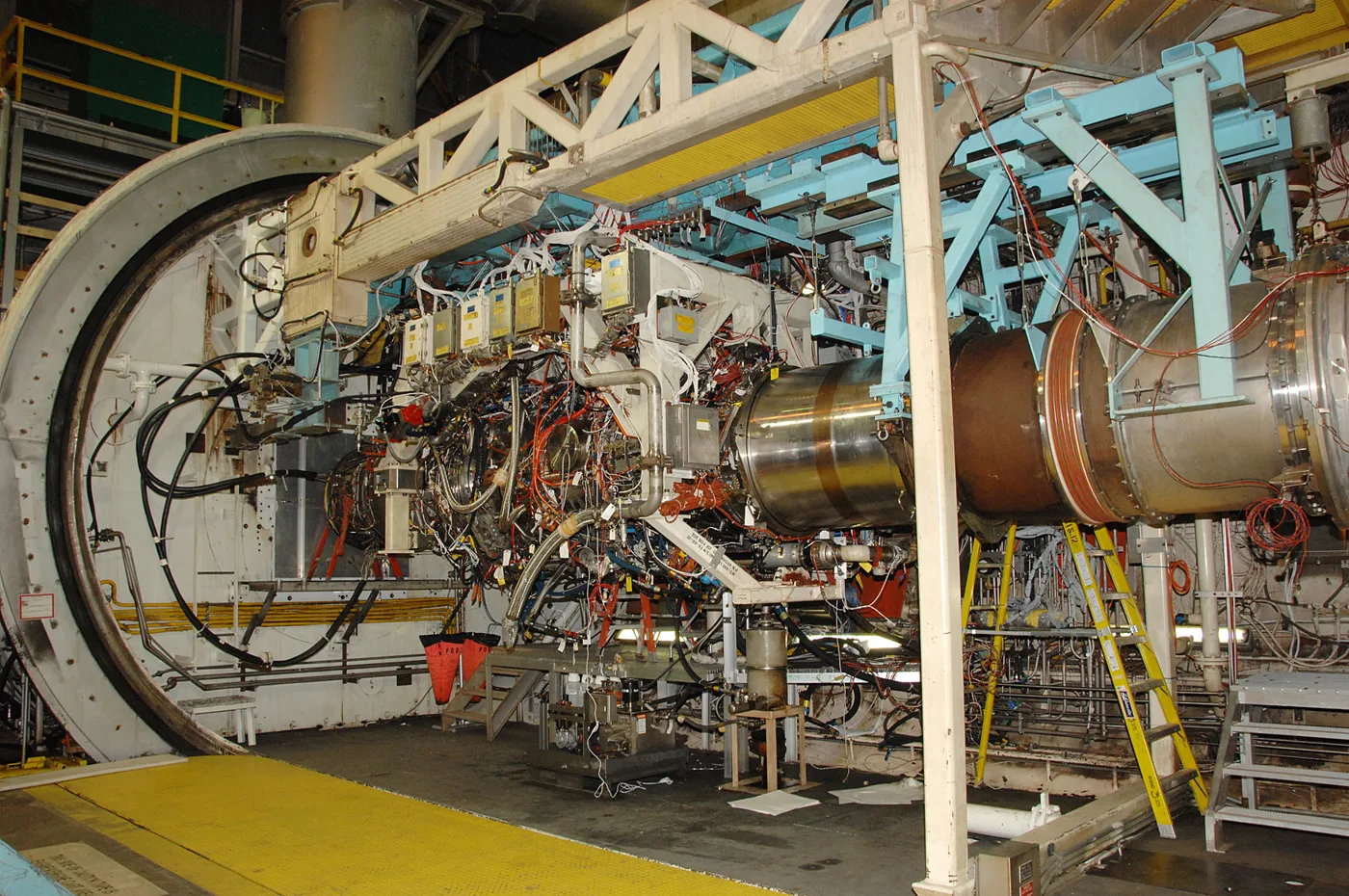
The GE/Rolls-Royce F136 engine in the J-2 test cell at Arnold Engineering Development Center in November 2007; the F136 was developed as the alternate engine for the F-35 Lightning II.
Developed by GE Aviation with Rolls-Royce. GE announced the GE Aerospace brand for its aviation business in July 2022; GE Aerospace launched as a standalone aerospace-focused public company following the GE Vernova spin-off in April 2024.
Photo: BrokenSphere via Wikimedia Commons · CC BY-SA 3.0
Photographed 2008Documented model
Healthcare
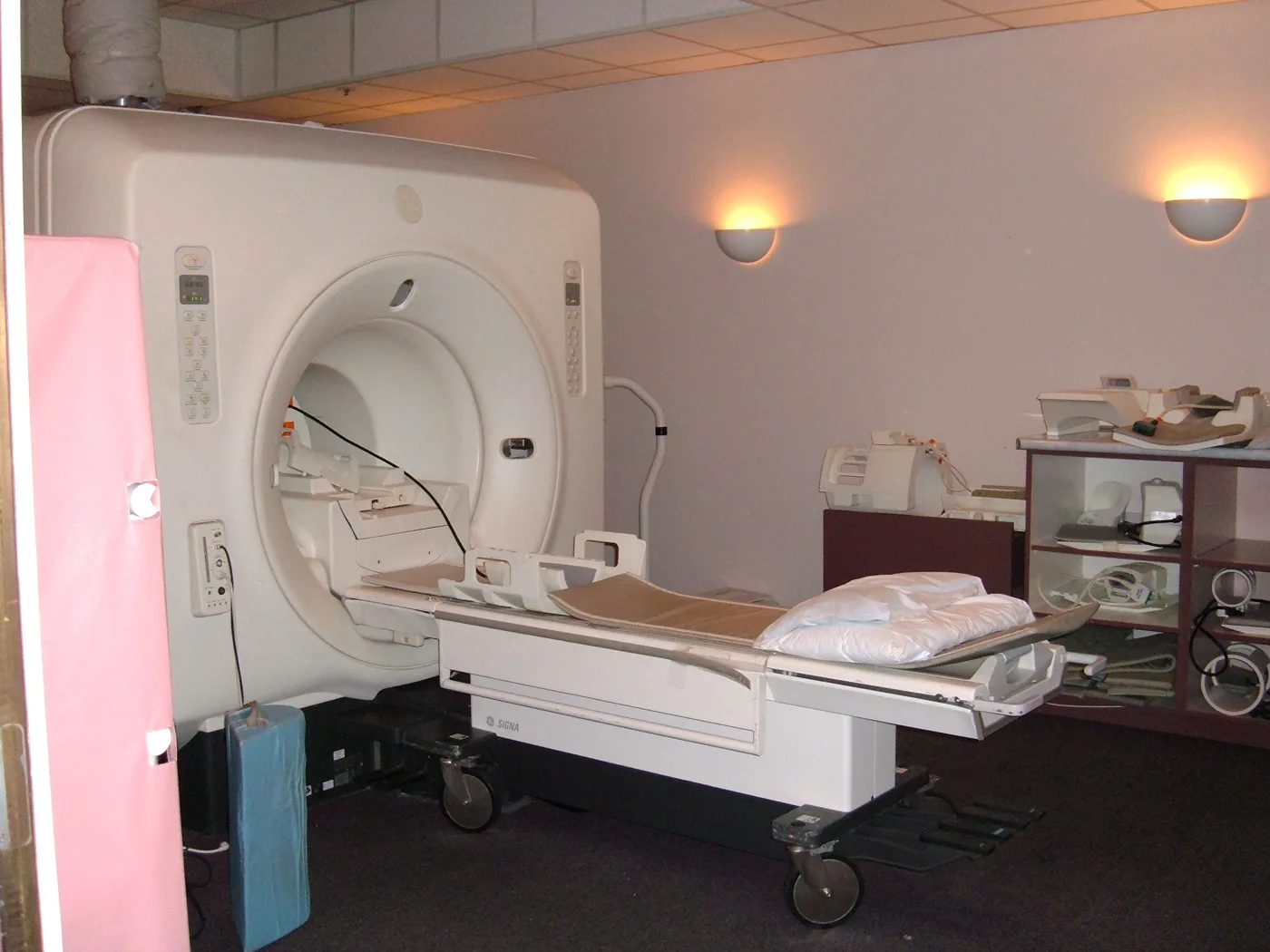
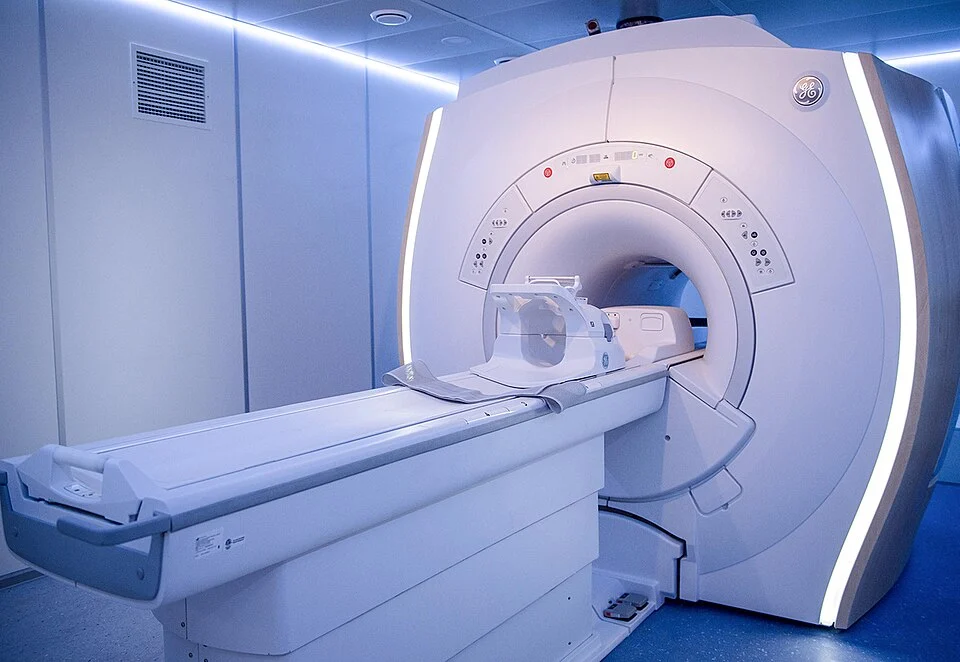
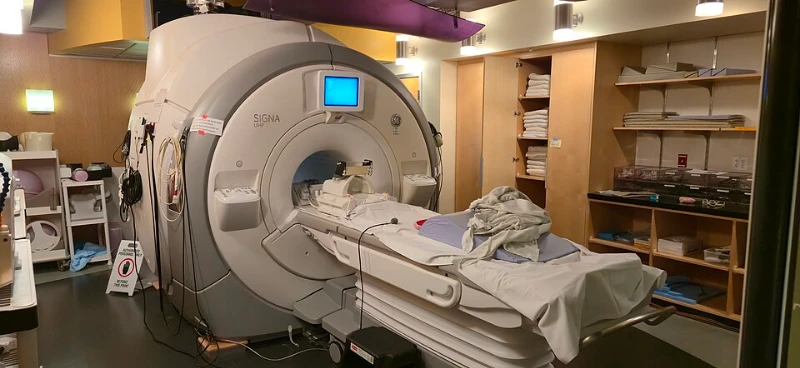
GE Signa MRI system
A GE Signa magnetic-resonance imaging system photographed in 2008; Signa has been GE's flagship MRI family since the 1980s, and the picture documents the series in clinical use.
Made by GE Medical Systems, later GE Healthcare; GE HealthCare became an independent company in January 2023.
Photo: BrokenSphere via Wikimedia Commons · CC BY-SA 3.0
2008 · photographed specimenDocumented use
Home & electronics
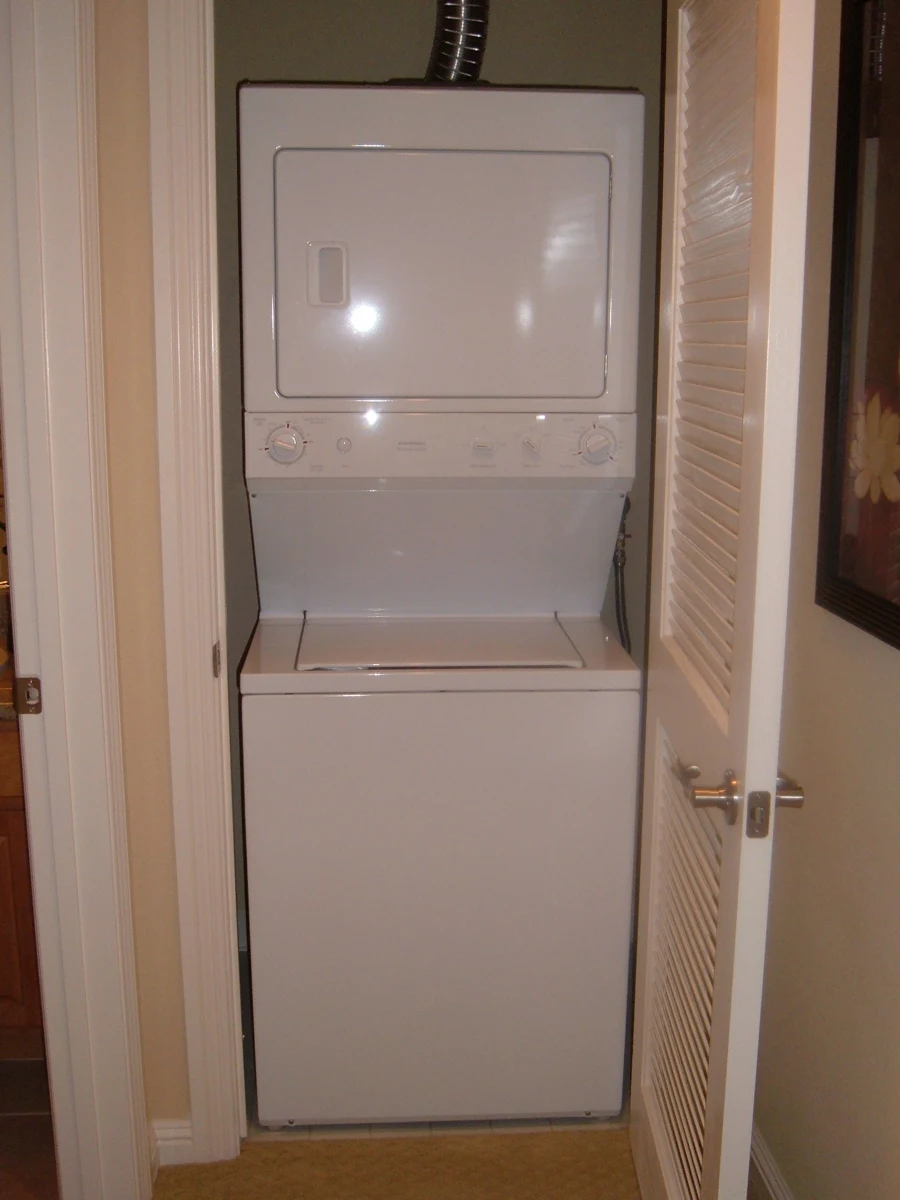
GE Spacemaker washer and dryer combination
A GE Spacemaker Laundry combination washing machine and clothes dryer, documented in an openly licensed photograph dated February 10, 2008; manufacture and introduction dates are not established. Photograph documentation does not establish GE invention priority.
Historical GE-branded household appliance. GE Appliances has been Haier-owned since 2016; this photograph alone does not establish the specimen’s manufacturing date.
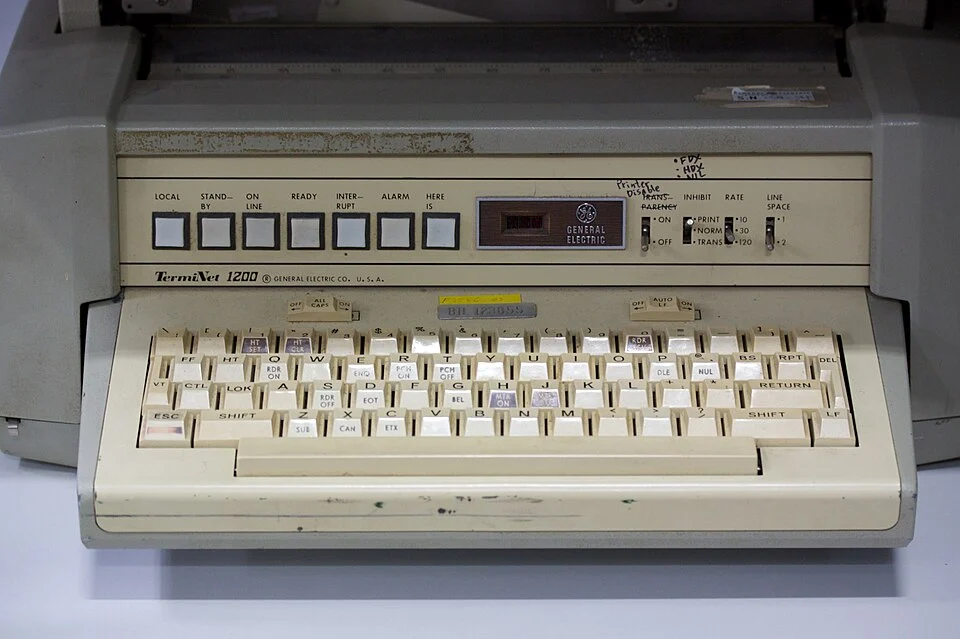
A surviving GE TermiNet 1200 photographed at the Computer History Museum in California in 2009. The date records museum documentation rather than launch.
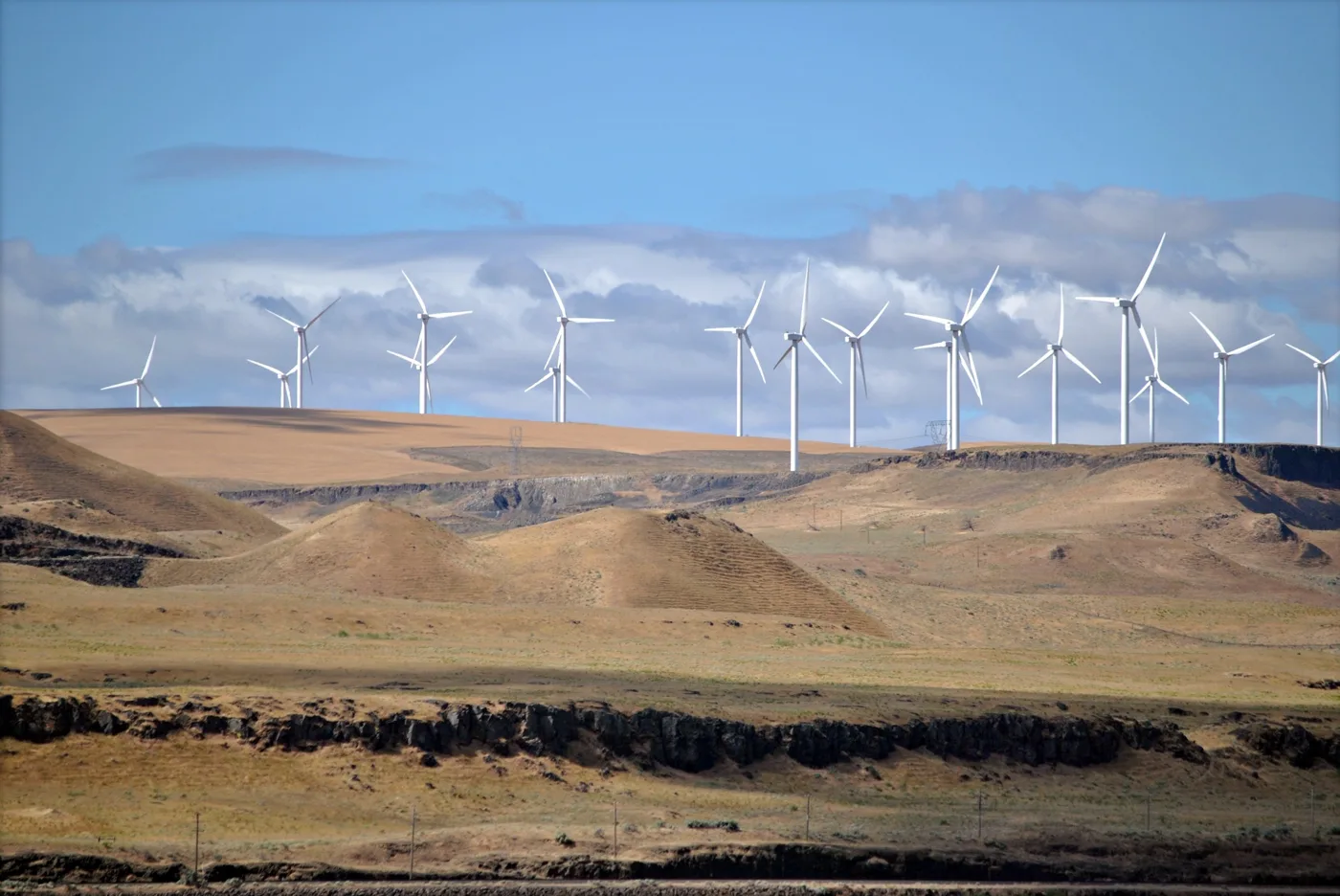
The Shepherds Flat Wind Farm in Oregon, photographed in July 2011 during construction. GE's contemporary announcements specified 338 turbines from its 2.5 MW platform, initially called 2.5xl and subsequently identified as 2.5-100; completion was expected in 2012.
Built by GE's wind-energy business, which became part of the independent GE Vernova in 2024.
Photo: Olivier Cleynen · preview extracted and resized · CC BY-SA 3.0
Photographed 2011Documented use
Healthcare
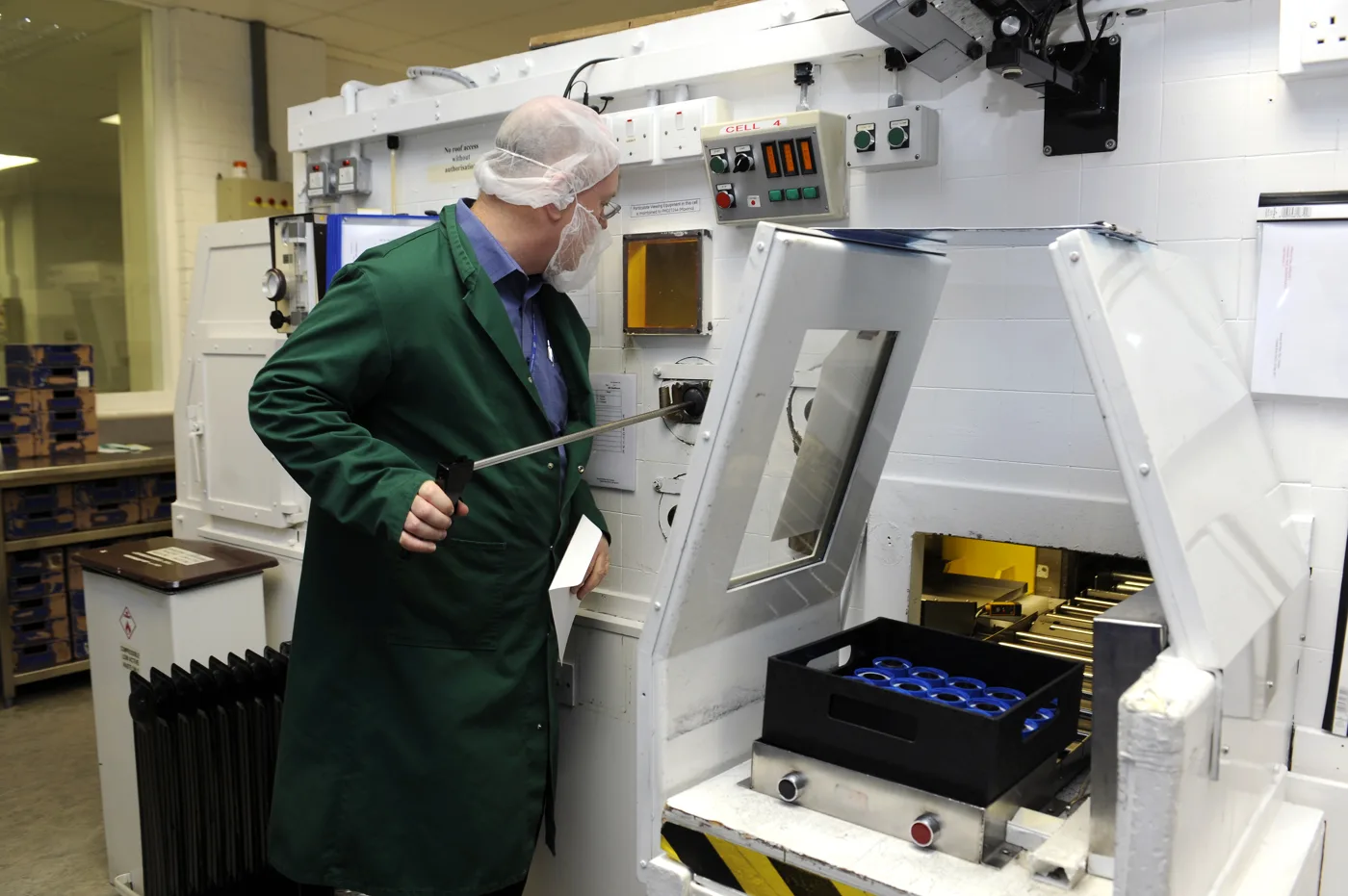
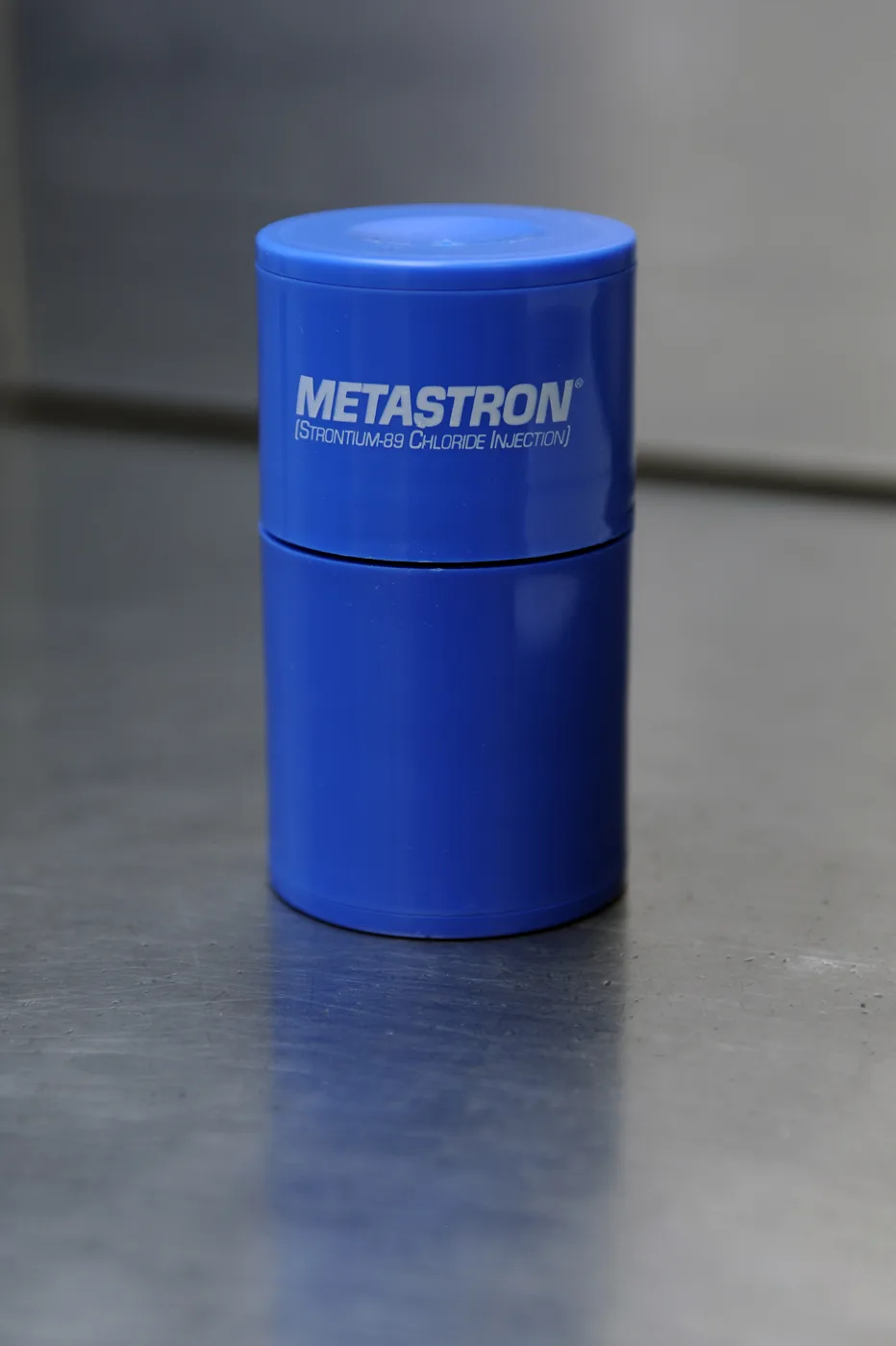
GE Healthcare Amersham radiopharmaceuticals
GE Healthcare radiopharmaceutical packaging at the Amersham site in England, photographed in 2011; GE acquired Amersham in 2004, gaining its nuclear-medicine tracer business.
Made by GE Healthcare's pharmaceutical-diagnostics business; GE HealthCare became an independent company in January 2023.
Photo: IAEA Imagebank via Wikimedia Commons · CC BY-SA 2.0
Unveiled May 2011Documented use
Wind & renewable energy
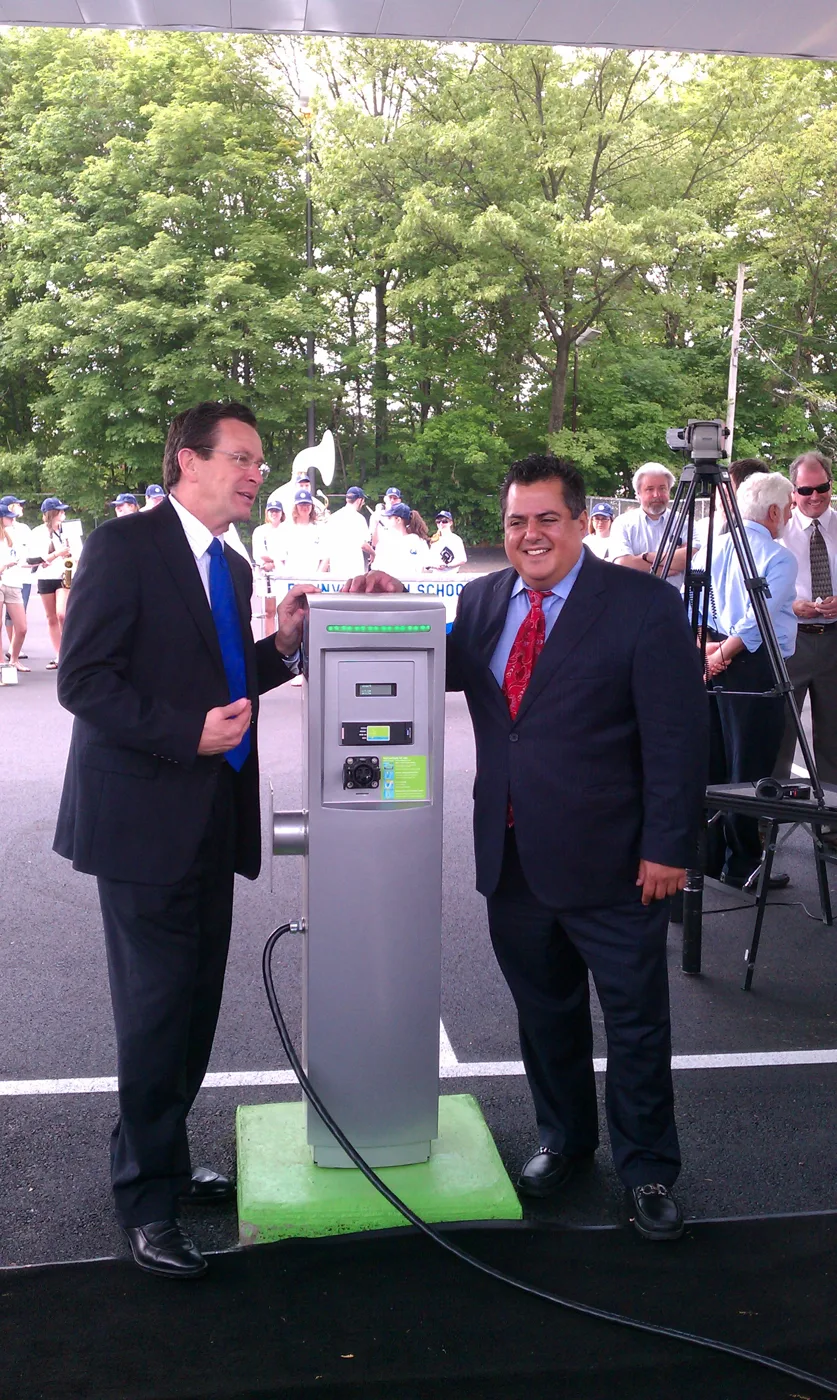
GE Solar Carport, Plainville, 2011
Governor Dannel Malloy joining GE Energy Industrial Solutions employees for the unveiling of the GE Solar Carport in Plainville, Connecticut, in May 2011 — a solar canopy that charged electric vehicles.
Built by GE Energy's Industrial Solutions business. ABB completed its acquisition of GE Industrial Solutions on June 30, 2018; this business did not become part of GE Vernova in 2024.
Photo: IAEA Imagebank via Wikimedia Commons · CC BY-SA 2.0
1950s components · photographed 2012Documented use
Industrial electronics
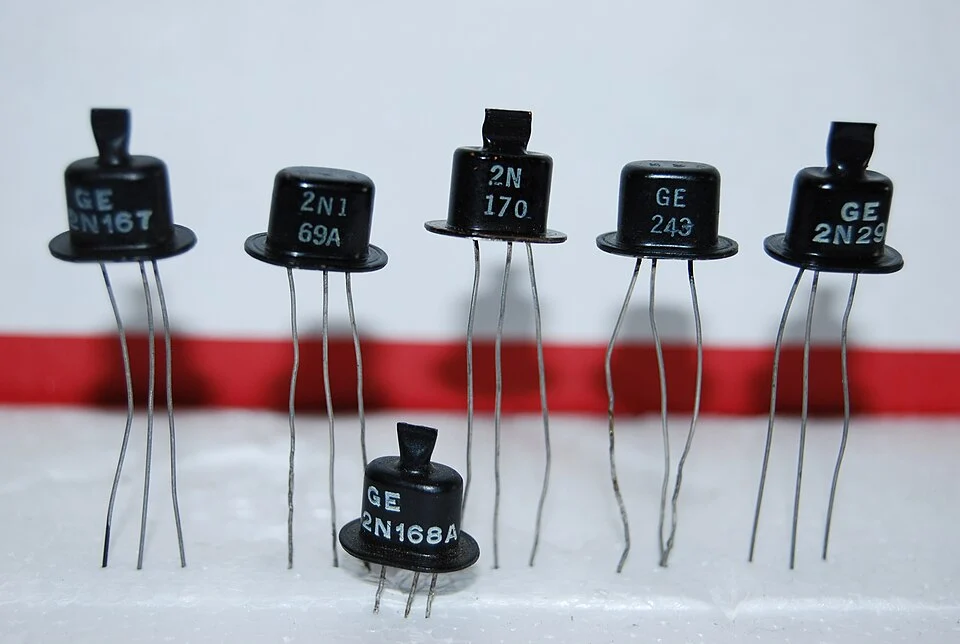
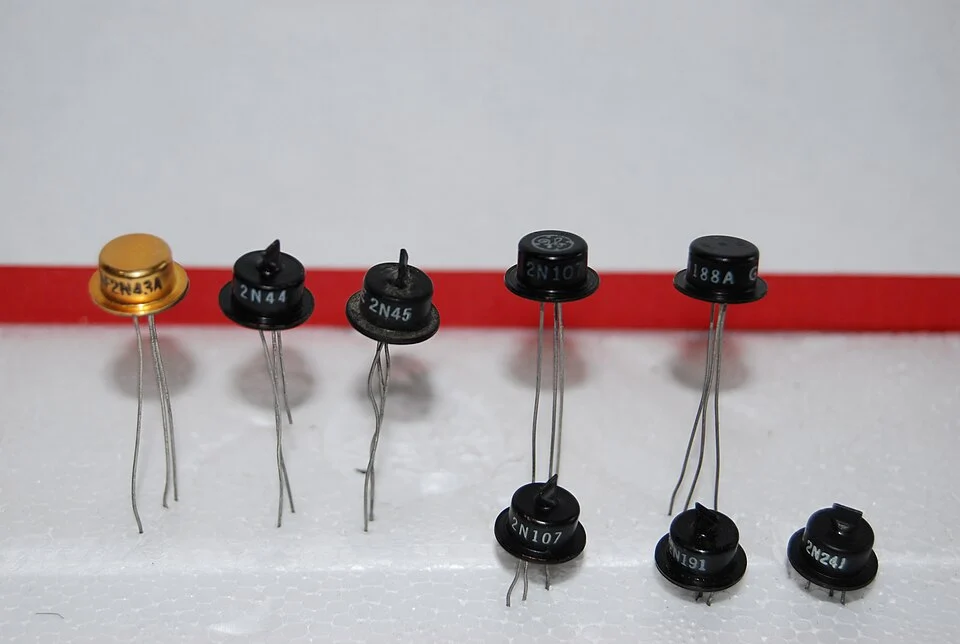
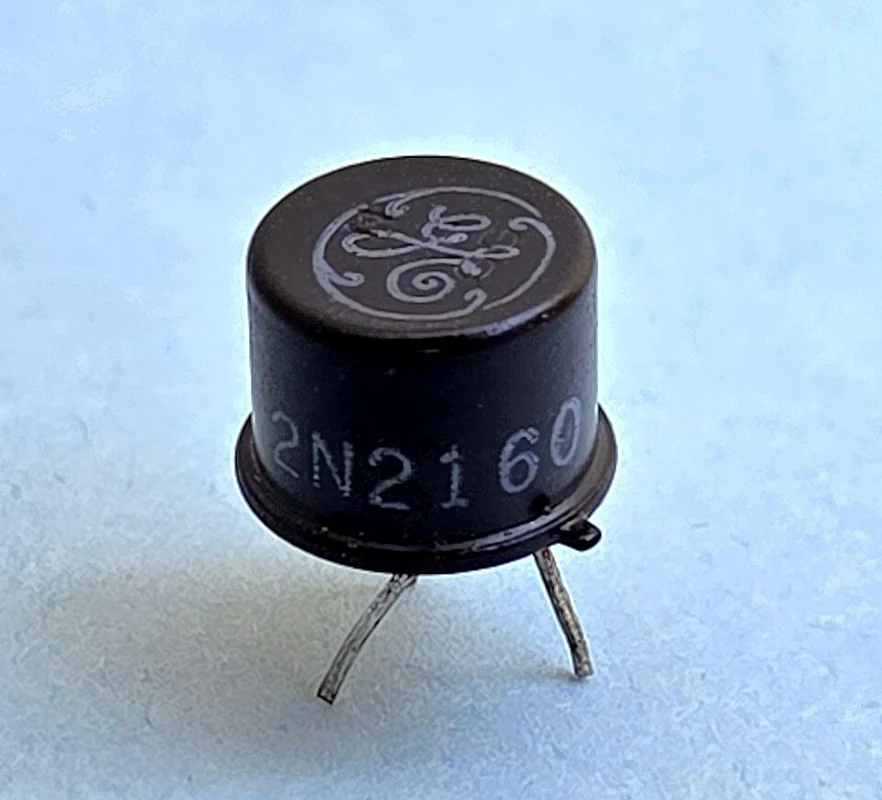
GE NPN transistor specimens
A group of GE NPN transistors including types 2N167, 2N169, 2N170, 2N292 and 2N168A. The archive describes these as 1950s components; the year here dates the photograph record.
Historical GE-branded equipment. The archive documents the specimen, not its invention or a present-day corporate owner.
2013 · documented photograph (not introduction)Documented use
Aviation
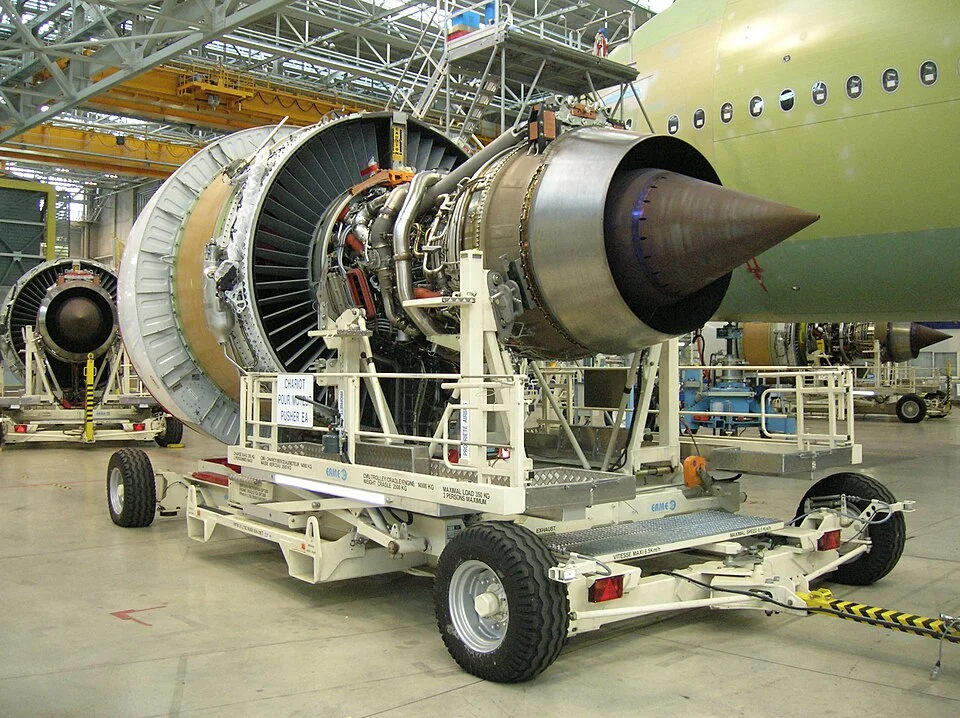
Engine Alliance GP7200 · GE/Pratt & Whitney JV
A GP7200 engine installation identified as MSN108 at Airbus Lagardère, photographed on 23 December 2013. Year shown is the documented photograph year, not an asserted product introduction.
Engine Alliance 50/50 GE and Pratt & Whitney joint venture; not solely a GE product. https://enginealliance.com/about/
2013 · documented photograph (not introduction)Documented use
Rail & transportation
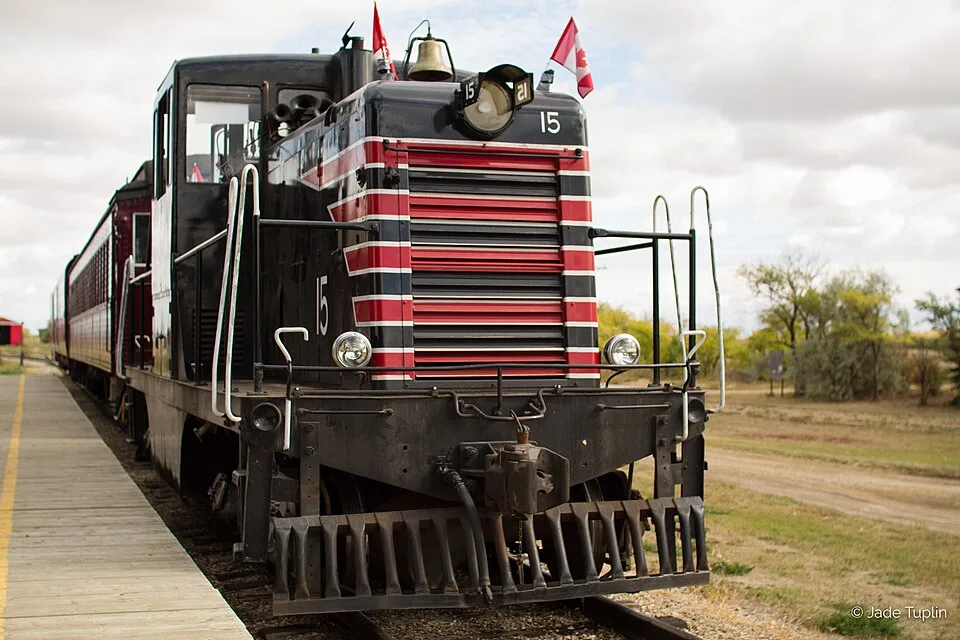
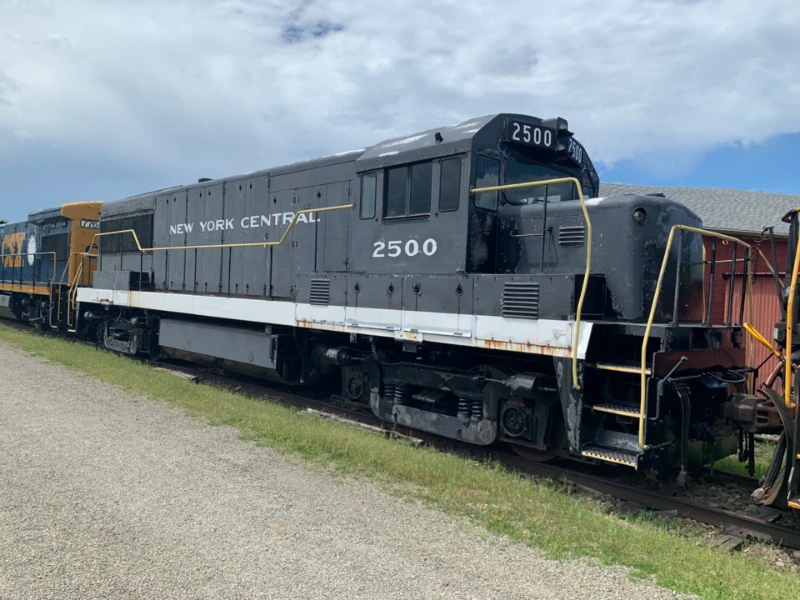
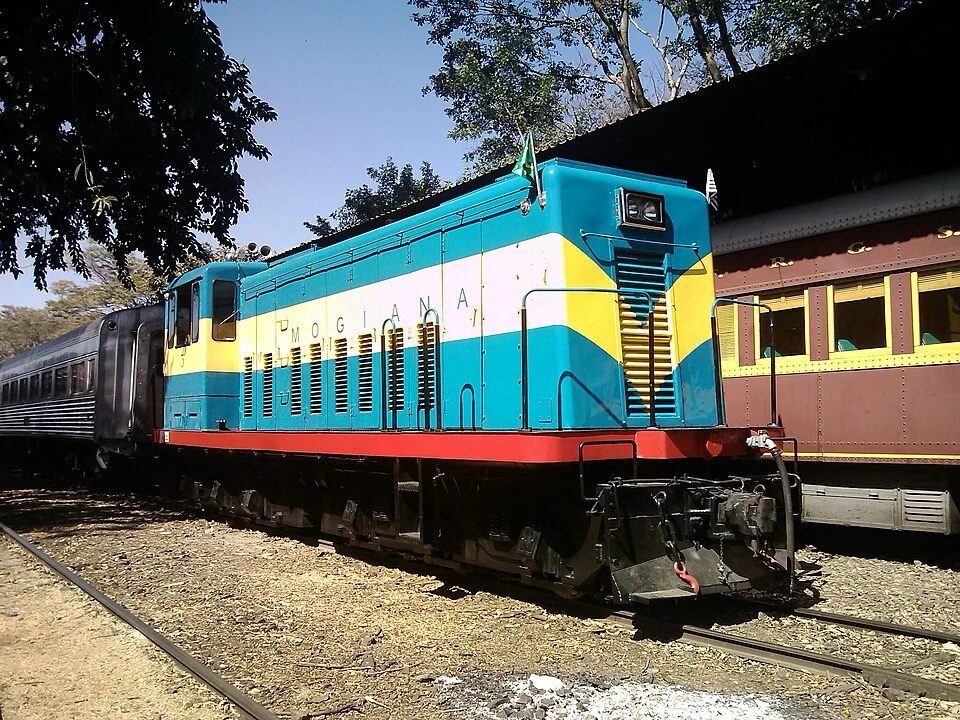
GE 70-ton switcher · ABPF 03
A metre-gauge GE 70-ton switcher photographed at Anhumas station in Campinas, São Paulo state, Brazil, on 15 September 2013. Year shown is the documented photograph year, not an asserted product introduction.
Historical GE locomotive; GE Transportation subsequently merged with Wabtec in 2019. The photograph year is not a manufacture date.
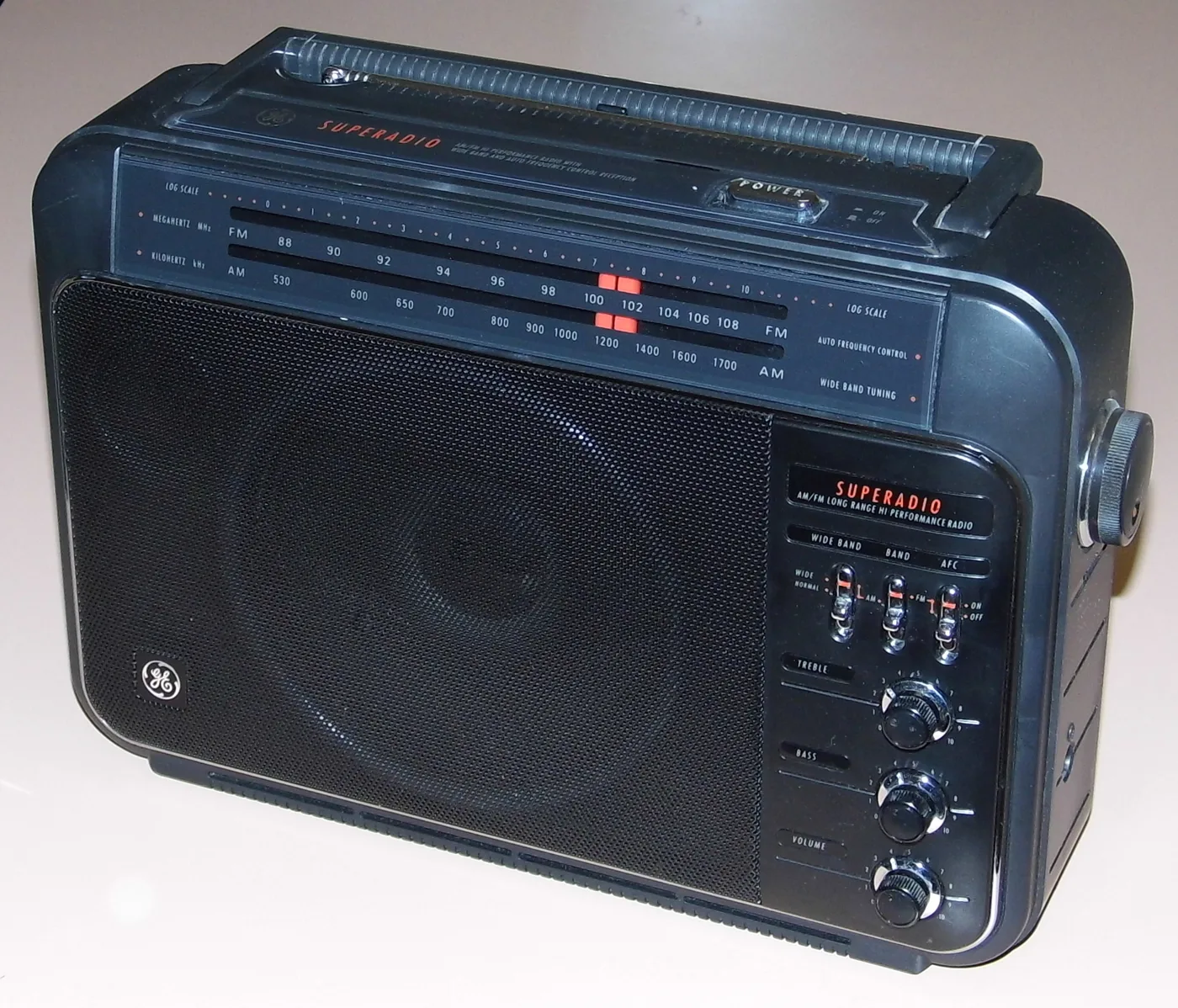
A GE Superadio III AM/FM radio, model 7-2887A, photographed in 2014; the Superadio line was famous among radio enthusiasts for its long-distance AM reception.
GE-branded consumer electronics made after GE sold its consumer-electronics business to Thomson in 1987; the GE brand continued under license.
Photo: Joe Haupt via Wikimedia Commons · CC BY-SA 2.0
Photographed 2015Documented model
Wind & renewable energy
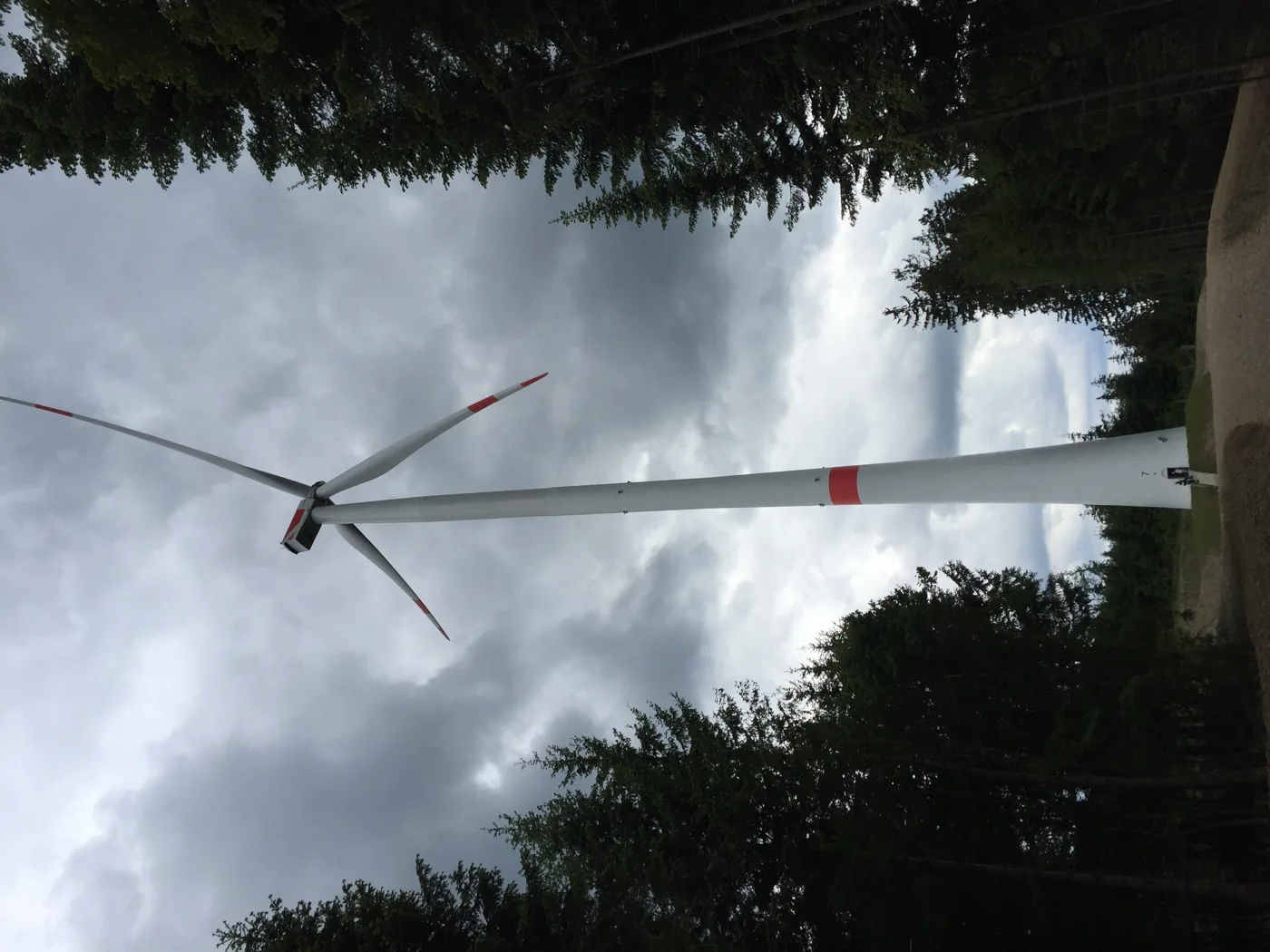
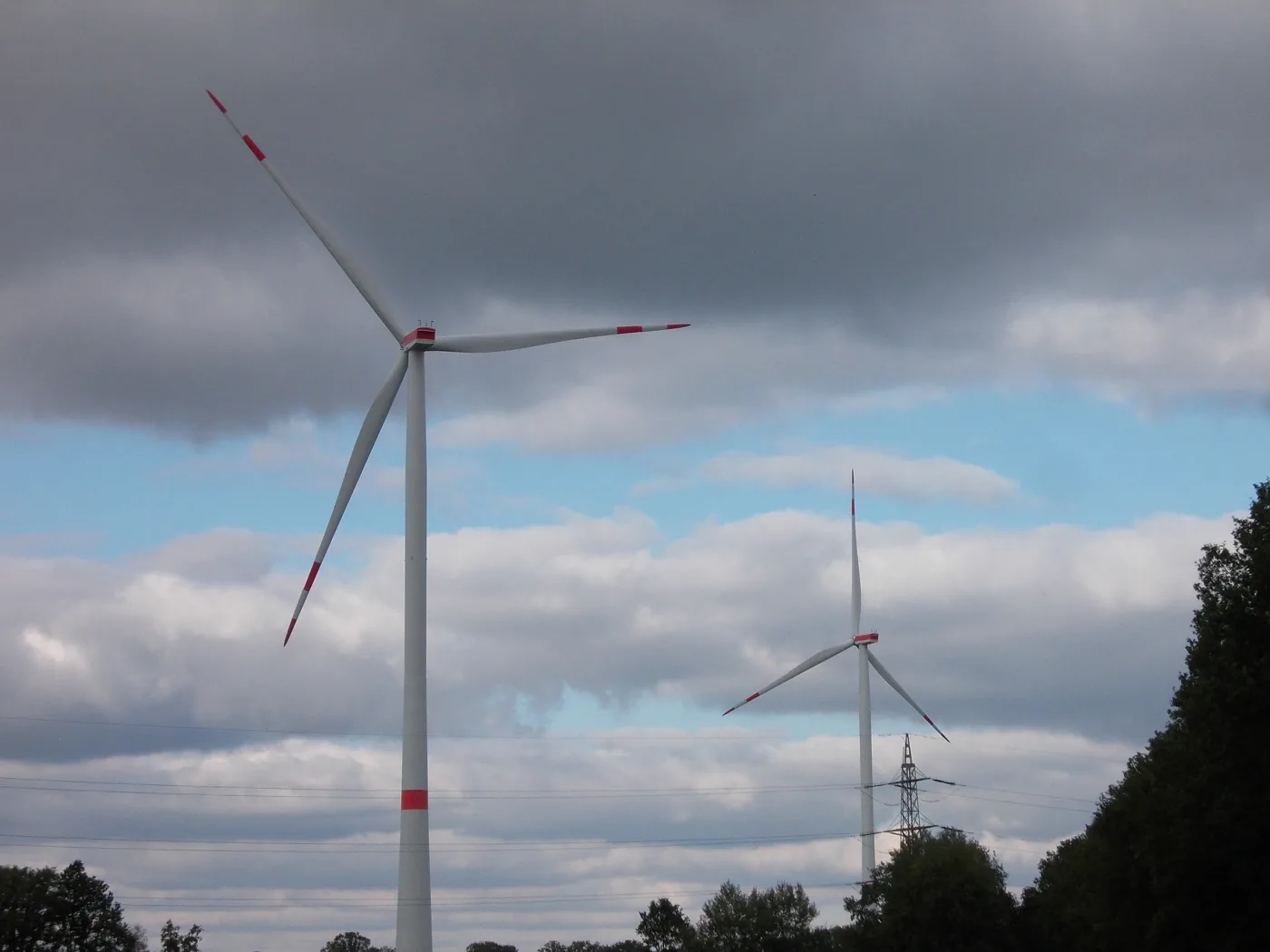
GE 2.5-120 wind turbine, Heidenrod
A GE 2.5-120 turbine in the Heidenrod wind park in Germany, photographed in May 2015; the 2.5 MW platform was GE's workhorse for European onshore wind.
Built by GE's wind-energy business, which became part of the independent GE Vernova in 2024.
Photo: Adl252 via Wikimedia Commons · CC BY-SA 4.0
2015 · Tier 4 production eraDocumented model
Rail & transportation
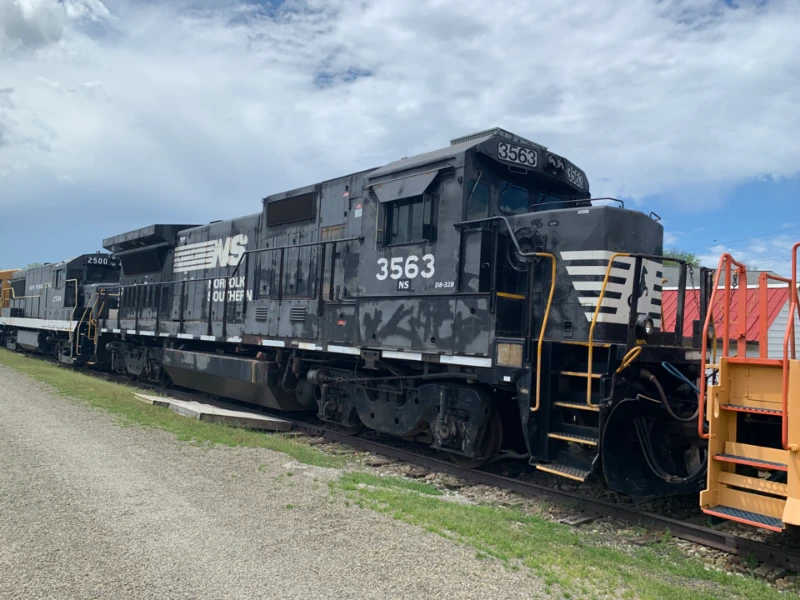
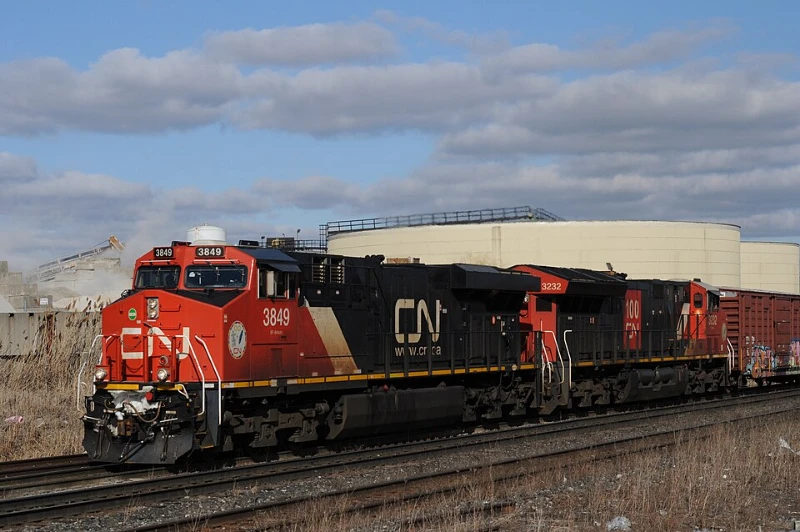
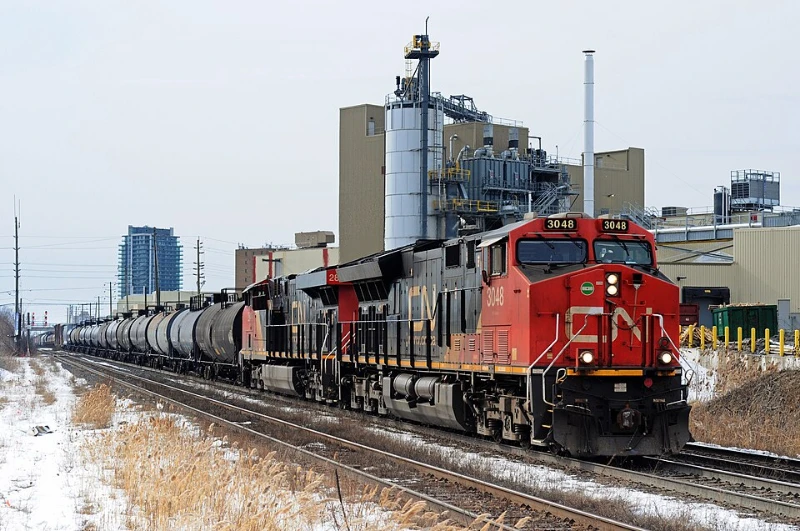
GE Evolution Series ET44AC
The Tier 4 generation of GE’s Evolution freight platform was developed to reduce regulated emissions. The photographed lead locomotive is CN 3048, an ET44AC.
Historical GE Transportation platform; successor business at Wabtec.
Photo: Milan Suvajac · preview extracted and resized · CC BY-SA 4.0
Photographed 2016Documented use
Wind & renewable energy
Haliade 6 MW turbines, Block Island Wind Farm
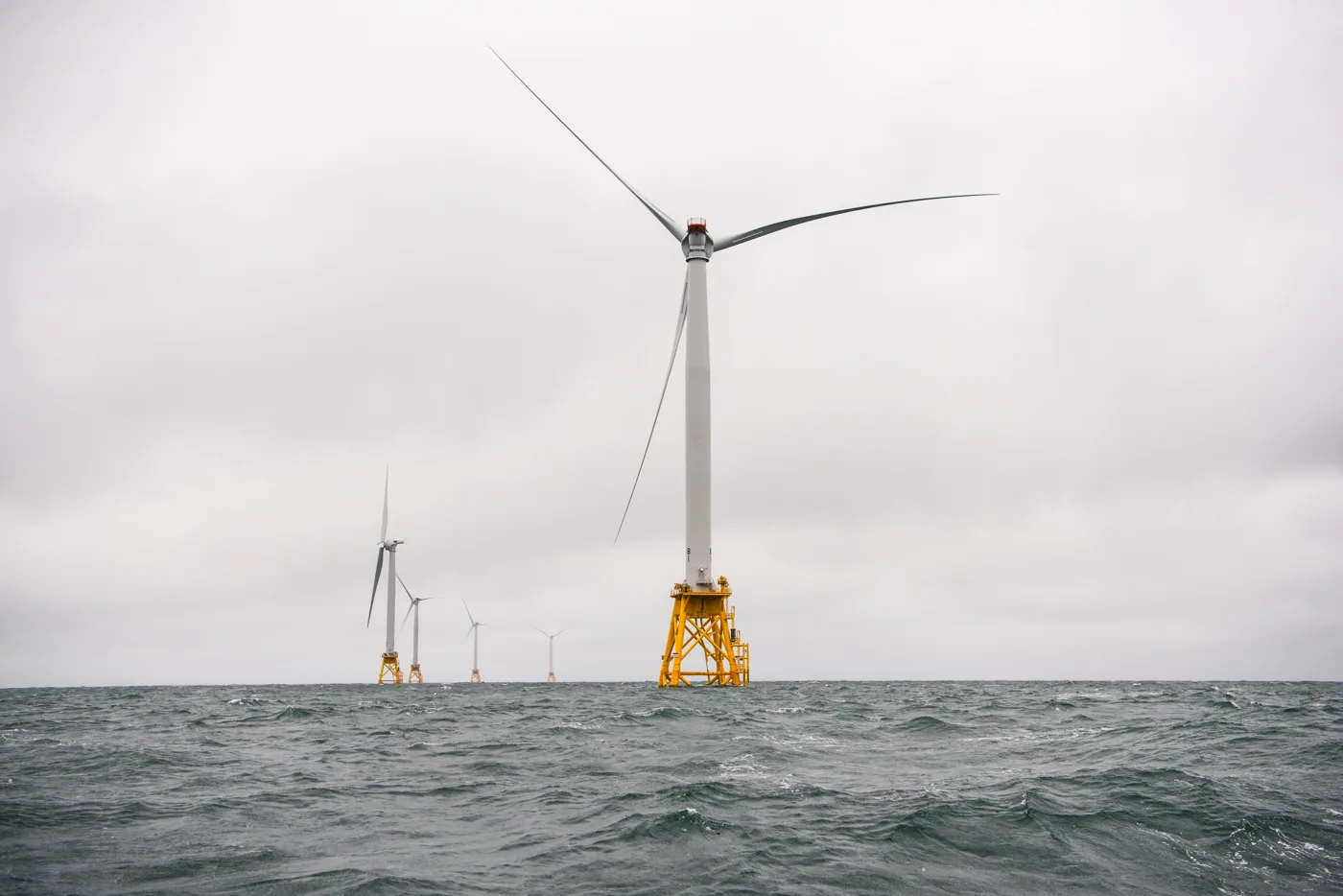
The Block Island Wind Farm off Rhode Island, photographed in 2016 — the first offshore wind farm in the United States, using five GE Haliade 150-6MW turbines.
The Haliade 150-6MW was developed by Alstom before GE acquired Alstom's energy assets in 2015. GE supplied the Block Island turbines; the offshore-wind business later became part of independent GE Vernova in 2024.
2017 · dated photograph (not launch year)Documented use
Power & grid
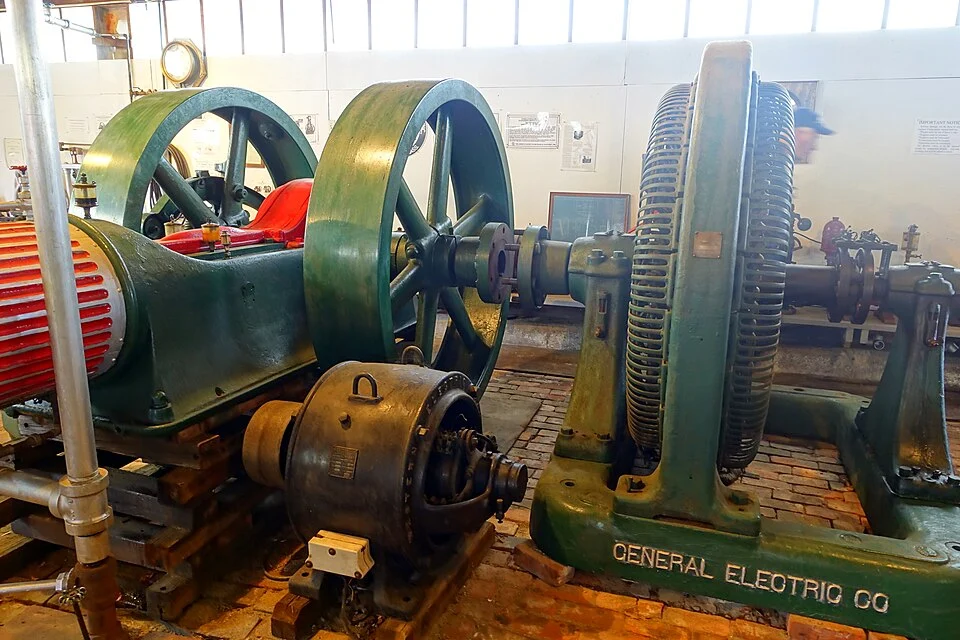
GE generator · New England Wireless & Steam Museum
A General Electric generator preserved in the stationary steam engine collection of the New England Wireless & Steam Museum in East Greenwich, Rhode Island.
Historical GE-branded equipment. The archive documents the specimen, not its invention or a present-day corporate owner.
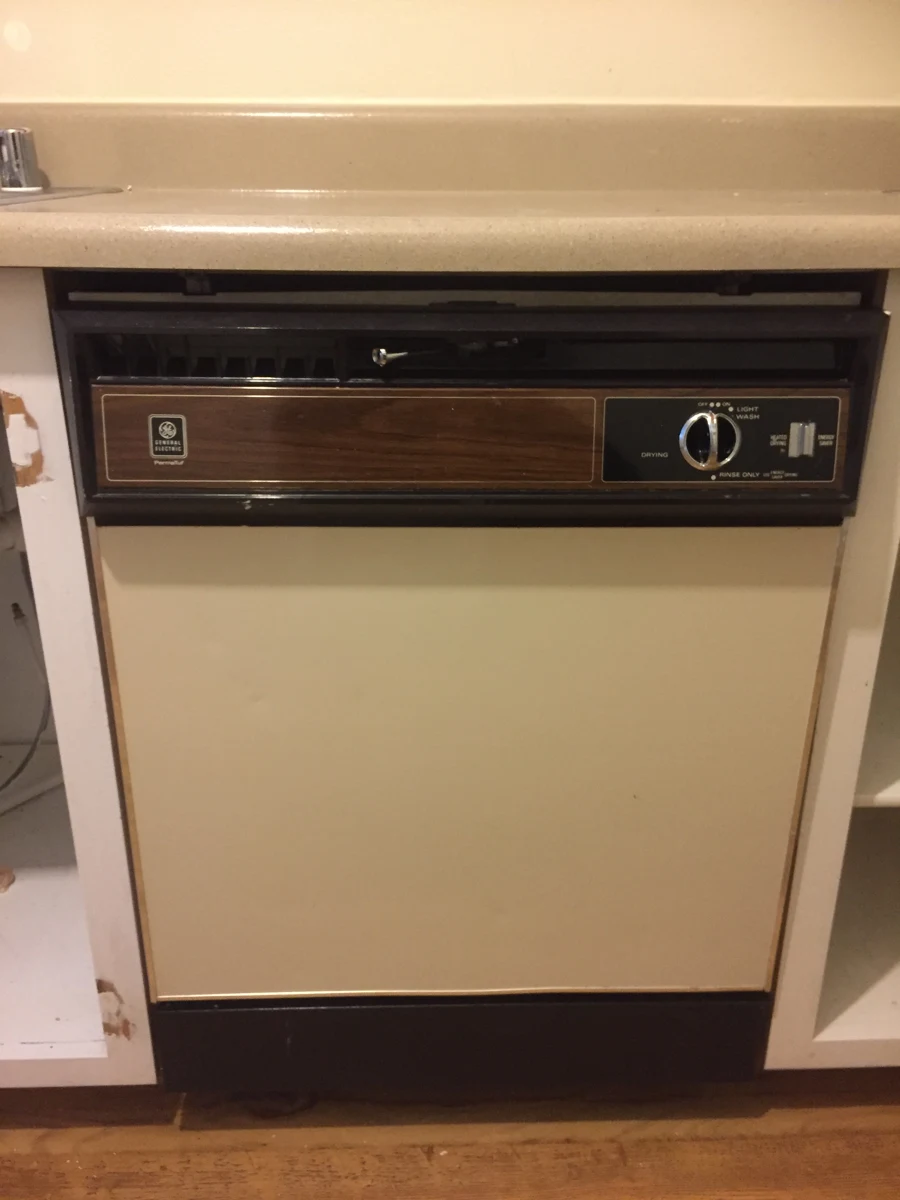
General Electric dishwasher model GSD500D-03AW, documented in an openly licensed photograph dated November 3, 2017; this date is not a model launch or manufacture date. Photograph documentation does not establish GE invention priority.
Historical GE-branded household appliance. GE Appliances has been Haier-owned since 2016; this photograph alone does not establish the specimen’s manufacturing date.
Photo: Steven Pavlov / Wikimedia Commons · resized; orientation corrected where needed · CC BY-SA 4.0
2017 · photographed specimenDocumented use
Home & electronics
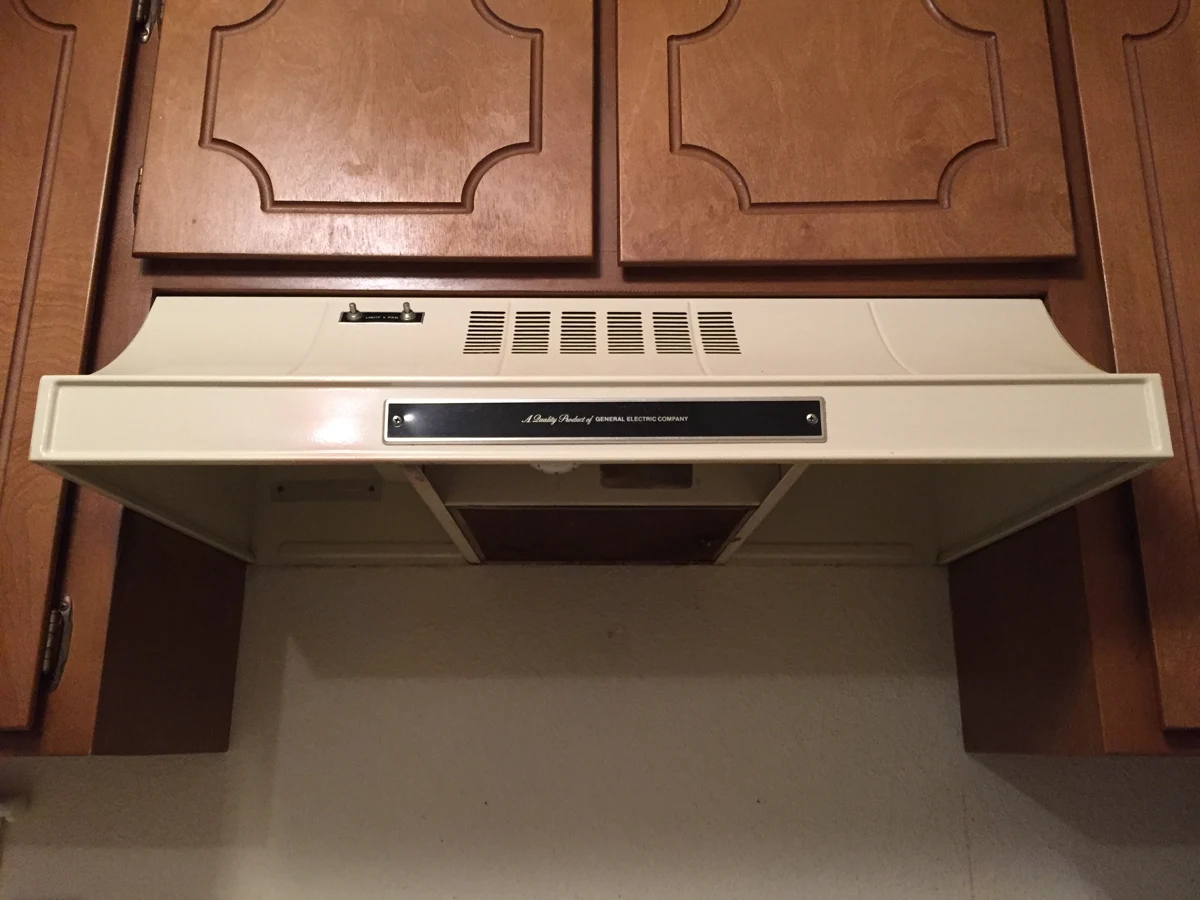
GE N320 003AD oven exhaust hood
General Electric oven exhaust hood model N320 003AD, documented in an openly licensed photograph dated July 22, 2017; this date is not a model launch or manufacture date. Photograph documentation does not establish GE invention priority.
Historical GE-branded household appliance. GE Appliances has been Haier-owned since 2016; this photograph alone does not establish the specimen’s manufacturing date.
Photo: Steven Pavlov / Wikimedia Commons · resized; orientation corrected where needed · CC BY-SA 4.0
March 2018 · announcedIntroduced
Energy & power
GE Haliade-X offshore wind turbine
Announced as a 12-MW direct-drive offshore turbine with a 220-metre rotor. The photograph shows the Rotterdam prototype; prototype operation began in 2019.
Offshore-wind product family now at independent GE Vernova.
Photo: Ktf · preview extracted and resized · CC BY-SA 4.0
2018 · photographed specimenDocumented use
Home & electronics
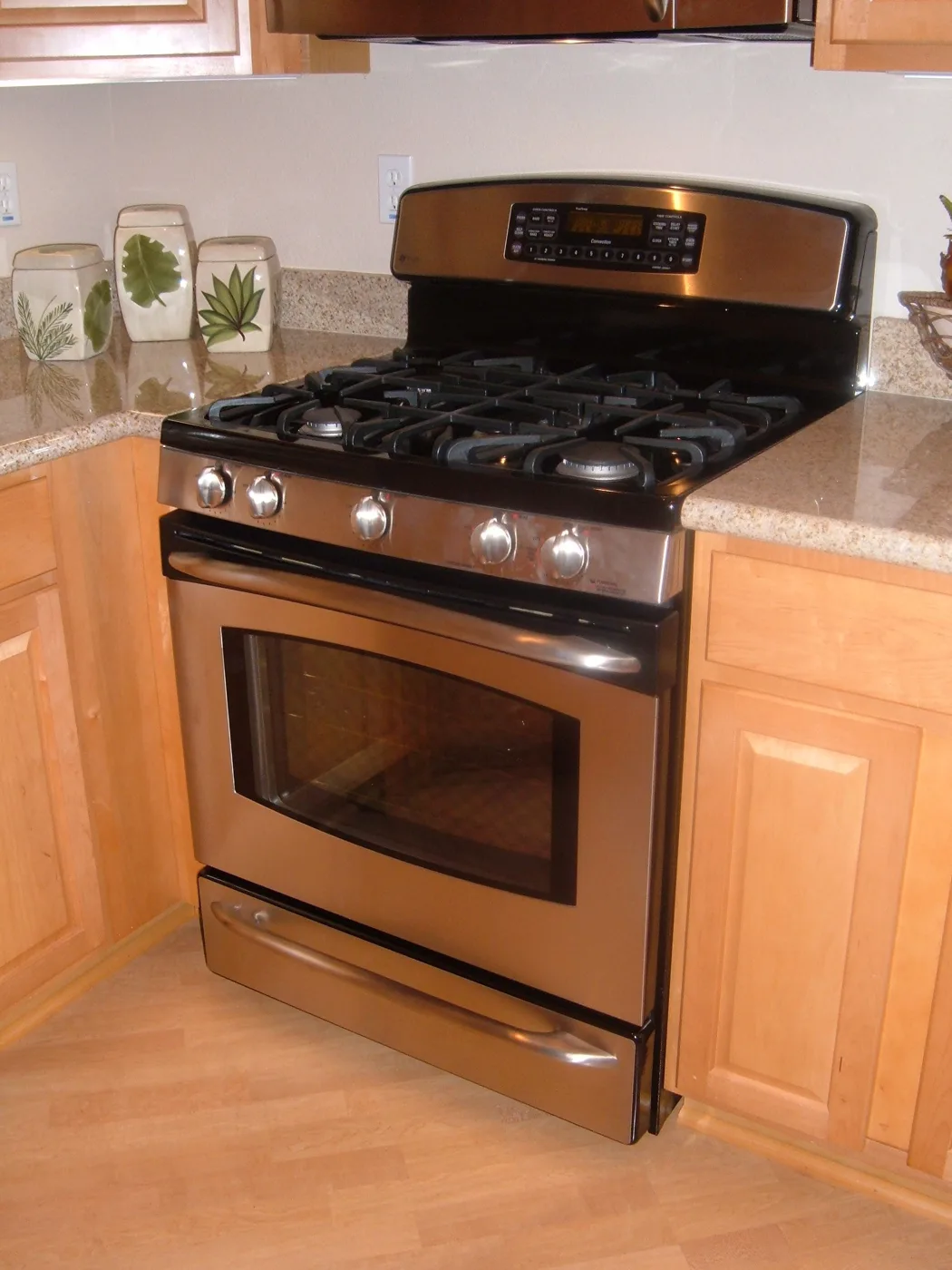
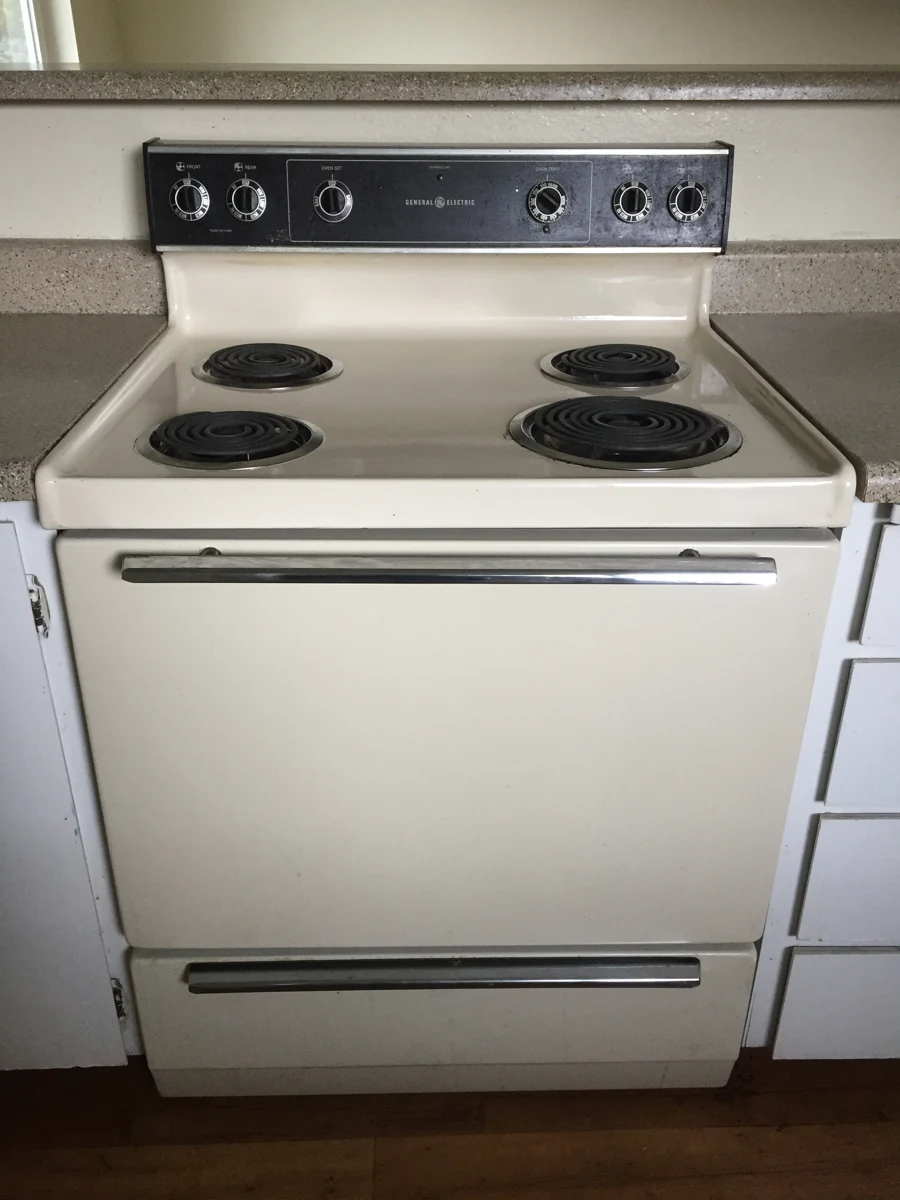
GE JBS03 0F2AD electric range
GE electric range model JBS03 0F2AD, documented in an openly licensed photograph dated January 10, 2018; this date is not a model launch or manufacture date. Photograph documentation does not establish GE invention priority.
Historical GE-branded household appliance. GE Appliances has been Haier-owned since 2016; this photograph alone does not establish the specimen’s manufacturing date.
Photo: Evgeny Samarin (Press Office of the Mayor and the Government of Moscow) / Mos.ru · CC BY 4.0
Documented 2019Documented use
Home & electronics
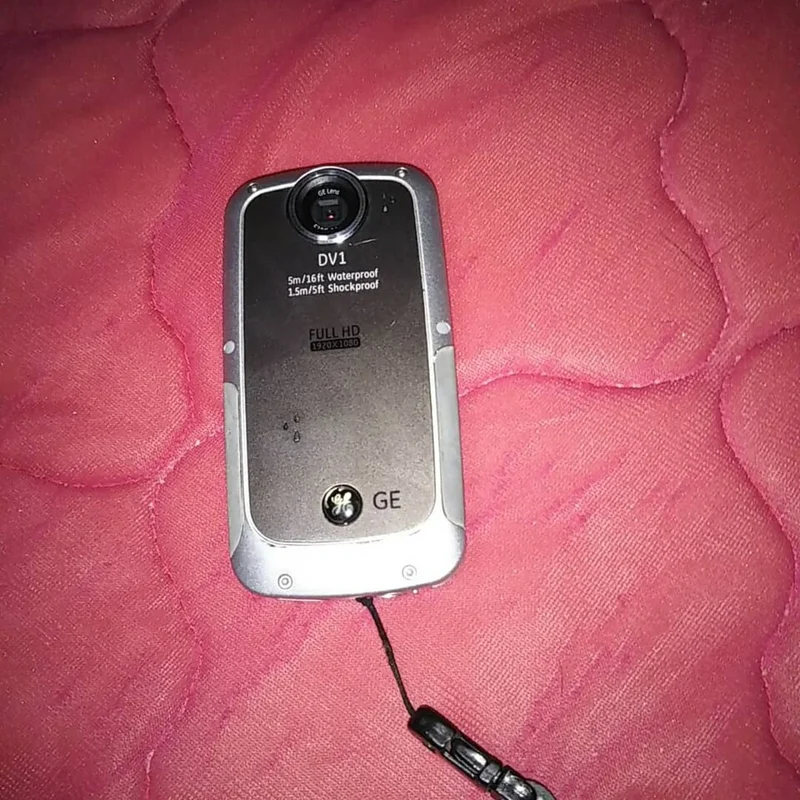
GE DV1 digital camcorder
A GE-branded DV1 camcorder photographed in November 2019. The year records the photograph rather than introduction; manufacturing attribution is not supplied by the archive.
GE-branded artifact; factory manufacturer not established by this record.
Late 1950s · museum description; published 2019Documented use
Home & electronics
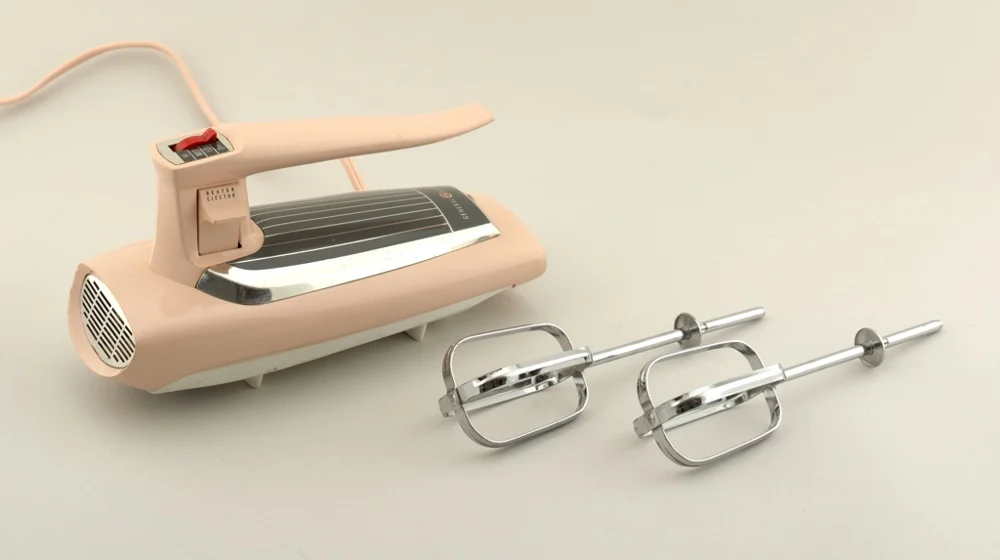
GE petal-pink portable mixer
A GE portable kitchen mixer illustrated in Cooper Hewitt’s dated April 4, 2019 article. The museum describes the appliance as late 1950s; 2019 dates the published photograph, not manufacture or introduction.
Photo: Leo Bro via Wikimedia Commons · CC BY-SA 4.0
Documented 2020Documented use
Home & electronics
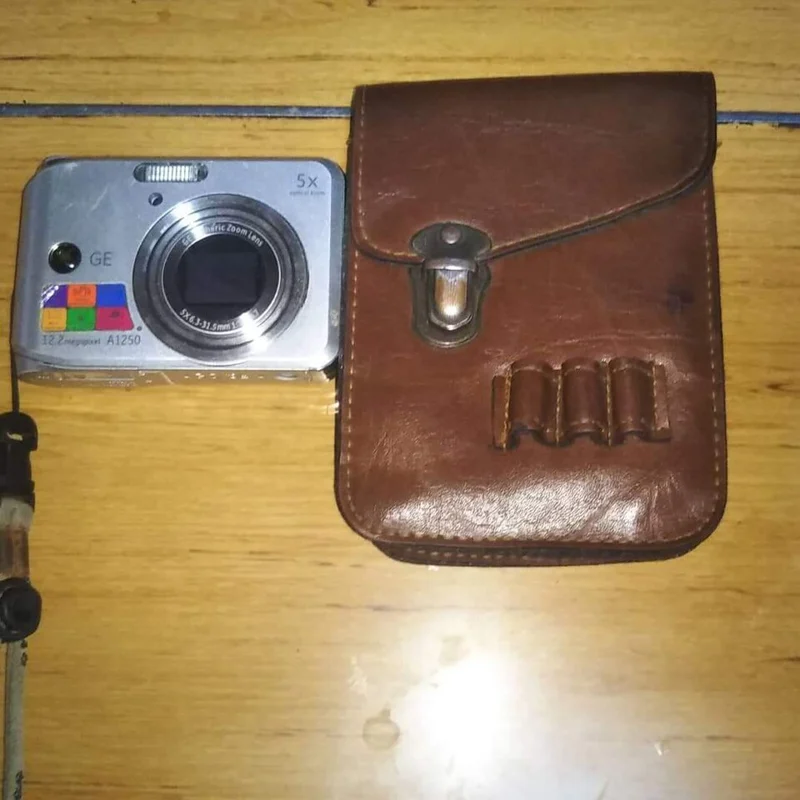
GE A1250 digital camera
A GE-branded A1250 digital camera photographed in May 2020. The year records the photograph; the archive does not establish launch date or factory manufacturer.
GE-branded artifact; factory manufacturer not established by this record.
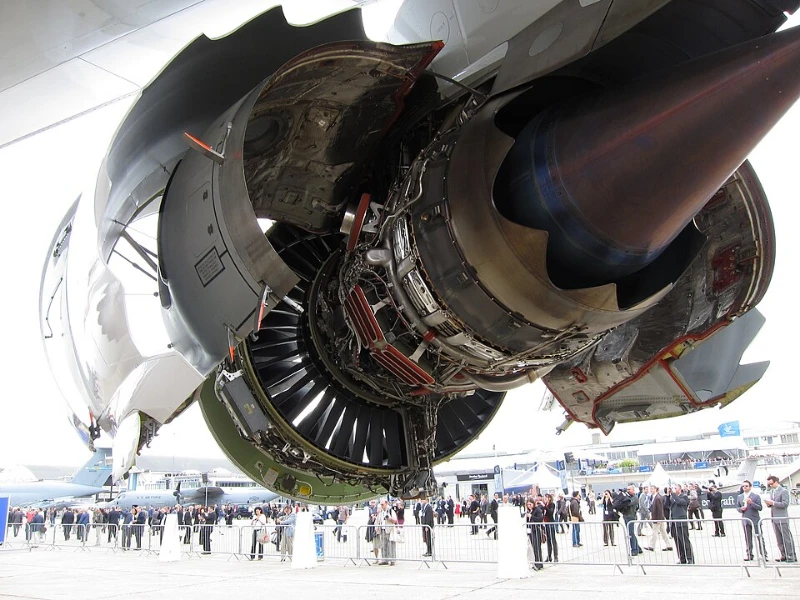
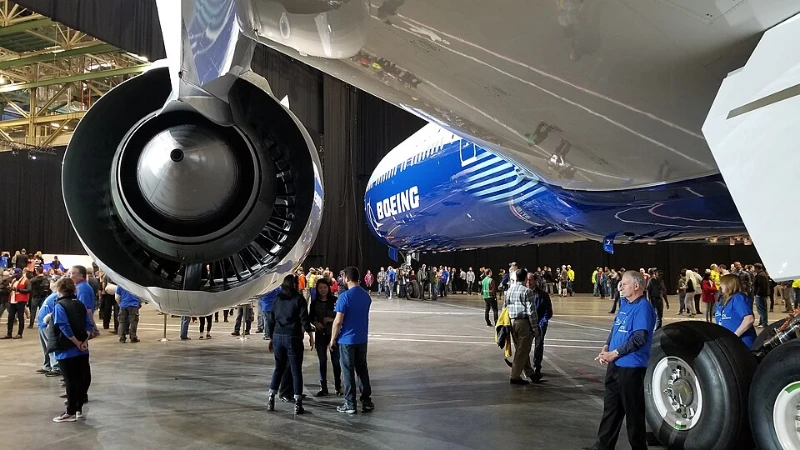
Designed for the Boeing 777X, the GE9X achieved FAA certification in September 2020. Photograph shows engines installed on a 777X at rollout, not an isolated engine.
GE Aerospace. Certification is not an airline-service introduction date.
Photo: Dan Nevill · preview extracted and resized · CC BY 2.0
Representative vintage illustration · not the exact vehicle, model or museum artifact.
August 4, 2021 · demonstration announcementDocumented use
Robotics & automation
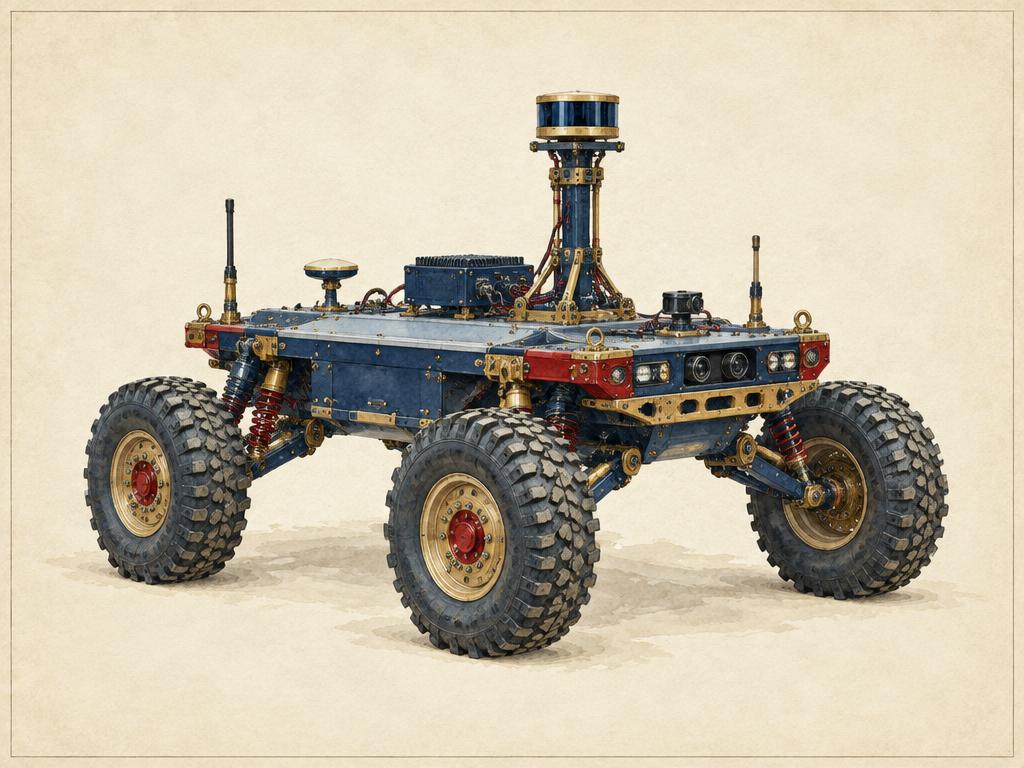
GE ATVer autonomous off-road robot
GE Research demonstrated a prototype autonomous ground vehicle under the U.S. Army's SARA research program. Vision, lidar and GE's Humble AI approach helped it assess known versus uncertain paths in wooded, unstructured terrain. The 2021 announcement documents a research demonstration, not commercial availability or battlefield deployment.
GE Research robotics and autonomy project with the U.S. Army. A prototype research platform, not evidence that GE manufactured every chassis or sensor component.
Illustration: GE Heritage Village · AI-generated representative artwork · AI-generated artwork · not a historical photograph
2024 · documented photograph (not introduction)Documented use
Aviation
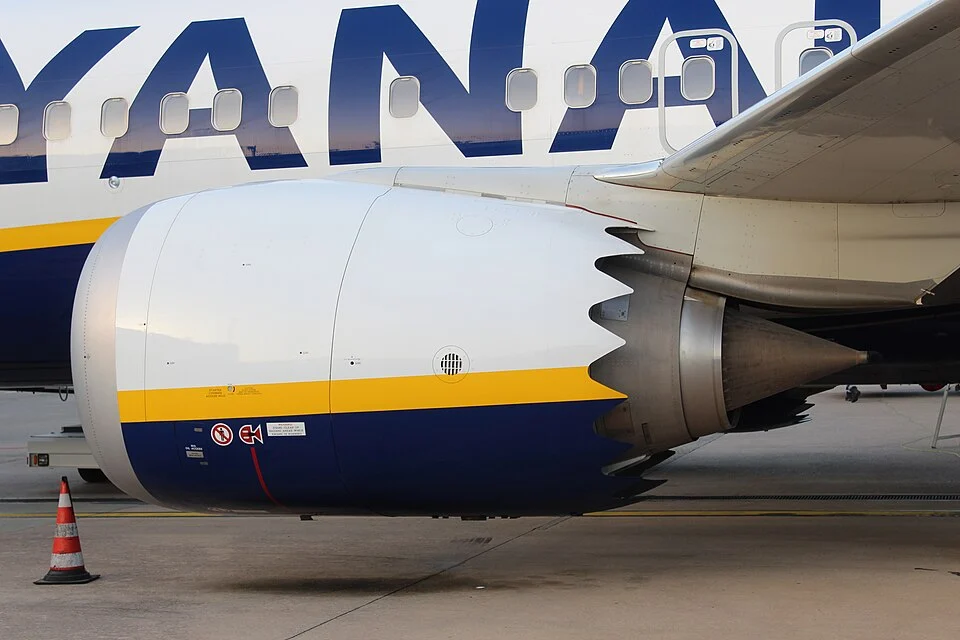
CFM International LEAP-1B · GE/Safran JV
An engine-focused photograph of a LEAP-1B installation on a Boeing 737-8 MAX at Alghero Airport, Sardinia, dated 29 April 2024. Year shown is the documented photograph year, not an asserted product introduction.
CFM International 50/50 GE and Snecma (now Safran Aircraft Engines) joint venture; not solely a GE product. https://www.cfmaeroengines.com/about/
A research-use-only magnetic resonance imaging system documented by the FDA. The photograph identifies a GE SIGNA UHP research 3T MRI at Stanford; 2024 is a documented model era, not an asserted launch date.
Photo: BrokenSegue · preview extracted and resized · CC BY-SA 4.0
Documented 2024Documented use
Computing & industry
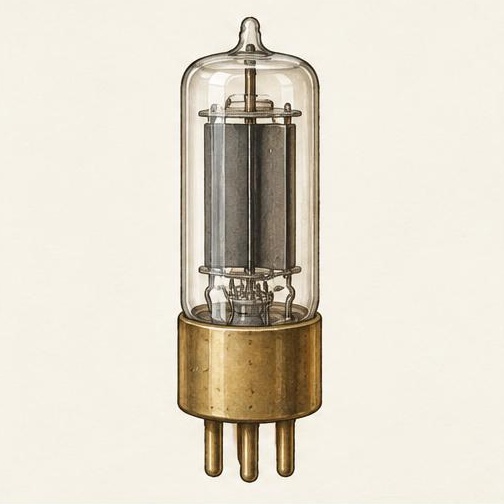
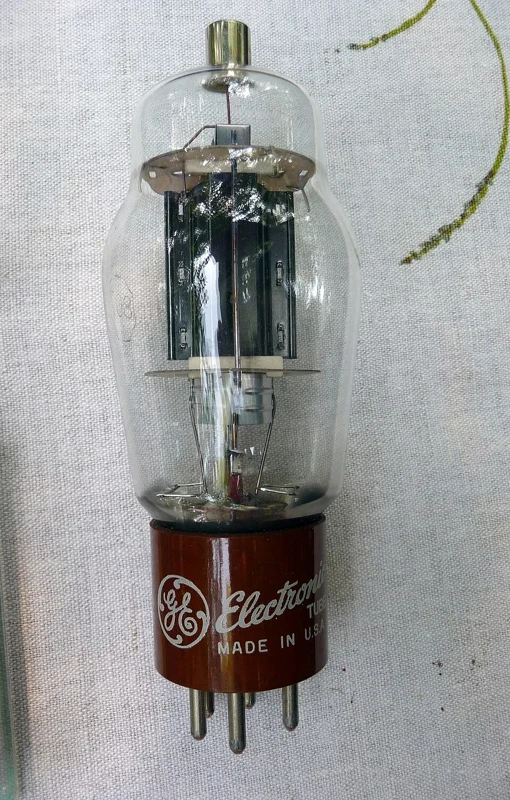
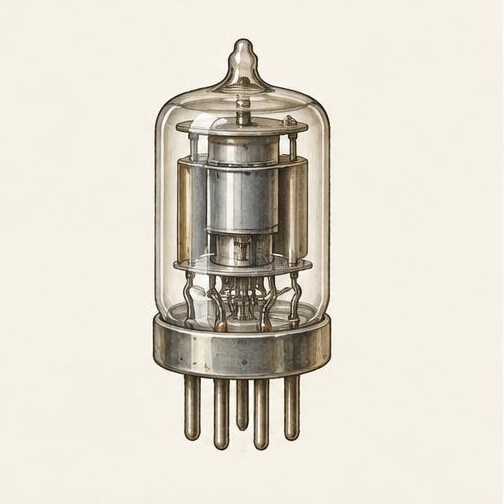
GE vacuum tube specimen
A General Electric vacuum tube photographed in 2024. The archive does not identify a model or manufacturing date; the year is photographic documentation only.
Circa 1962 · collector estimate; photographed 2025Documented use
Water & industrial systems
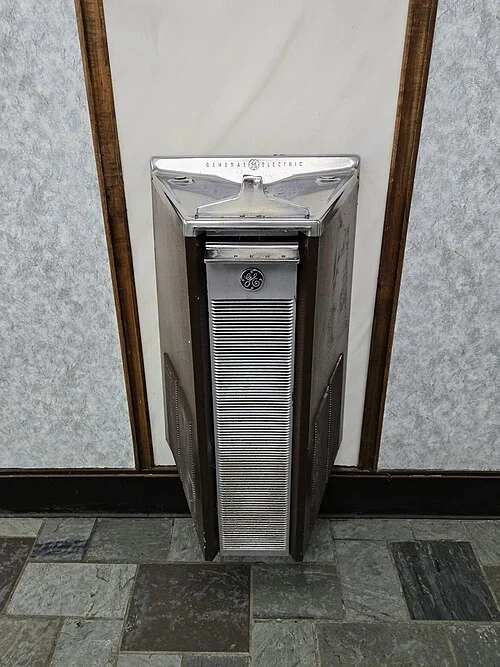
GE drinking fountain · Erie specimen
A brown General Electric drinking fountain in an Erie, Pennsylvania office building. The photographer estimates the artifact to around 1962; the year here dates the photograph.
GE-branded or GE-associated historical artifact; no invention or acquisition-origin claim is made.
Look-alike illustration · not the exact model or museum artifact.
Undated museum artifactUndated artifact
Radio & communications
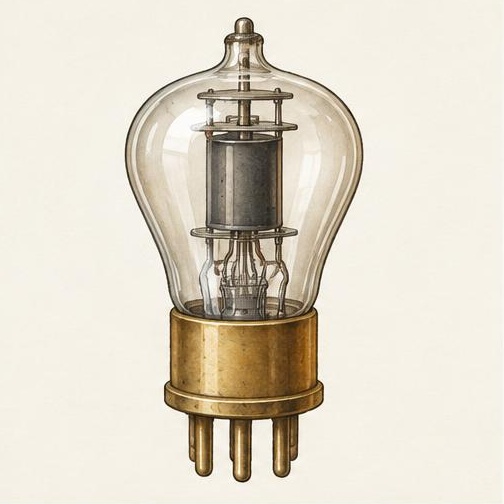
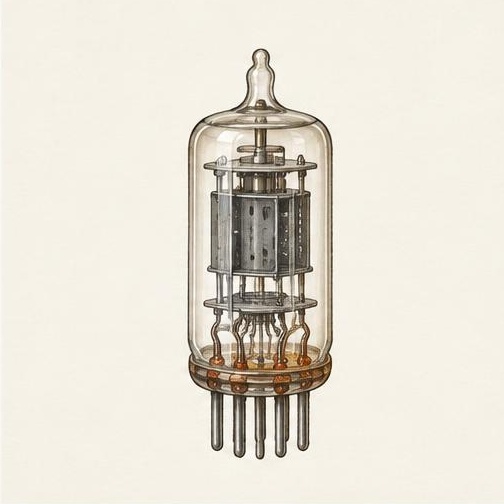
GE 1-U-5 diode / sharp-cutoff pentode
The Smithsonian donor record identifies GE as the maker of this combined diode and sharp-cutoff pentode for portable-radio service. No specimen year is established.
Made by General Electric Company; a historical GE artifact, not a claim that GE invented its entire product category.
Illustration: GE Heritage Village · AI-generated representative artwork · AI-generated artwork · not a historical photograph
Undated artifactUndated artifact
Appliances
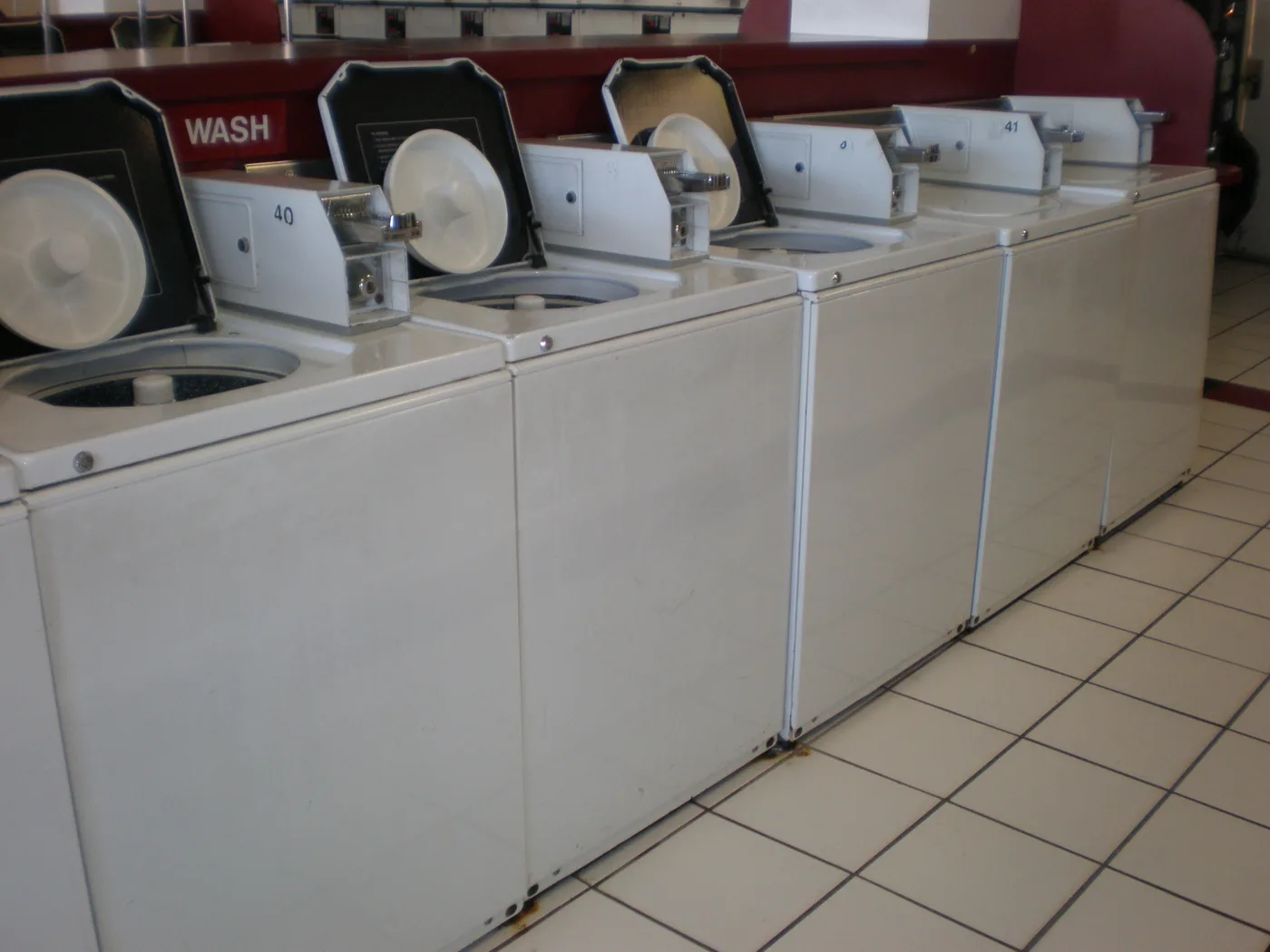
GE 2 Speed commercial washers
Coin-operated GE 2 Speed commercial washers in a Daly City, California laundromat; GE supplied laundry equipment to laundromats and apartment houses for decades.
Made by GE's appliance business; GE Appliances was acquired by Haier in 2016 and uses the GE brand under license.
Illustration: GE Heritage Village · AI-generated representative artwork · AI-generated artwork · not a historical photograph
Circa 1920sUndated artifact
Power generation
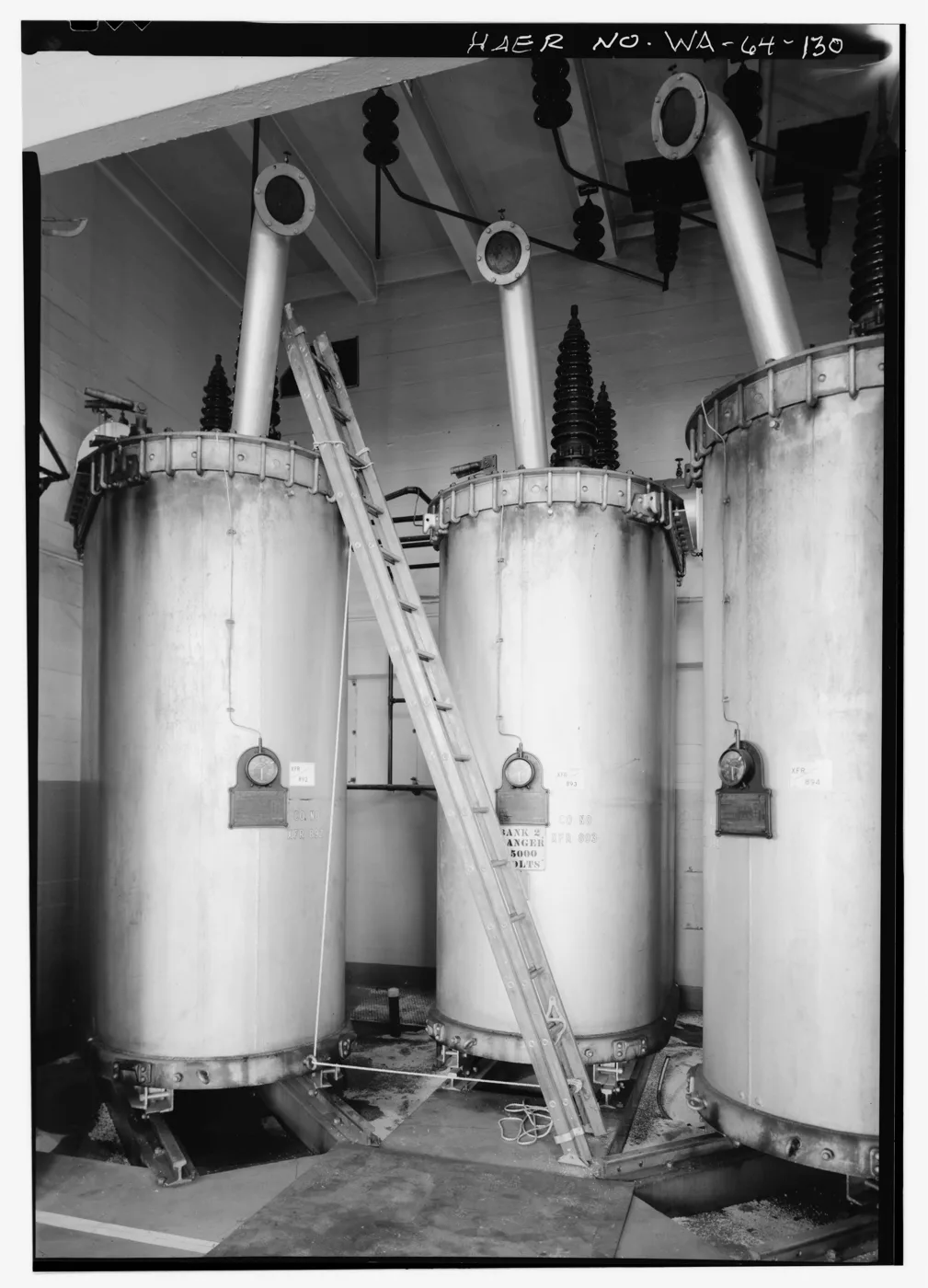
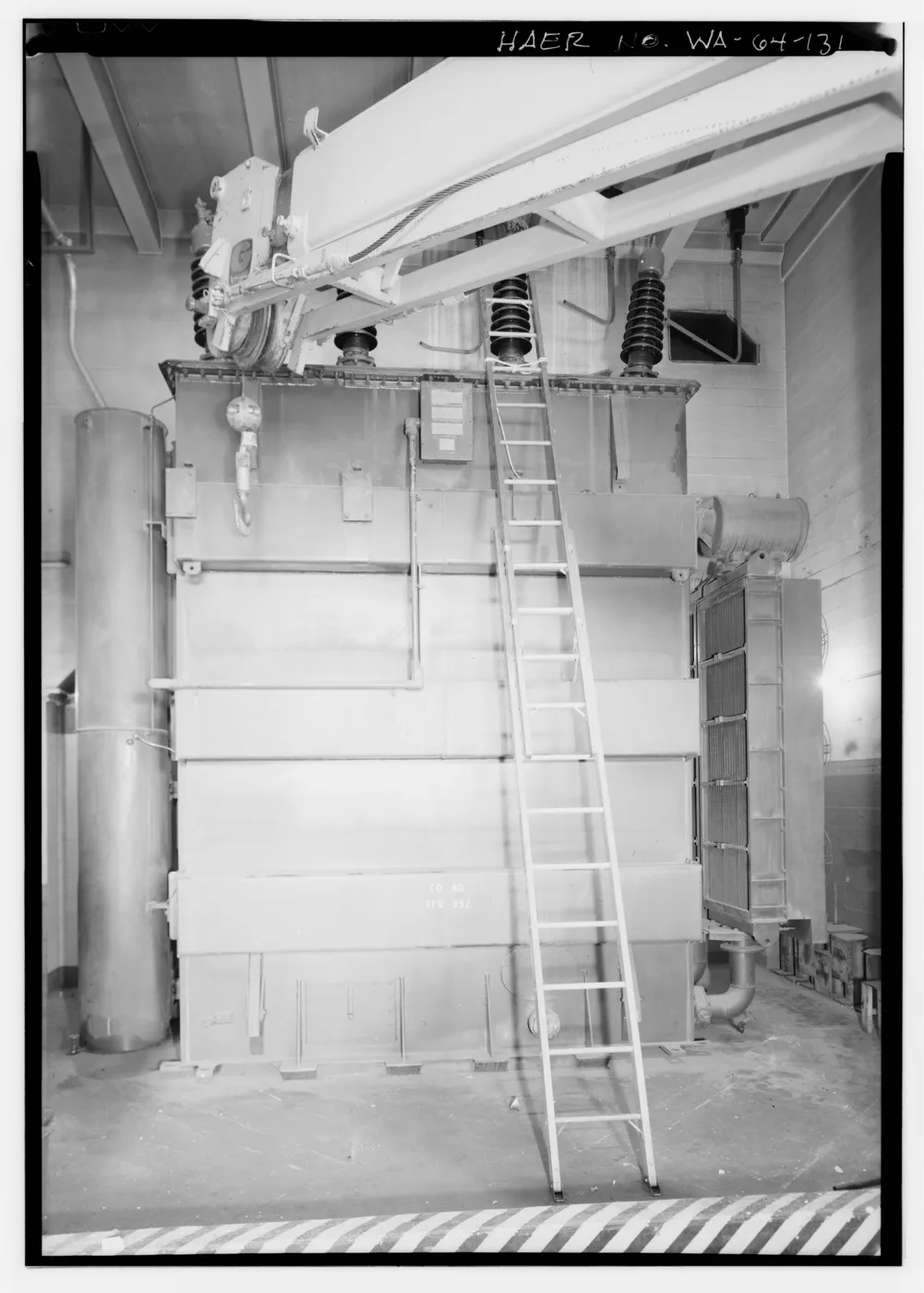
GE 9,000 kVA transformers, circa 1920s
Three circa-1920s General Electric transformers, each rated 55,000–6,600 volts and 9,000 kVA, documented by HAER photographer Jet Lowe in the transformer bay of the White River hydroelectric plant.
Built by General Electric's power-transformer business; GE's grid-equipment heritage passed to GE Vernova in 2024.
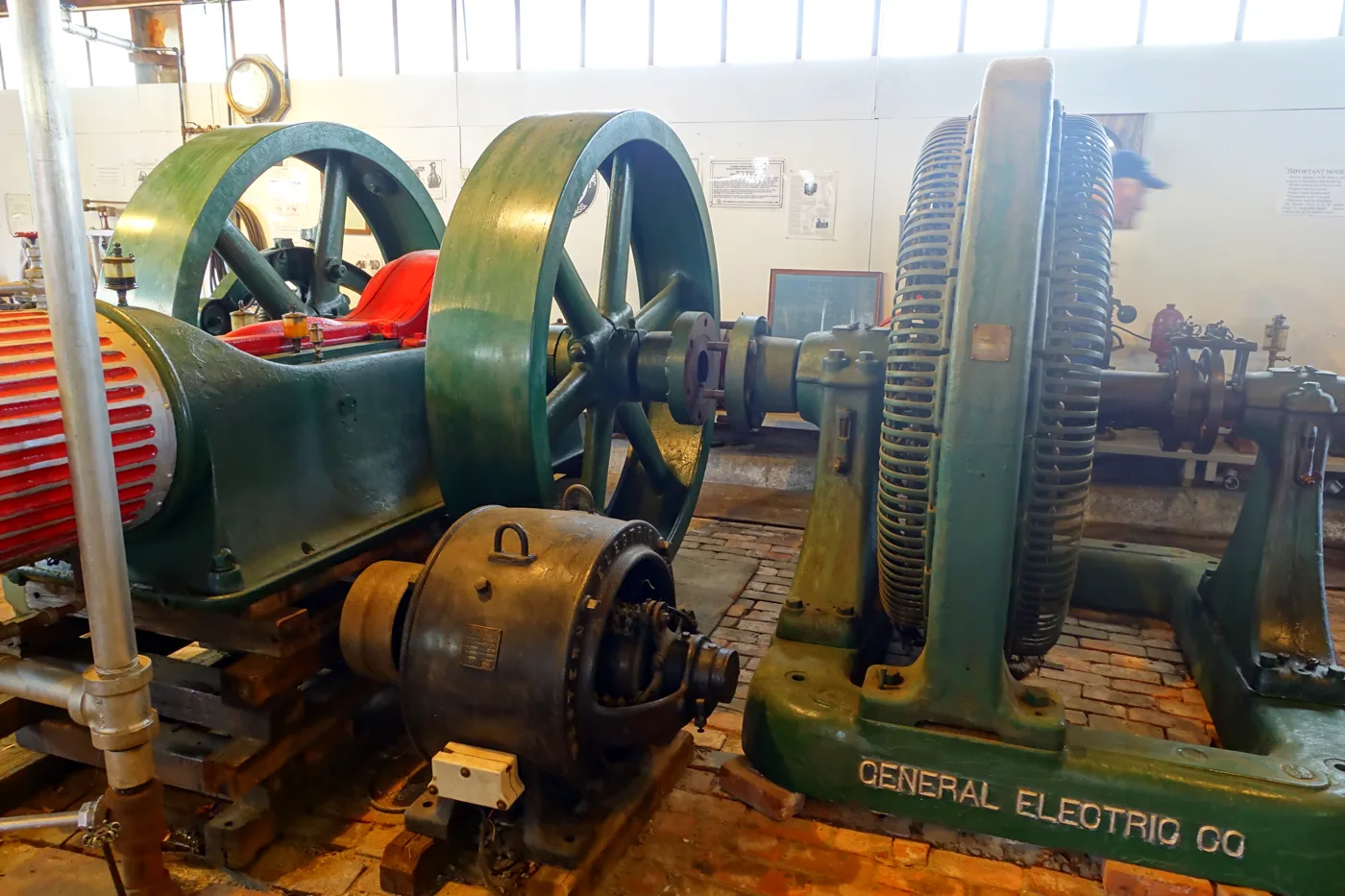
GE AC generator, New England Wireless & Steam Museum
A General Electric AC generator in the stationary steam engine collection of the New England Wireless & Steam Museum in East Greenwich, Rhode Island, photographed in 2017.
Built by General Electric's power-generation business; GE's power-equipment heritage passed to GE Vernova in 2024.
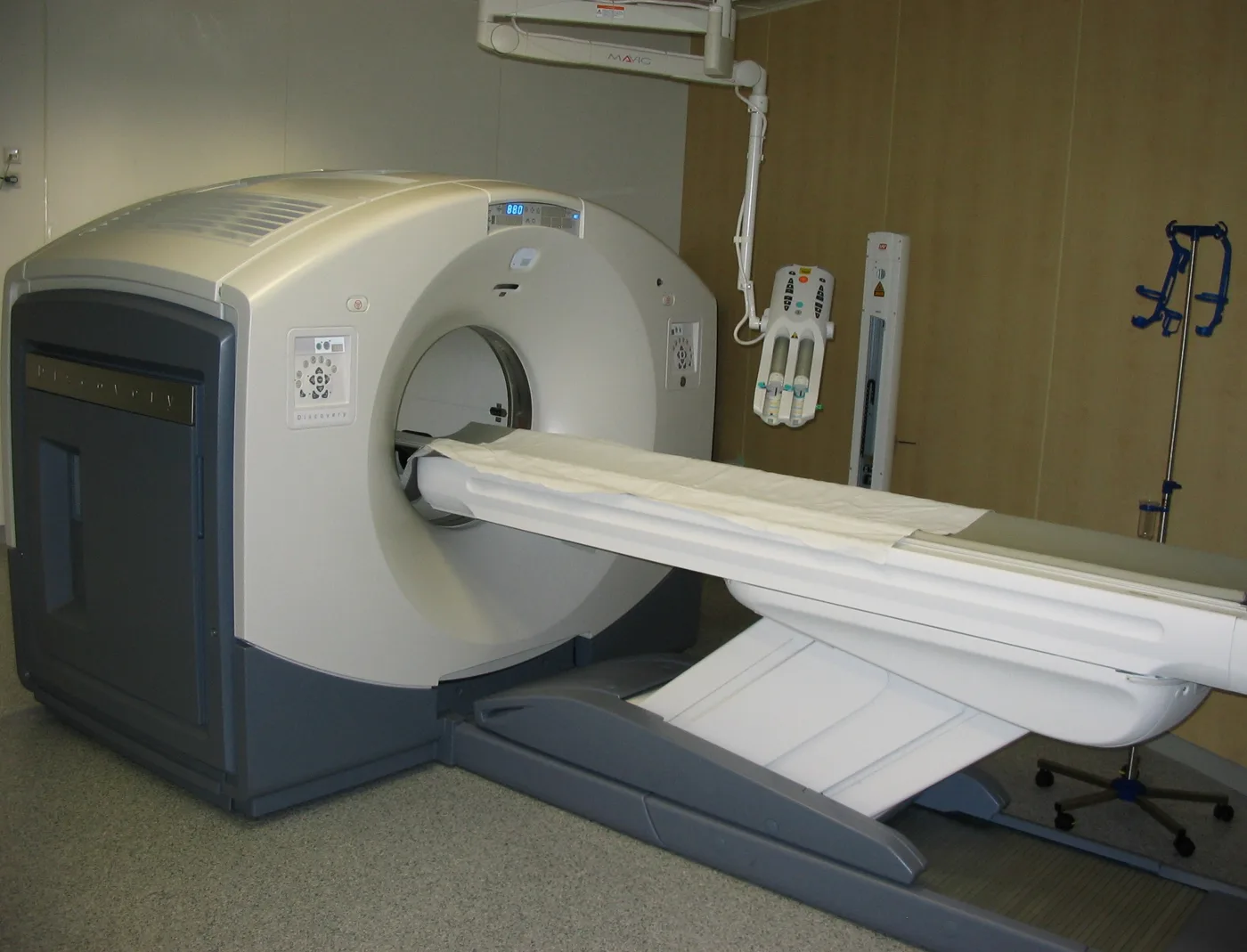
A General Electric Advance positron emission tomography (PET) scanner at the NIH Clinical Center, photographed for the U.S. National Institutes of Health.
Made by GE Medical Systems, later GE Healthcare; GE HealthCare became an independent company in January 2023.
Photo: Melissa Highton via Wikimedia Commons · CC BY-SA 4.0
Undated artifactUndated artifact
Computing & industry
GE Dial DTD Series VHF car radiotelephone control head
A General Electric Dial DTD Series VHF car radiotelephone control head, exhibited at the Telephone Museum in Waltham, Massachusetts, and photographed in 2018 — part of GE's mobile-radio line that preceded cellular telephony.
Made by GE's mobile-radio business; GE's communications operations were later sold, and the mobile-radio line passed through Ericsson to Harris.
An early-20th-century General Electric electric fan; the archive description dates it to the first decades of GE's fan production without a specific year.
Made by GE's appliance business; GE Appliances was acquired by Haier in 2016.
Photo: Infrogmation of New Orleans via Wikimedia Commons · GFDL
Look-alike illustration · not the exact model or museum artifact.
Undated museum artifactUndated artifact
Measurement & controls
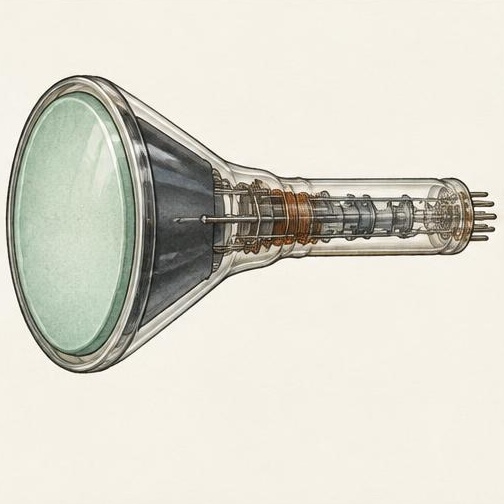
GE GL3MP1 oscilloscope cathode-ray tube
A GE-made cathode-ray tube identified in the museum donor record for oscilloscope use. Its role is electronic measurement, not a complete television or computer.
Made by General Electric Company; a historical GE artifact, not a claim that GE invented its entire product category.
Illustration: GE Heritage Village · AI-generated representative artwork · AI-generated artwork · not a historical photograph
Photographed 2008Undated artifact
Healthcare
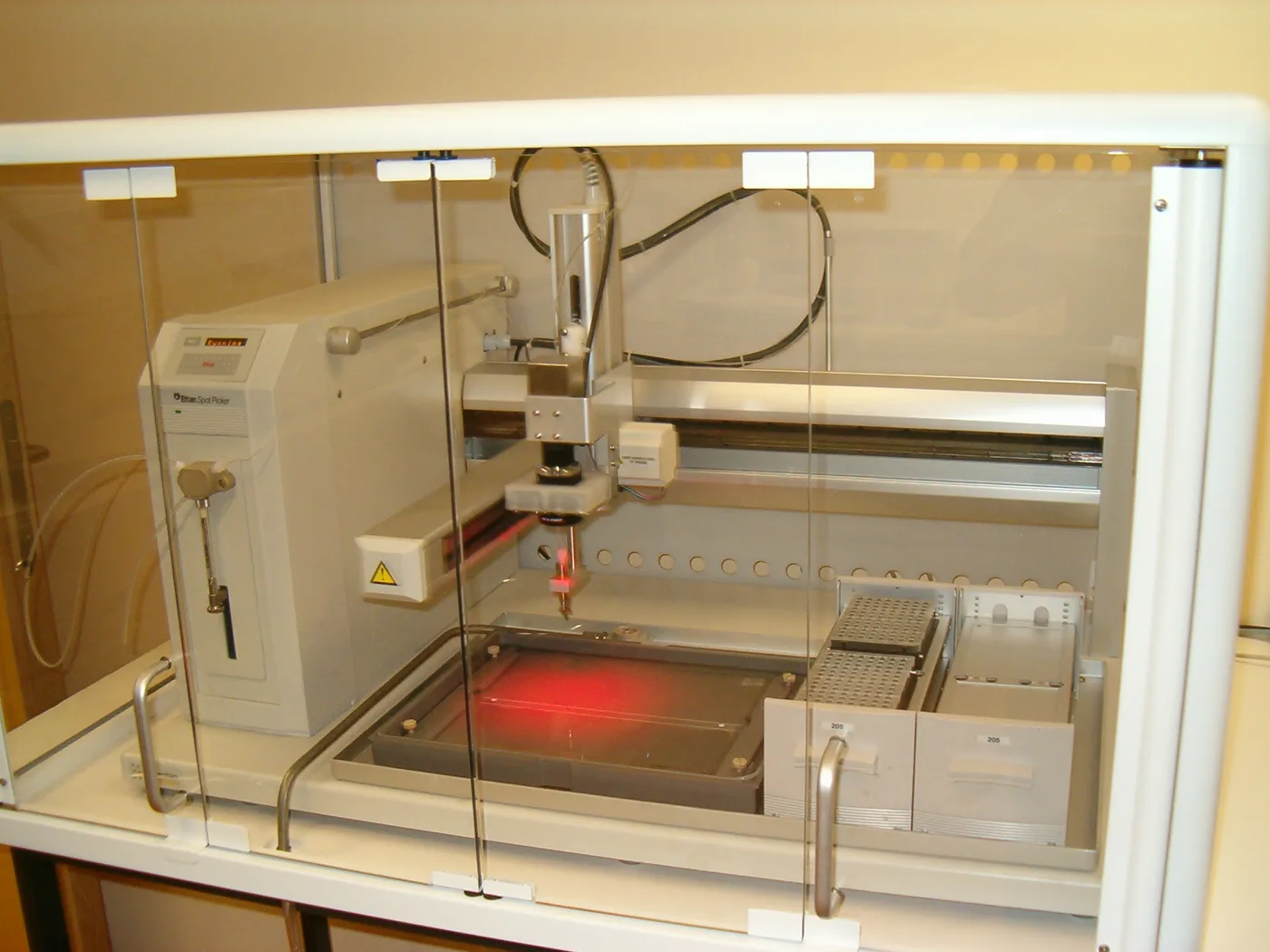
GE Healthcare Ettan Spot Picker
A GE Healthcare Ettan Spot Picker in action in 2008; the instrument automatically cuts protein spots from electrophoresis gels for laboratory analysis.
Made by GE Healthcare's life-sciences business; the biopharma instruments business was sold to Danaher in 2020 and operates as Cytiva.
Photo: Jean-Etienne Minh-Duy Poirrier via Wikimedia Commons · CC BY-SA 2.0
Undated · manufacture year not establishedUndated artifact
Beauty & grooming
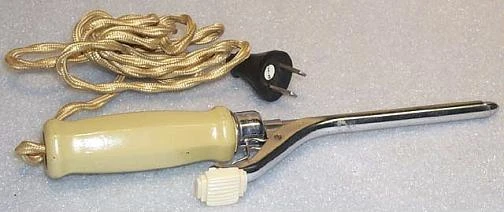
GE Hotpoint model 119L16 curling iron
An electric curling iron identified by the Smithsonian as General Electric Hotpoint model 119L16, catalog EM.330664. The museum names General Electric Company as maker and credits a gift from Emma Labbee through GE. The retrieved record supplies no manufacture or introduction year. This record documents a product, not a claim that GE invented its appliance category.
General Electric Company is explicitly named as maker.
Look-alike illustration · not the exact model or museum artifact.
World War II era · no exact specimen yearUndated artifact
Aviation
GE I-A experimental turbojet
The museum describes the I-A as an improvement on GE’s Type I, derived from the British Power Jets W.I.X. design. The broad wartime dating is retained without inventing a specimen year.
Made by General Electric; preserved in the Smithsonian collection. Historical propulsion work, distinct from current GE Aerospace products.
Photo: Mathieu Landretti via Wikimedia Commons · CC BY-SA 4.0
Undated artifactUndated artifact
Lighting
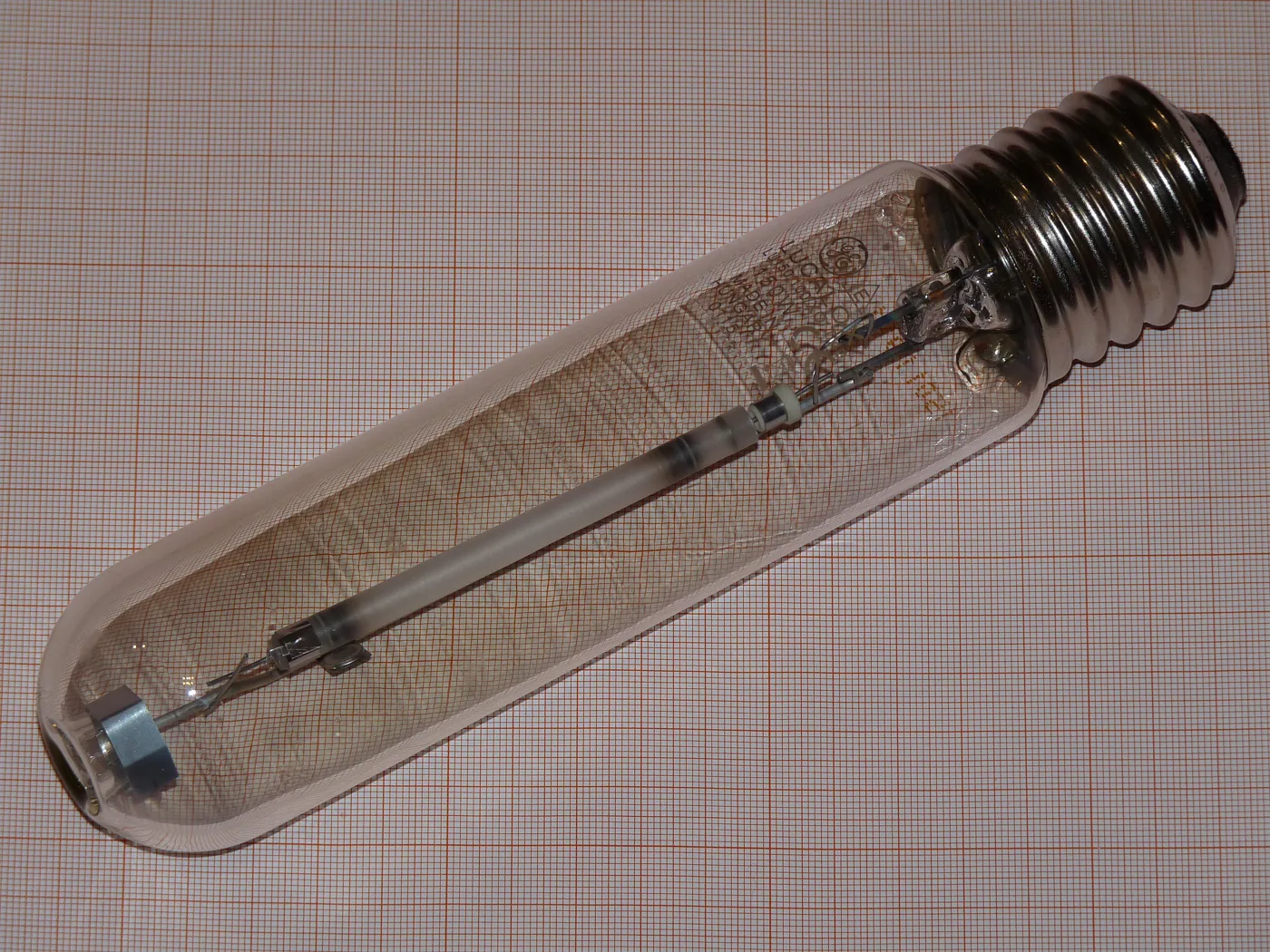
GE Lucalox 150 W high-pressure sodium lamp
A GE Lucalox 150-watt high-pressure sodium lamp; GE introduced the Lucalox line in the 1960s, and it became a standard for street and industrial lighting.
Made by GE Lighting; GE's consumer lighting business was sold to Savant Systems in 2020.
Photo: Dmitry G via Wikimedia Commons · CC BY-SA 3.0
Undated museum artifactUndated artifact
Healthcare
GE radiator dental-type Coolidge X-ray tube
A dental radiator-type Coolidge X-ray tube made by GE’s X-Ray Department. The museum explains its heated-tungsten-filament design; no manufacture year is confirmed for the specimen.
Made by General Electric Company’s X-Ray Department; a dental variant distinct from the separately cataloged early Coolidge tube.
Photo: Infrogmation of New Orleans via Wikimedia Commons · GFDL
Undated artifactUndated artifact
Consumer electronics
GE RP-2000A LP record player
A General Electric RP-2000A LP record player; GE's audio line brought record players into American living rooms alongside its radios and televisions.
GE-branded consumer electronics; GE's consumer-electronics business was sold to Thomson in 1987, and later GE-branded products were not necessarily manufactured by GE.
Photo: DanielPenfield via Wikimedia Commons · CC BY-SA 4.0
Undated · manufacture year not establishedUndated artifact
Beauty & grooming
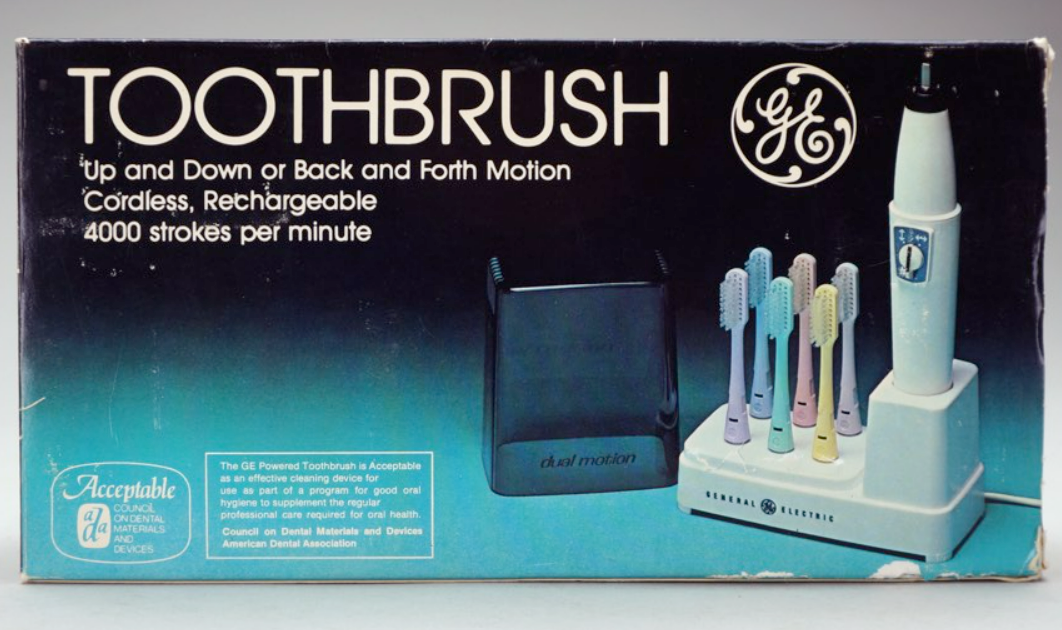
GE TB 9 cordless electric toothbrush
Cordless rechargeable dental brush. The retail carton prints “Up and Down or Back and Forth Motion”, “Cordless, Rechargeable” and “4000 strokes per minute”, shows the charging base with brush heads and a translucent cover marked “dual motion”, and carries an American Dental Association Council on Dental Materials and Devices acceptance panel. The specialist record lists model TB 9, handheld operation, made in USA, with no manufacture year recorded. The model number is not legible in the supplied photograph, so the TB 9 identification follows the contributor's identification of the object. This record documents a product, not a claim that GE invented its appliance category.
General Electric company attribution in specialist record and printed on the carton; manufacturing entity not independently verified.
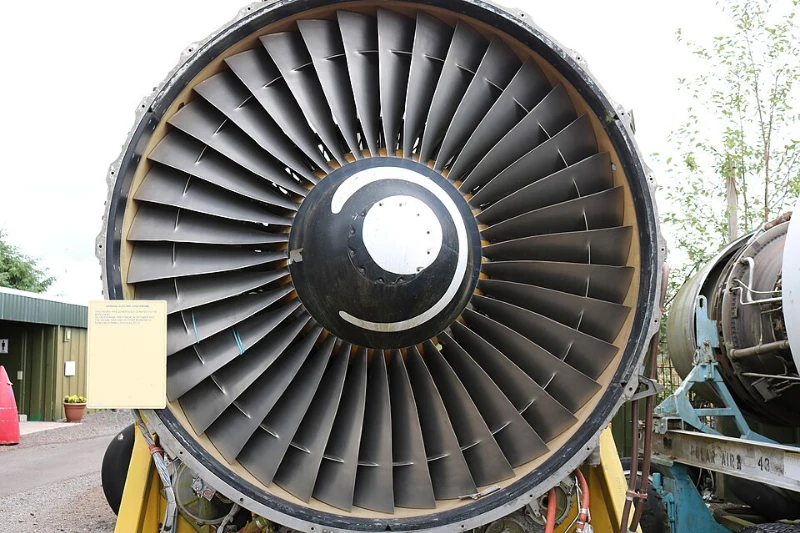
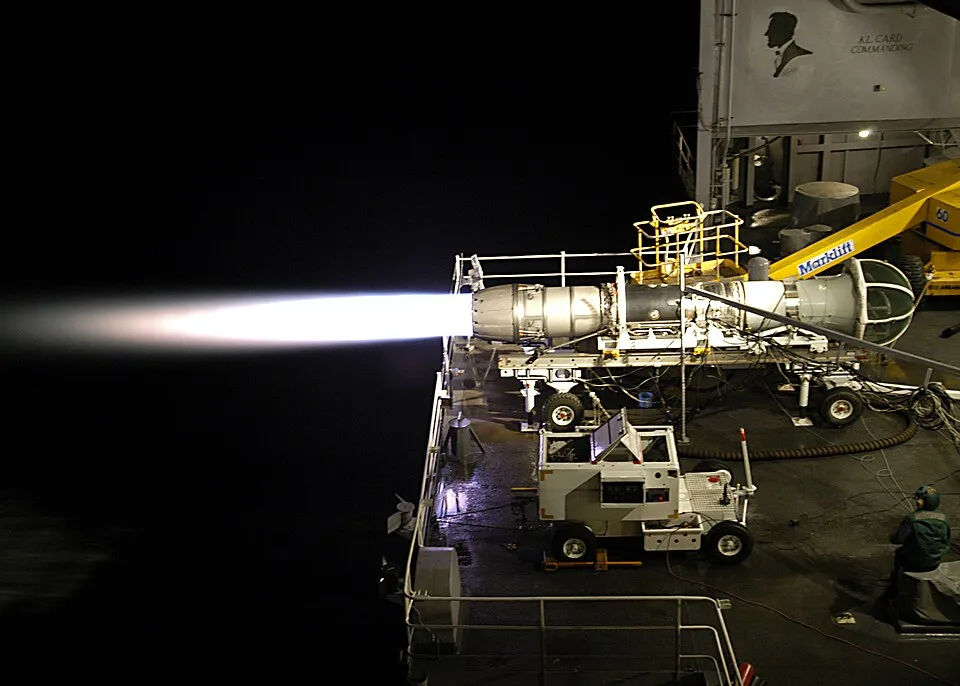
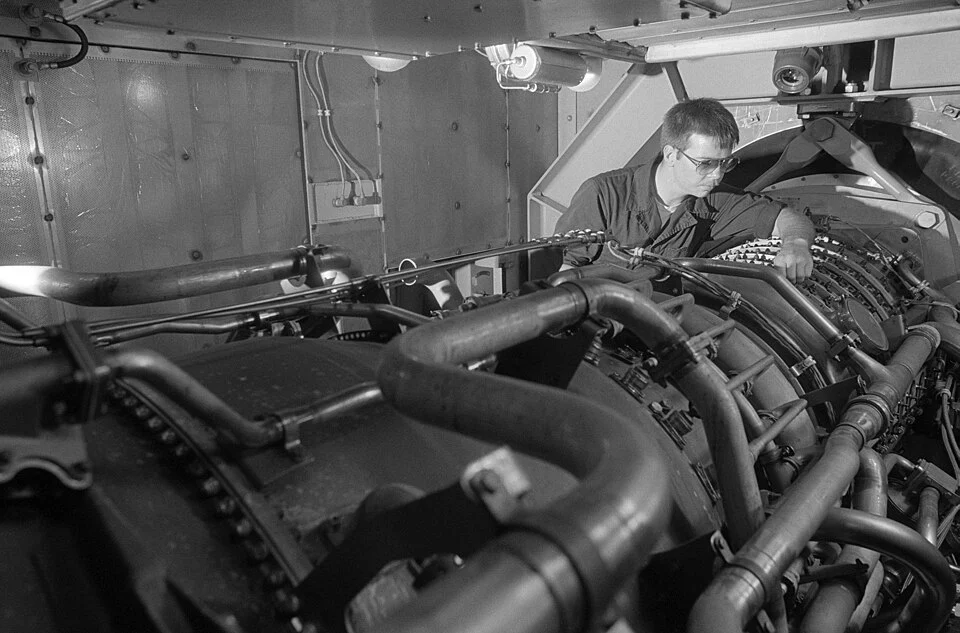
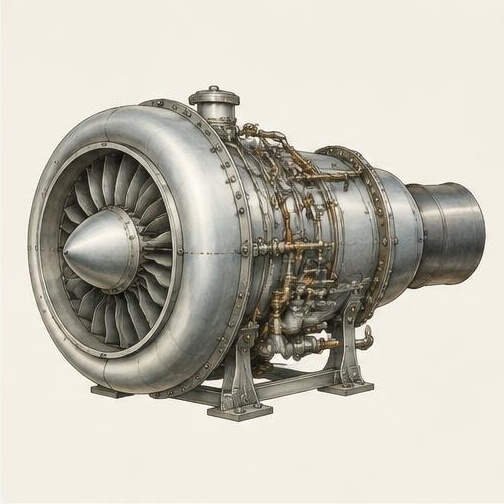
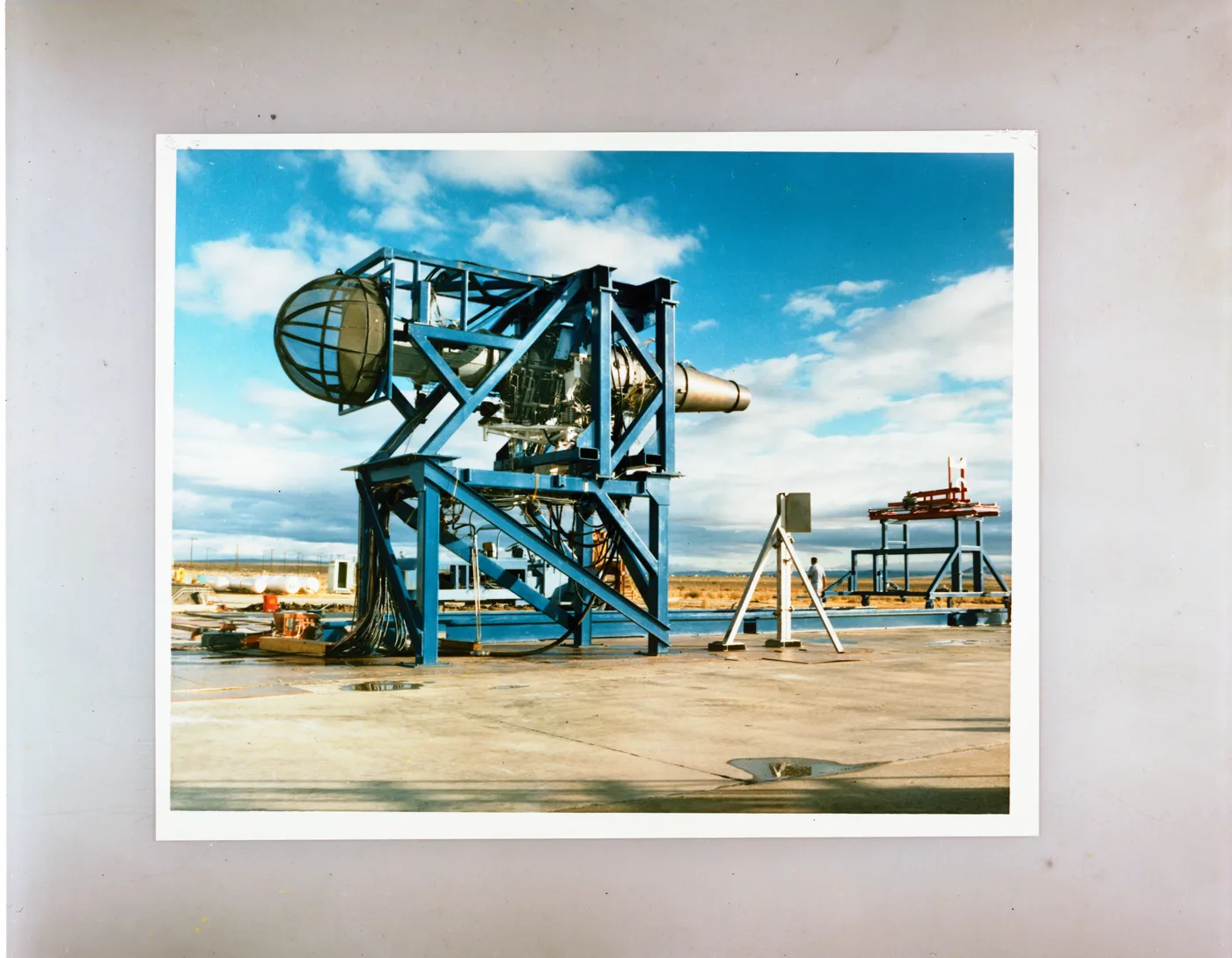
A General Electric variable cycle engine in a test stand, from the U.S. National Archives; GE's variable-cycle work explored engines that could reconfigure airflow for both efficiency and supersonic power.
Developed by GE's aircraft-engine business, today GE Aerospace.
Photo: TaurusEmerald via Wikimedia Commons · CC BY-SA 4.0
Undated · manufacture year not establishedUndated artifact
Beauty & grooming
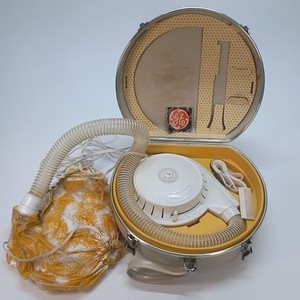
General Electric MD18 bonnet hair dryer
Archive record transcribes the marking Model MD18 703, 240 volts and describes a yellow round blower, flexible white tube and yellow/white bonnet. The supplied photograph shows a round clamshell carrying case with a silver-toned rim and latches and a moulded mustard-yellow tray nesting a cream blower dome, ribbed hose and yellow-patterned bonnet, with a GE monogram badge inside the lid. No model or voltage marking is legible in the photograph, so the MD18 identification follows the contributor's identification, and the hard-shell case shown differs from the vinyl case described in the archive record. This record documents a product, not a claim that GE invented its appliance category.
General Electric branding transcribed in the archive record and a GE monogram badge is visible inside the supplied photograph's case lid; precise corporate manufacturer unresolved.
Authentic photographs retain their stated credits and licenses, including the Museums Victoria appliance photograph licensed CC BY 4.0. AI-generated representative drawings are explicitly labeled as look-alikes; symbolic archive and art illustrations are not reproductions of the original documents or paintings. Smithsonian photographs are used for this non-commercial educational collection under its usage conditions, not represented as unrestricted CC0 images. The animated banner above remains a labeled artistic recreation.